
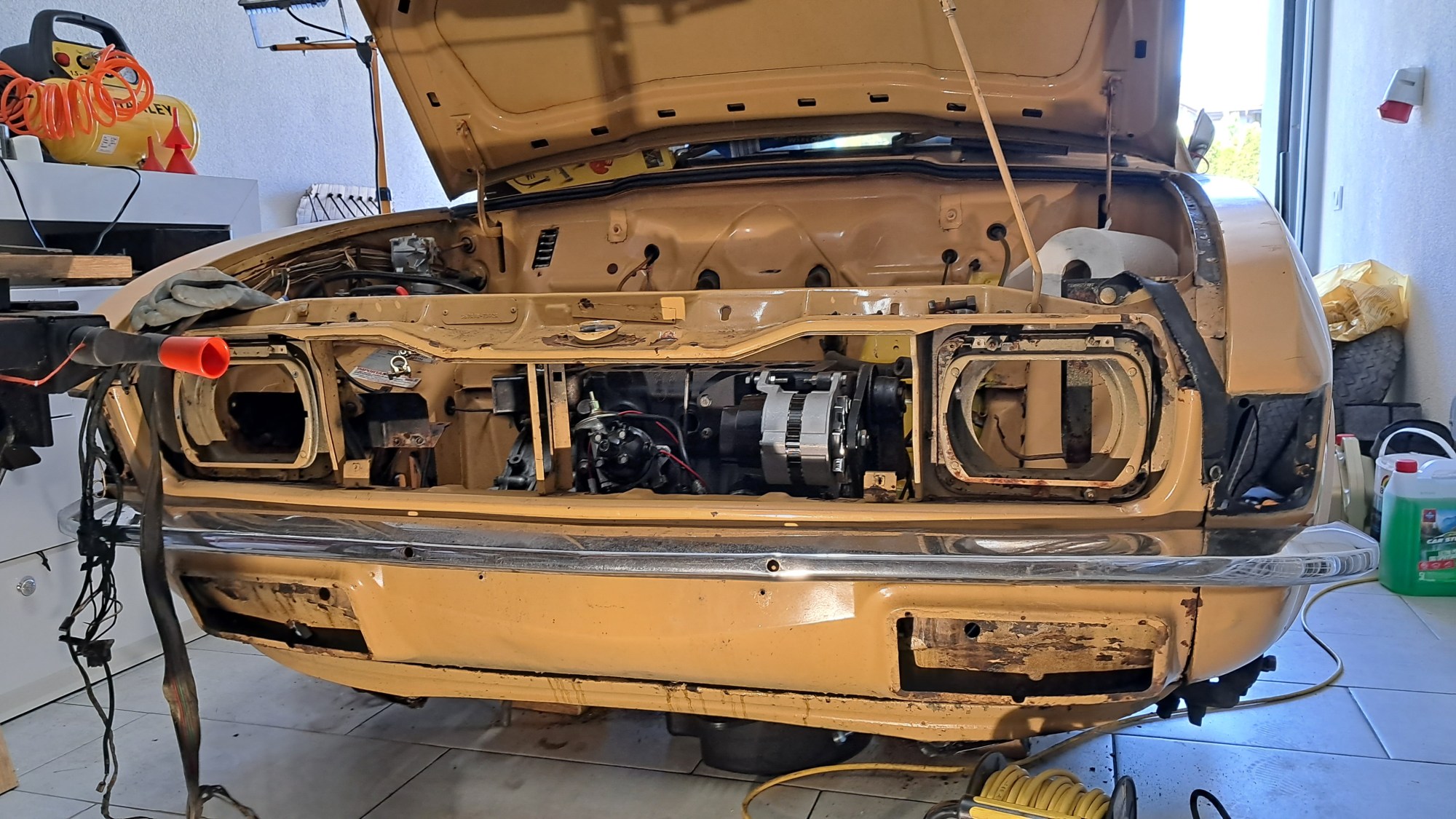
It’s been a while since the last update and a lot of good stuff has been happening. After an easy start reviving the electrics I took a closer look at what 34 years of sitting idle around the Arctic Circle had done to Agnetha, and what she needed to get back on the road. She’s been on the blocks since January so that I could get a good look at everything.

Here’s a fairly comprehensive list of what I found out, although some of these have already been solved, and no doubt there are other problems yet to be discovered:
- Electrical loom is good.
- Headlights are knackered.
- Front indicator repeater bulb sockets are knackered.
- Front indicator/sidelight clusters are OK, ish.
- Rear light clusters are grand.
- Starter relay is knackered.
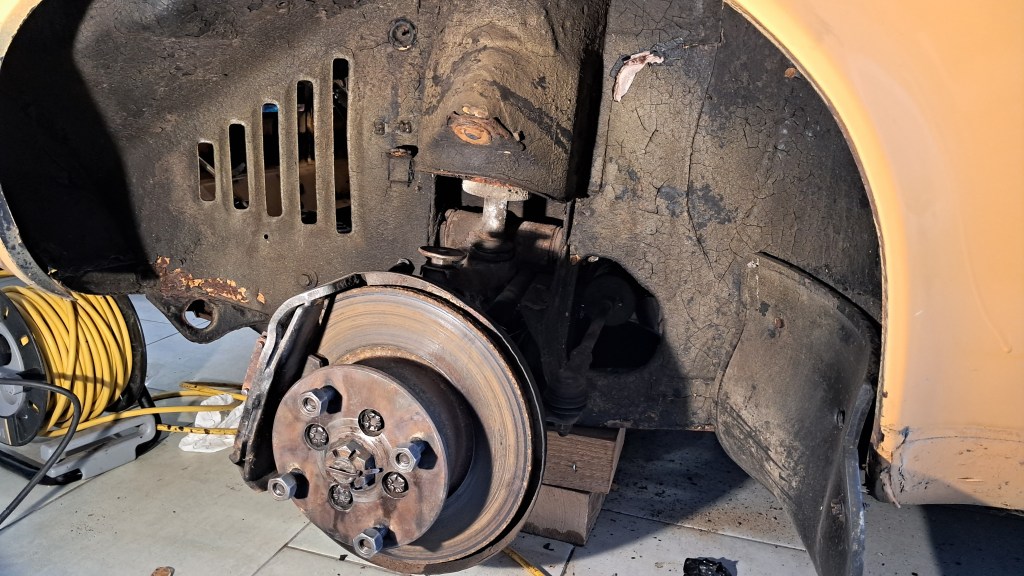
- Front discs and pads are OK.
- Wheel bearings look good.
- Steering rack seems OK, gaters are knackered.
- Hydragas displacers – knackered.
- Suspension fluid lines probably knackered.
- Bump-stops disintegrated.
- Tyres don’t have datestamps which makes them… older than the car?!
- Brake lines and brake cylinders – knackered.
- Handbrake is good.
- Gearbox linkage is good.
- Clutch pump is knackered.
- Brake pump is knackered.
- Brake servo seems OK.
- Brake pressure differential switch is locked solid.
- Clutch cylinder is knackered.
- Clutch itself seems OK.
- Alternator is knackered.
- Distributor – knackered.
- Fuel pump is knackered.
- Carburettor isn’t too bad but deserves a rebuild.
- Coil – knackered.
- Thermostat is knackered.
- Water pump – assumed knackered.
- Starter motor is fine!
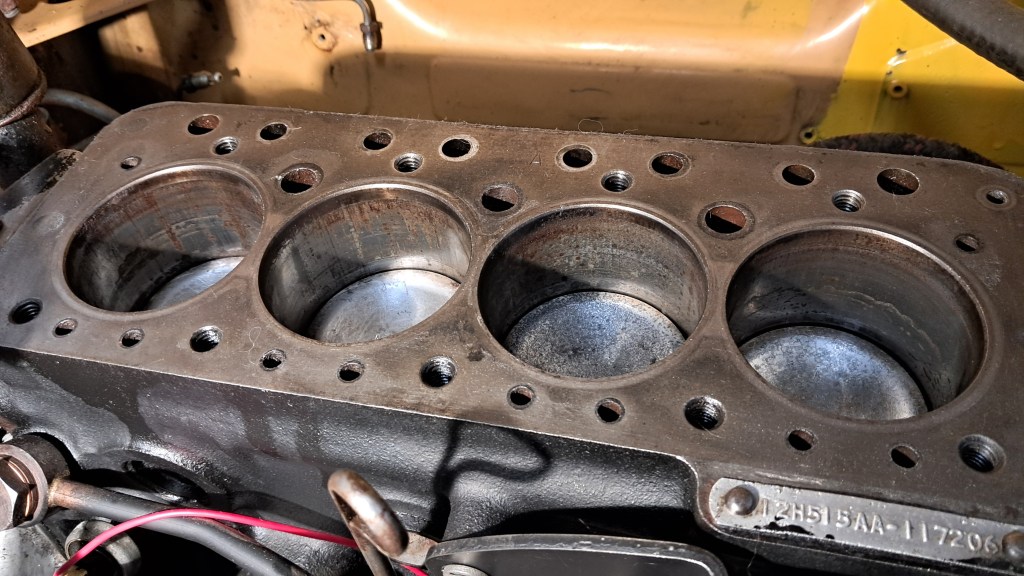
- Valves are knackered.
- Rocker assembly is good.
- Remains of a broken spark plug seem to be welded to the block – rethreading required.
- Engine rotates freely, bottom end seems OK.
- Final drive seems OK.
- All forward gears and reverse seem OK.
- Cylinder linings are knackered.
- Block heater disintegrated due to corrosion – there’s now a 1 inch hole in the side of the engine – great!
- All rubber hoses are knackered.
- Radiator might be OK but safer to assume it’s knackered.
- Radiator fan motor is knackered.
- Heater matrix not to be trusted based on what came out of the rest of the cooling circuit.
- Corrosion along the sills.
- Localised corrosion towards the rear of the floor pan but nothing dramatic.
- Inner sills look good.
- Localised corrosion in the engine bay.
- Corrosion around the windscreen, urgh.
- Localised corrosion in both doors.
- Localised corrosion & filler in the boot.
- Window winders and door locks all work.
- Carpet is strangely brittle and kind of revolting.
- Seats are lovely.
- Seatbelts are good.
- Needs a stereo.
That’s quite the list, isn’t it? But let’s keep things in perspective. The car is 47 years old, and was used continuously for her first 13 years, clocking up over 122,000 km driving around Sweden. She then sat idle since 1989, evidently spending some of that time outdoors in harsh Scandinavian winters. I would say she weathered it incredibly well.

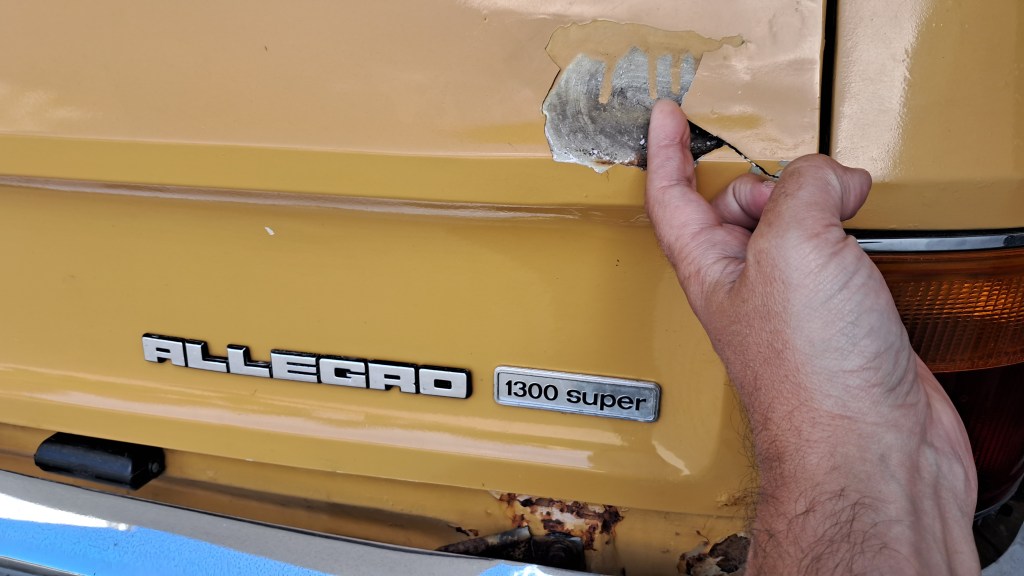
Having said that, when I first confronted the scale of the restoration, I was in two minds about continuing. But come on this is a gorgeous super-rare Allegro Estate. Not many left in the UK, hardly any abroad, and she survived all that time. Lesssssss GOOOOOOOOOO!!!!!
Break it down yo
With any project a bit of planning goes a long way. I’m not going to cringepost about Scrum but I will admit to using Scrum very lightly for Projekt Agnetha. So, the project as been broken down in Epics with names like “Engine”, “Transmission”, “Suspension”, “Bodywork”, and so on. Within each epic are lots of short-term projects called Sprints, e.g. “Replace the distributor”, “Clean the shit off the sump”, and so on. Just one Epic is done at a time, and might take any number of months to complete. It doesn’t really matter as long as it’s your own money and not someone else’s! This means each Epic is almost like its own separate project. Everything becomes more manageable and the whole project is less intimidating.
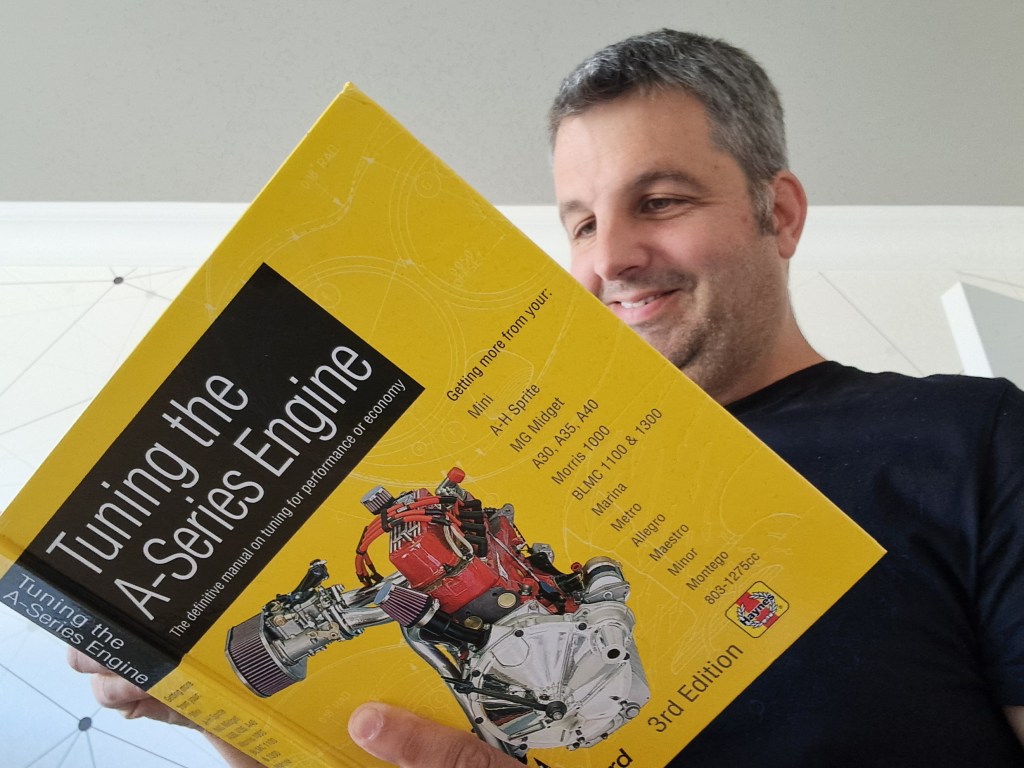
In March I made a start on the engine, and several items on the Big List have already been crossed off. I could have started with the bodywork or anything else, but I fancied a crack at the engine. The spark plug remnants have been drilled out and the cylinder head rethreaded – this was a lot easier than expected! I also had the head checked by a professional engine builder for flatness and so on. The alternator, distributor and coil have been replaced too.
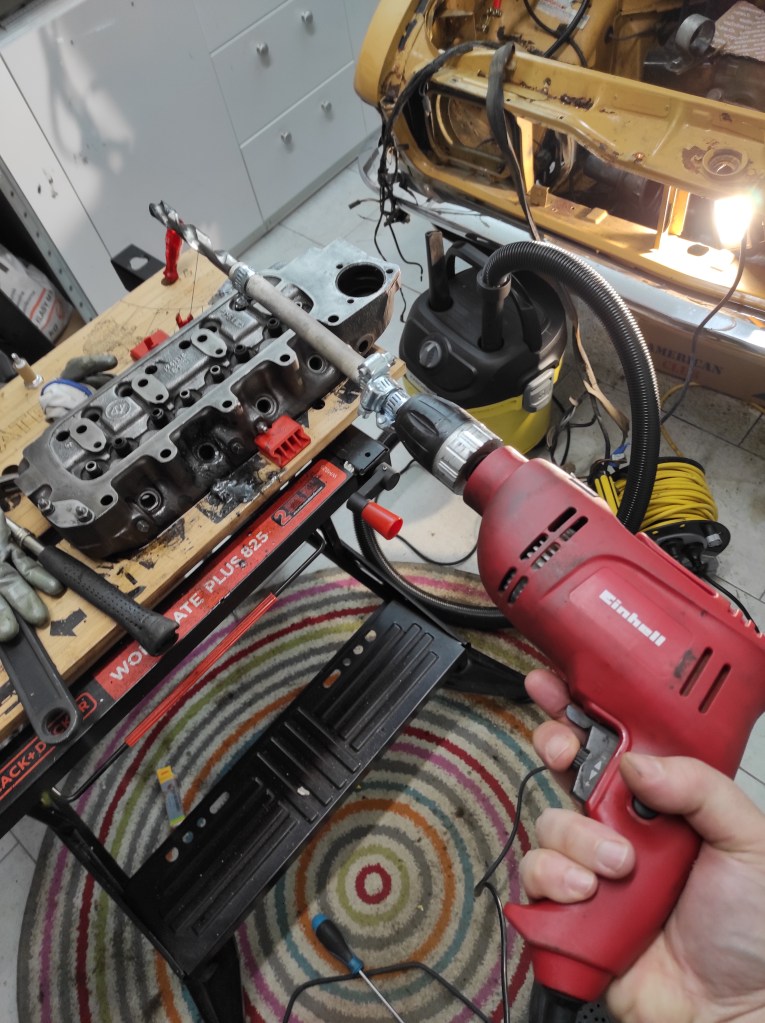
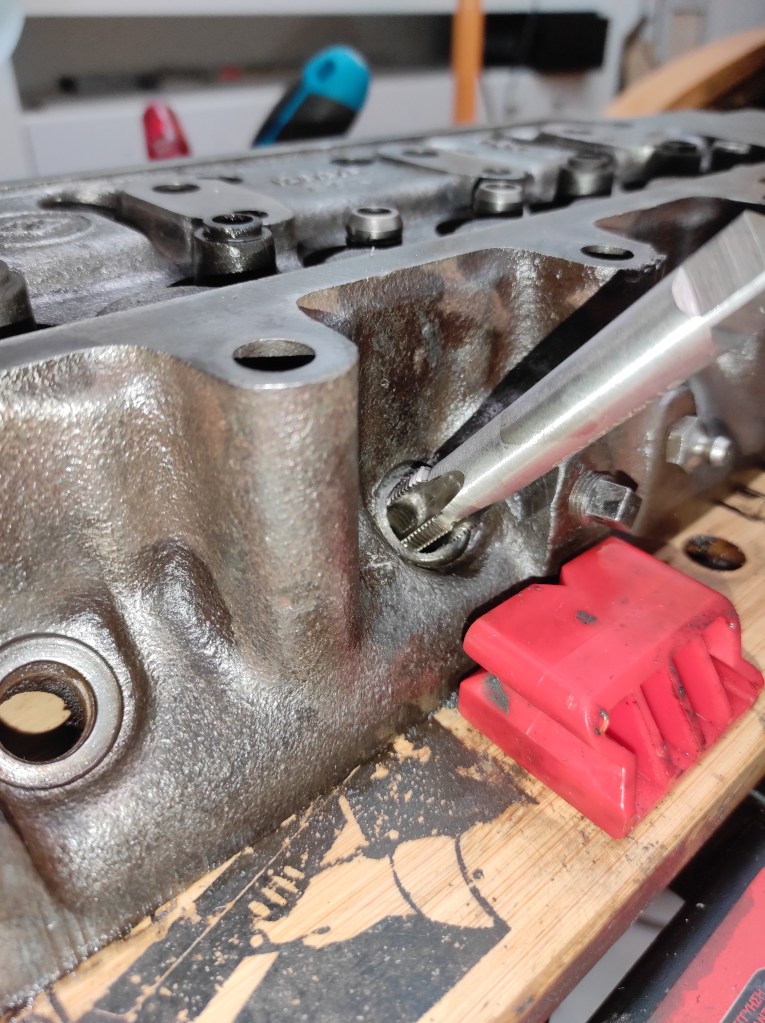
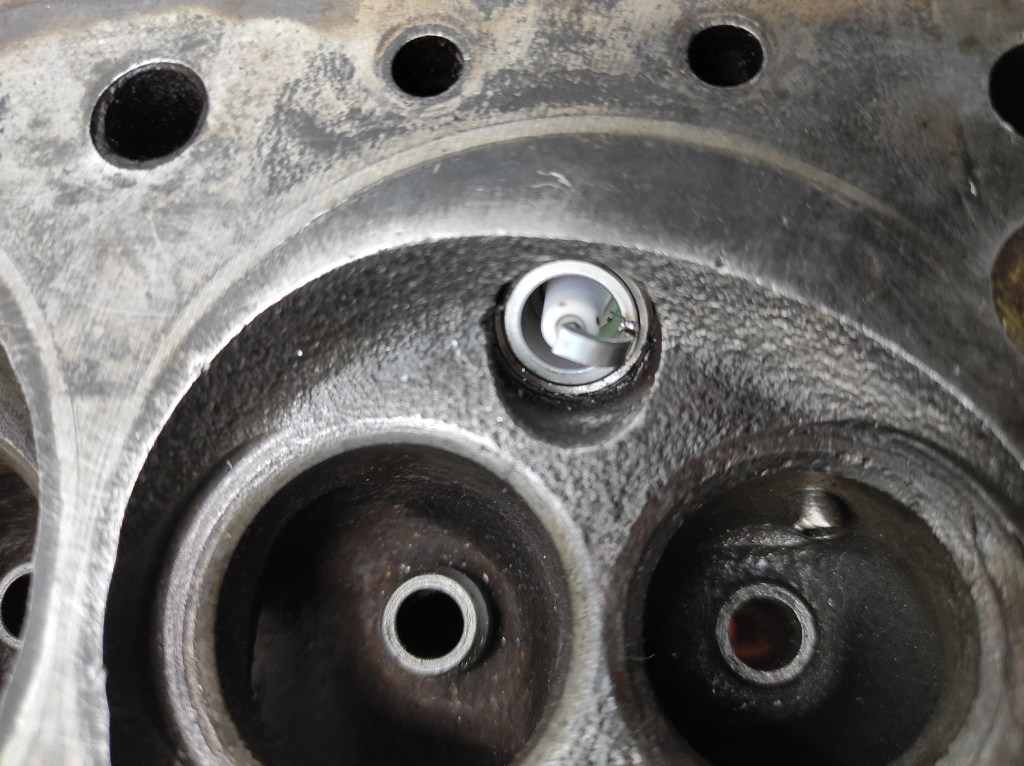
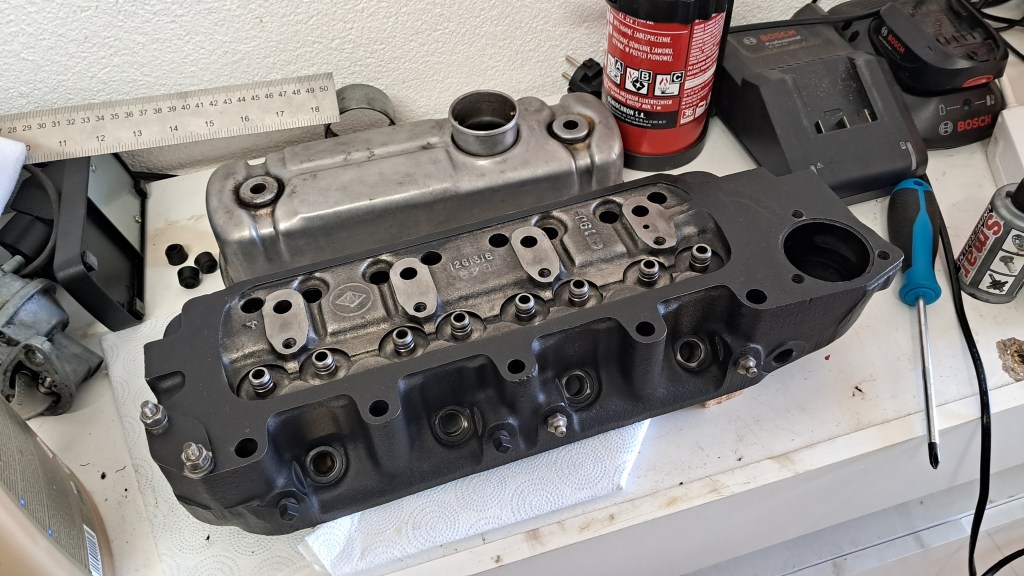

New valves, springs, gaskets, studs ‘n nuts are on order, as are a new starter solenoid, fuel pump and carburettor rebuild kit. I’m fairly sure Agentha will have her first start this summer. Judging by the state of the cylinder linings, she probably hasn’t run properly since being laid-up in 1989, so that will be a big milestone. Can’t do much about the cylinder linings right now so we’ll just try to get it running and see how bad it is. If that old A-series needs to rebored then rebored it will be…and the rest, haha!!
What next?
Assuming the engine runs, the next Epic will be the drivetrain. From what I can tell, all she would need to move under her own power is new clutch hydraulics. Finding an original Allegro clutch pump seems problematic but I read recently in the Allegro Club magazine about using one from a Land Rover as a replacement. I’m not fussed at all about using original parts, so I’ve a Land Rover pump on order and we’ll try to fit that.
Maybe Agnetha could move under her own power by the autumn – who knows? Health and safety folks need not fret: Unlike the UK, all vehicles returning to traffic in Poland must past a vehicle inspection, so there won’t be any driving on public roads in Agnetha until everything – especially the much-needed welding – is crossed off the list and the car is absolutely solid again. I’m sure she’ll be fine for a bit of low-speed manoeuvring on the drive in the meantime though!
It might also be a good idea to get a new radiator sooner rather than later – I don’t think BL designed them to be air-cooled.
 Projekt Agnetha