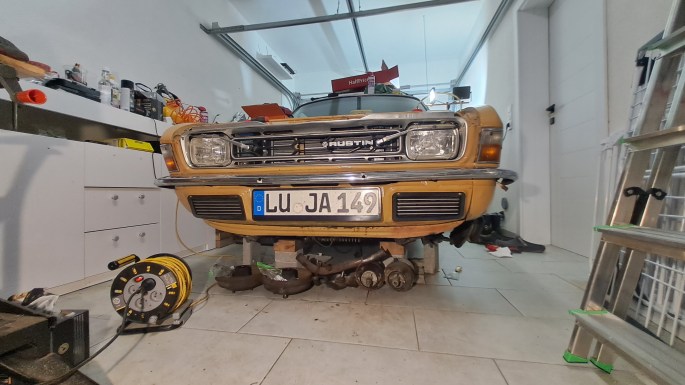
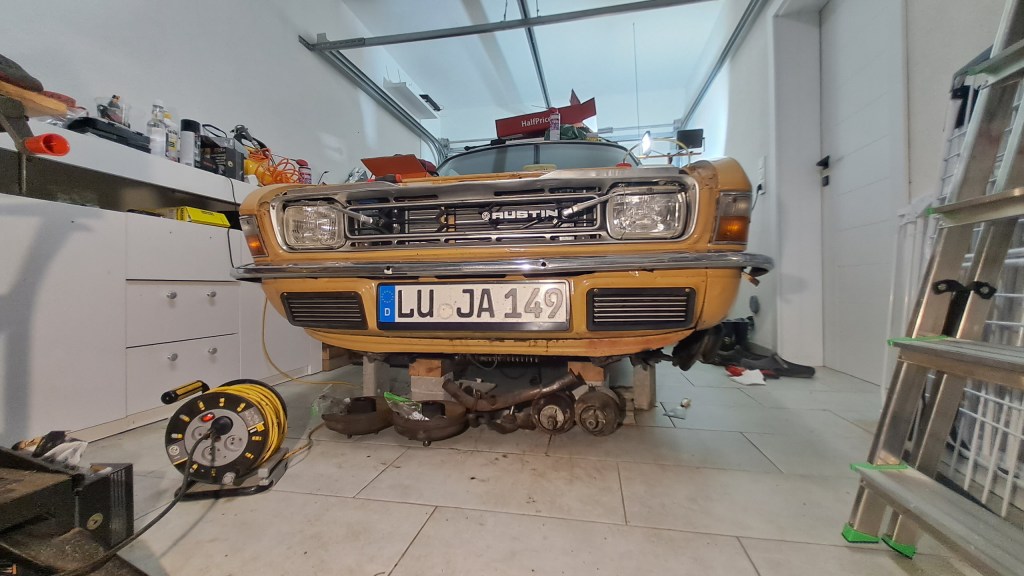
As Agnetha sits patiently on the blocks I’ve put together a fairly complete list of jobs to be done to get her through an inspection.
So here goes:
Replace drive shaft bushings and seals, both sides.
Replace all drive shaft boots.
Clean and grease steering rack, replace boots.
Rebuild brake calipers.
Rebuild drum brakes.
Rebuild brake differential switch.
Rebuild brake master cylinder.
Clean and patch the fuel tank, replace sender unit.
Weld sills, corners of the floorpan, passenger door and boot.
New fuel line.
New brake lines.
New Hydragas fluid lines.
Recondition/replace Hydragas displacers.
New tyres.
New exhaust.
New indicator wing repeaters.
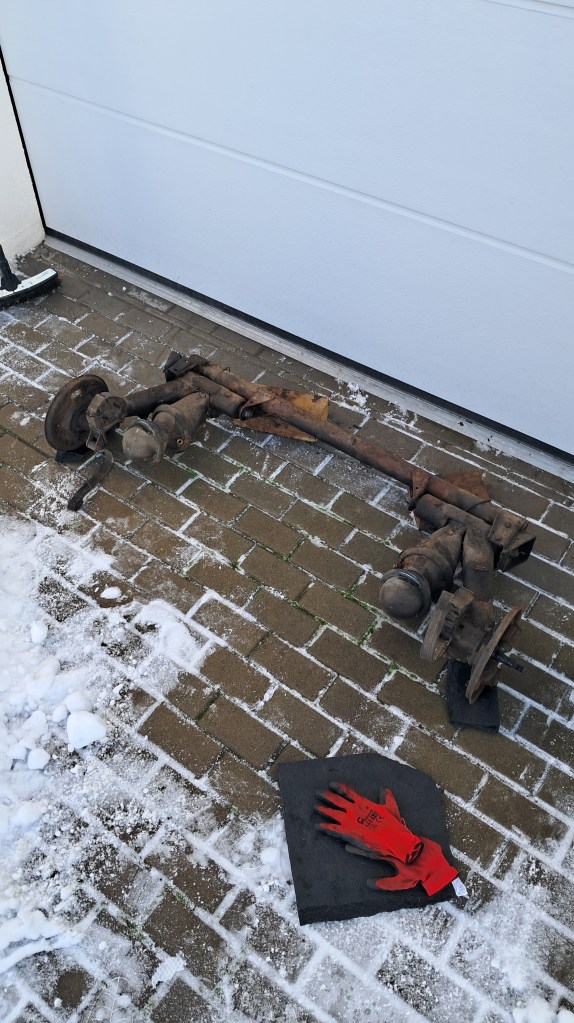
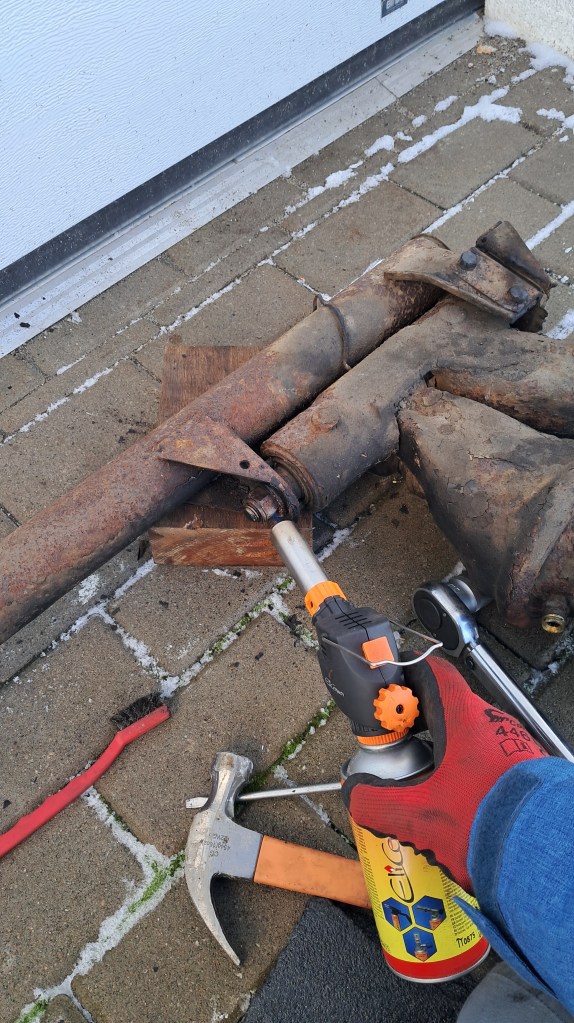
Rebuild and reinstall crosstube assembly.
New windscreen and tail screenwash pumps.
New stereo – a must!
That should be it, we’ll see.
I would love all this to be done by the end of 2024, and I think there’s a good chance. For a pro it’s probably not even a month’s work but as a hobbyist it never hurts to massively pad the auld estimates.
There has been a lot of progress with Agnetha since the last post but it seems I forgot to blog stuff again.
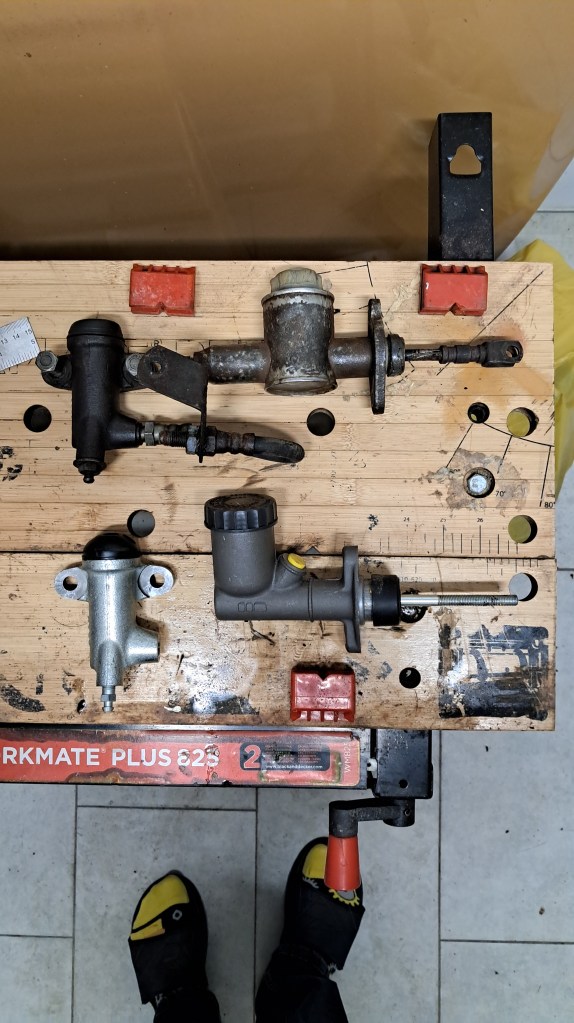
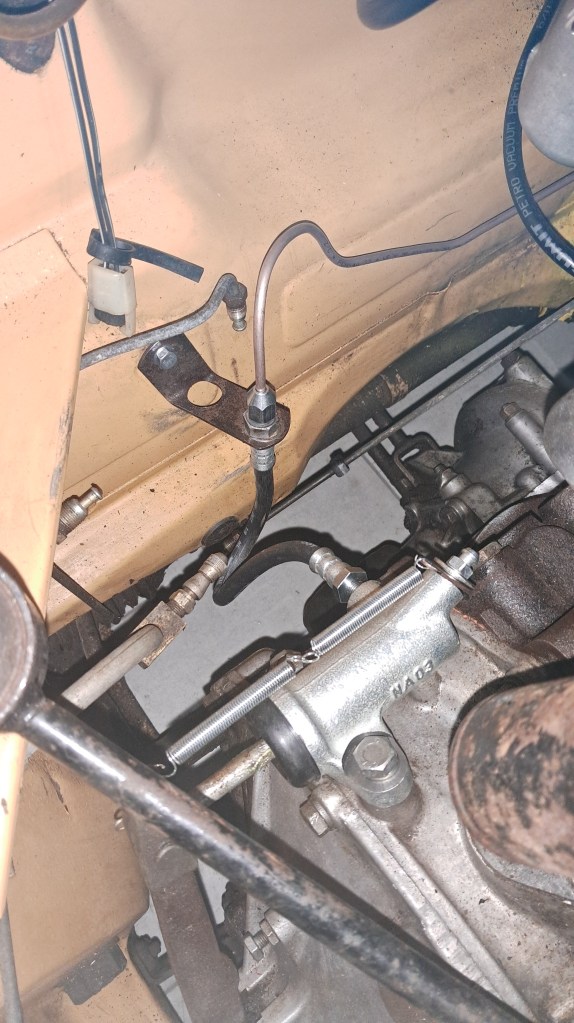
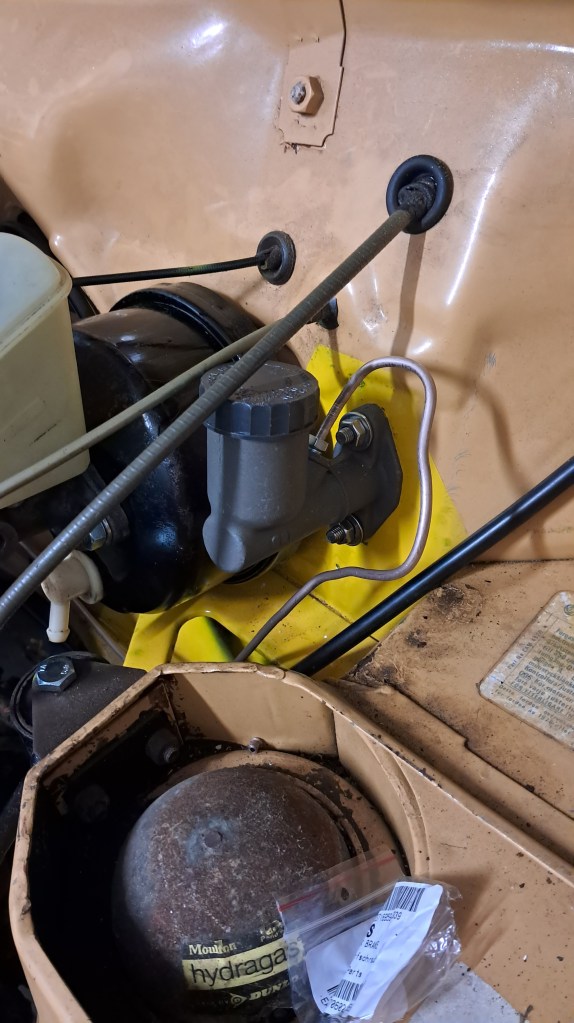
First of all Agnetha had another subtle modification: Allegro hydraulic components can sometimes be difficult to track down – particularly in “foreign lands”. I’ve dismantled the brake master cylinder and the Allegro Club sent me a repair kit, so let’s hope a rebuild will get that working. The clutch master, however, was a non-starter. Having read in the club magazine about substituting Land Rover Defender hydraulics since they’re very similar mechanically and spares are plentiful, I decided to give that a whirl. Apparently the components can (if you’re lucky) more-or-less bolt on to the original Allegro fittings. Then it’s just a case of making new lines, which had to be replaced anyway.
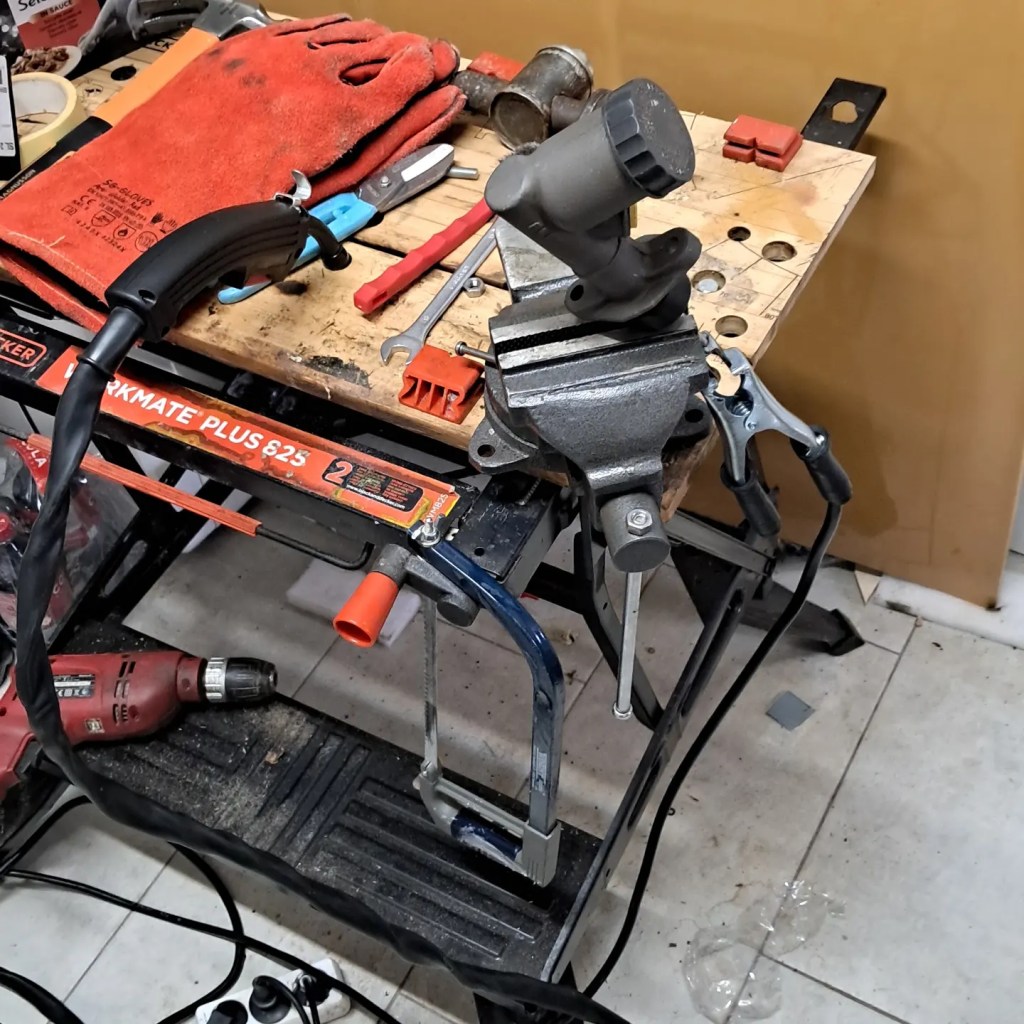
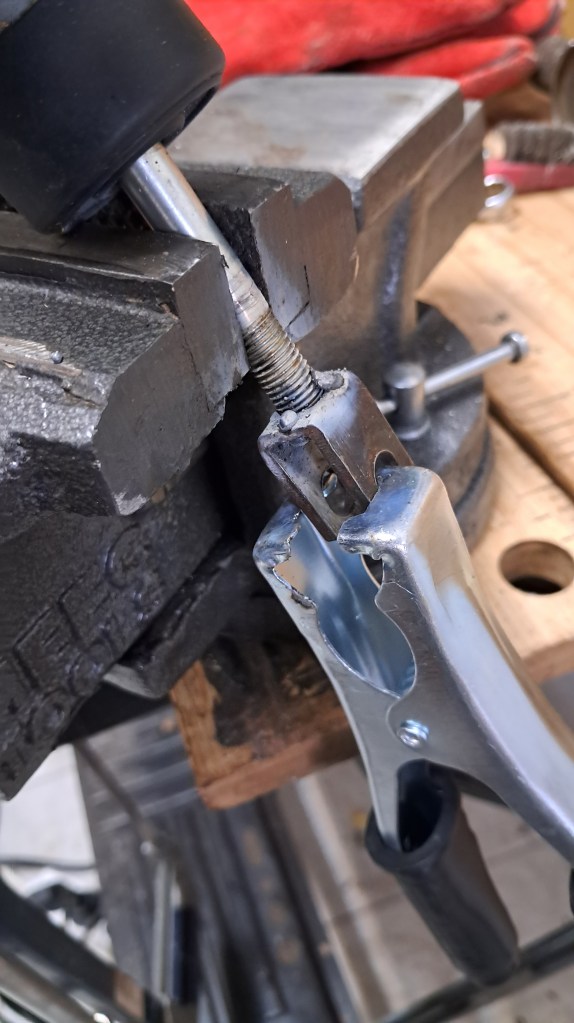
And it worked out really well. The master cylinder did indeed drop right into the bulkhead and the only slight modification I needed to do was to the cylinder connecting rod in order to make the brake pedal mate with it properly. Best of all: the clutch itself actually works!
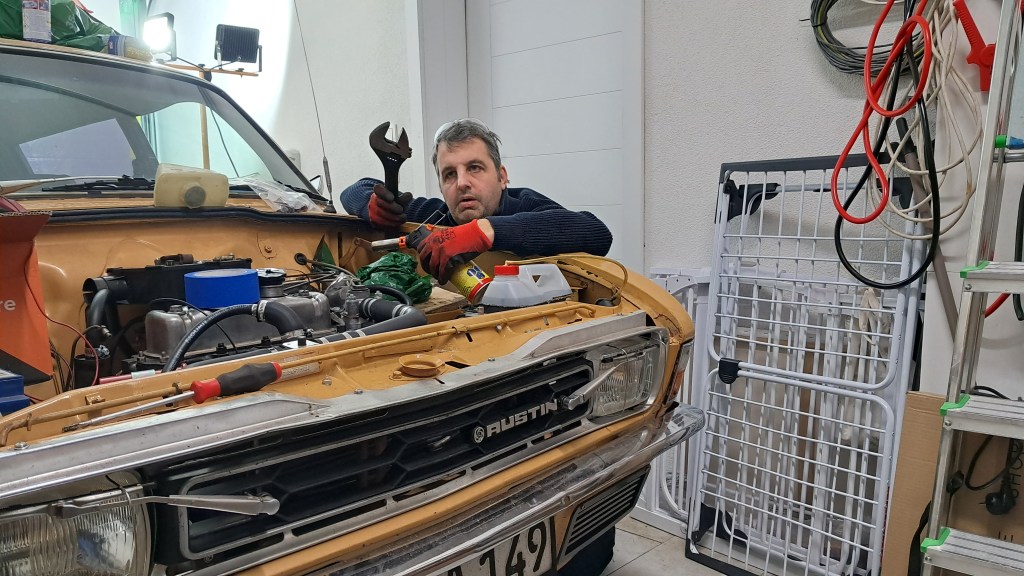
Agentha then received a brand new radiator, cooling fan and water pump. I bought a cheap NOS radiator for an Austin Montego that was the same dimensions but with different fixings, so a little bit of careful fabrication was needed. There is an unnecessarily long and detailed video about it here:
This was quickly followed-up by another video in which we stopped the dribble from the expansion tank:
The excessive noise of an A-series engine running without an exhaust did not go unnoticed, and so yet another follow-up video pressed Agnetha’s long-dead exhaust back into action:
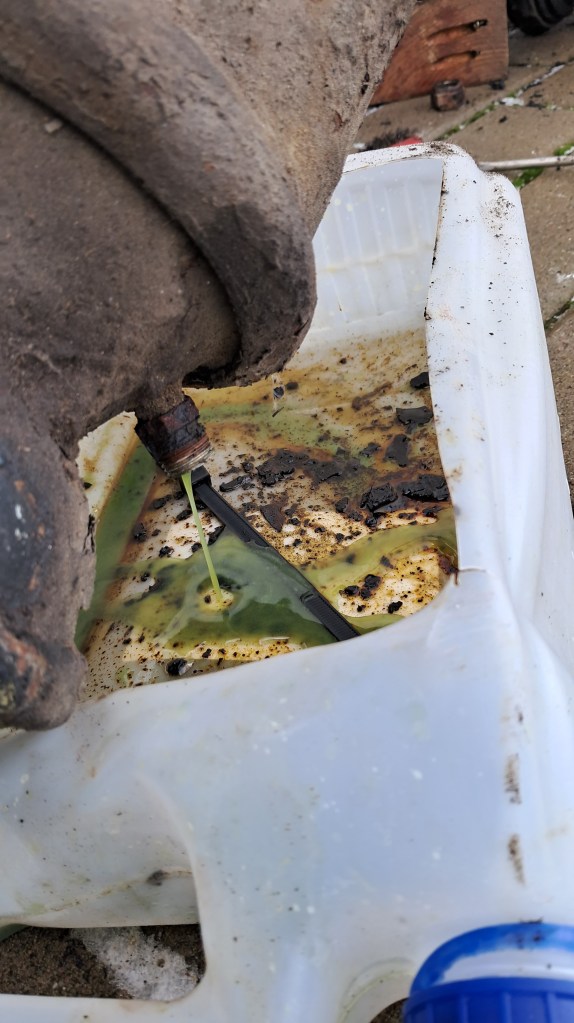
Following all that driving around and excitement, Agnetha unfortunately found that she could no longer holder on to her oil, and she made a little mess. I originally thought it was the gear selector seal but it turns out the left and right driveshaft seals and bushings are shot. Not a big deal! We can get that fixed early in the the New Year. Once I’d cleaned up it was then full speed ahead to get the headlight wipers working…ish:
Since she’s no longer holding oil it seemed like a good time to get her up on the auld bricks again and start by dismantling the brakes, then take a good look at all the gubbins on the underside:
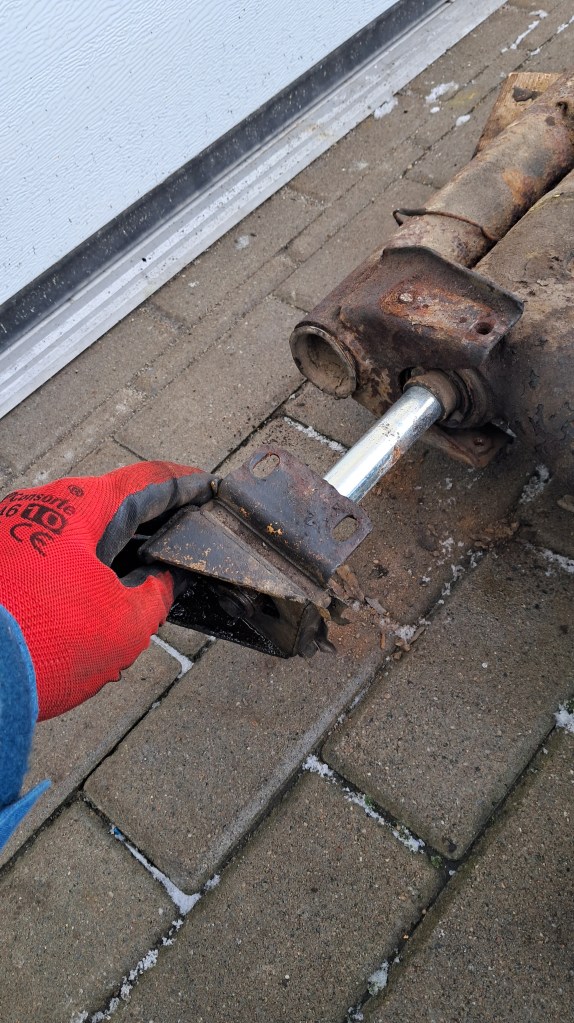
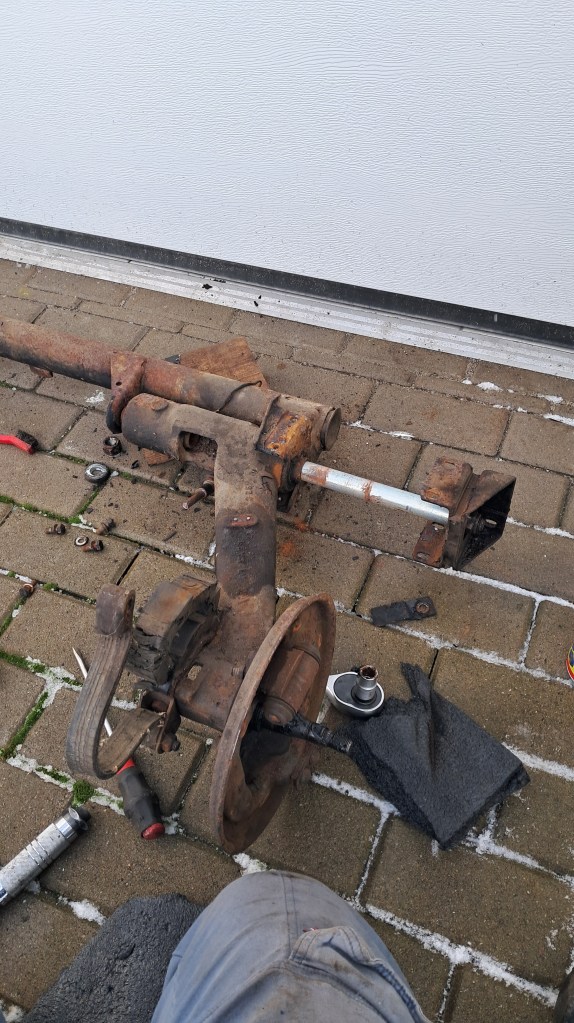
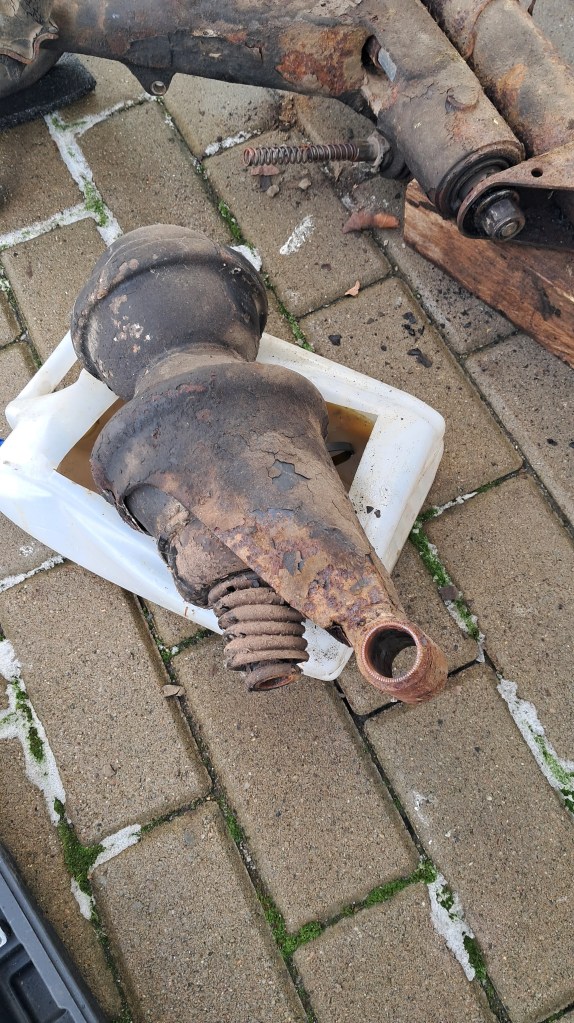
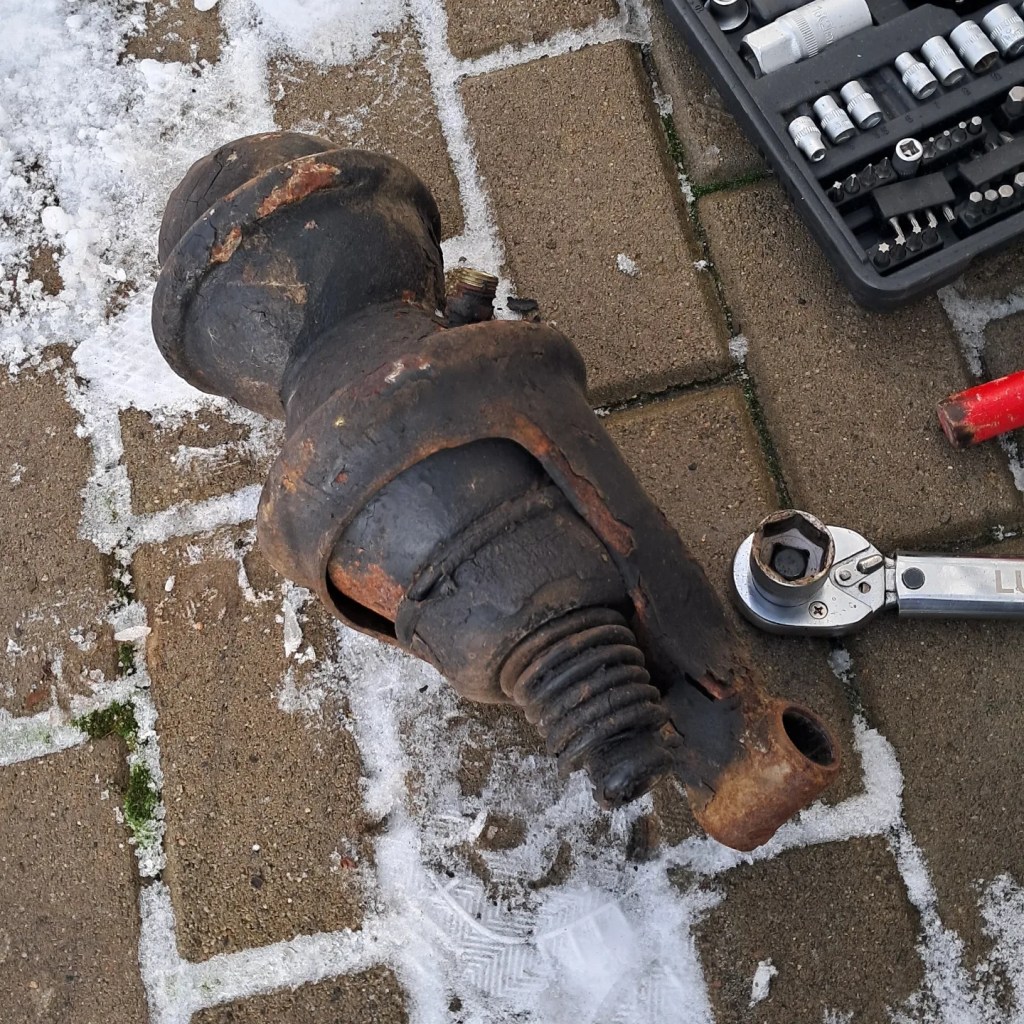
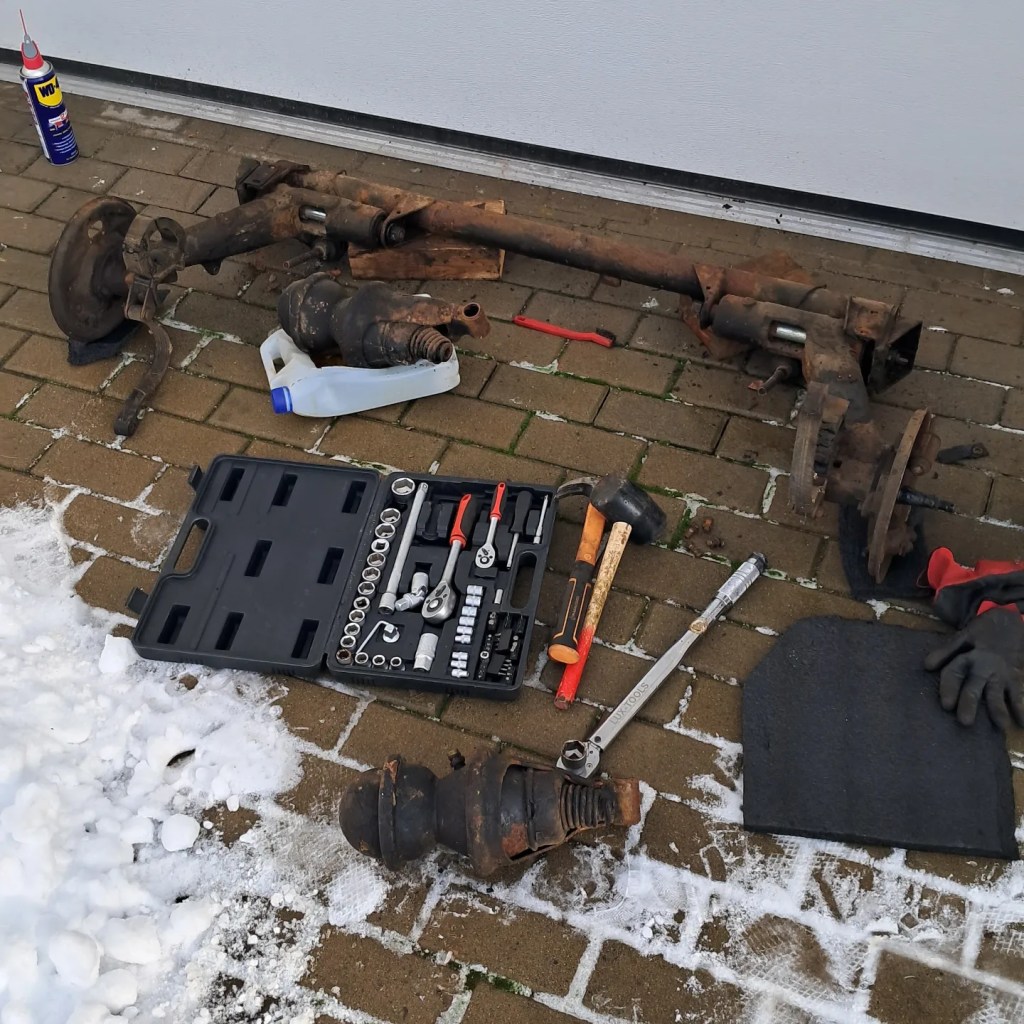
As of now I’ve removed the Hydragas fluid lines, all the Hydragas displacers, the fuel line, all brake lines and partially stripped the cross-tube assembly. The Hydragas lines are knackered and need to be completely replaced, and we’ll see about the displacers. I plan to send them off for an expert opinion but budget-restraints mean that won’t happen immediately.
The good news is that this completely dead car that arrived just over one year ago is well on the way to a complete recovery! I can finally write down all the jobs that need to be done to get her ready for a vehicle inspection and put them roughly in order, and I’ll reveal that in the next post very soon.

 Projekt Agnetha