
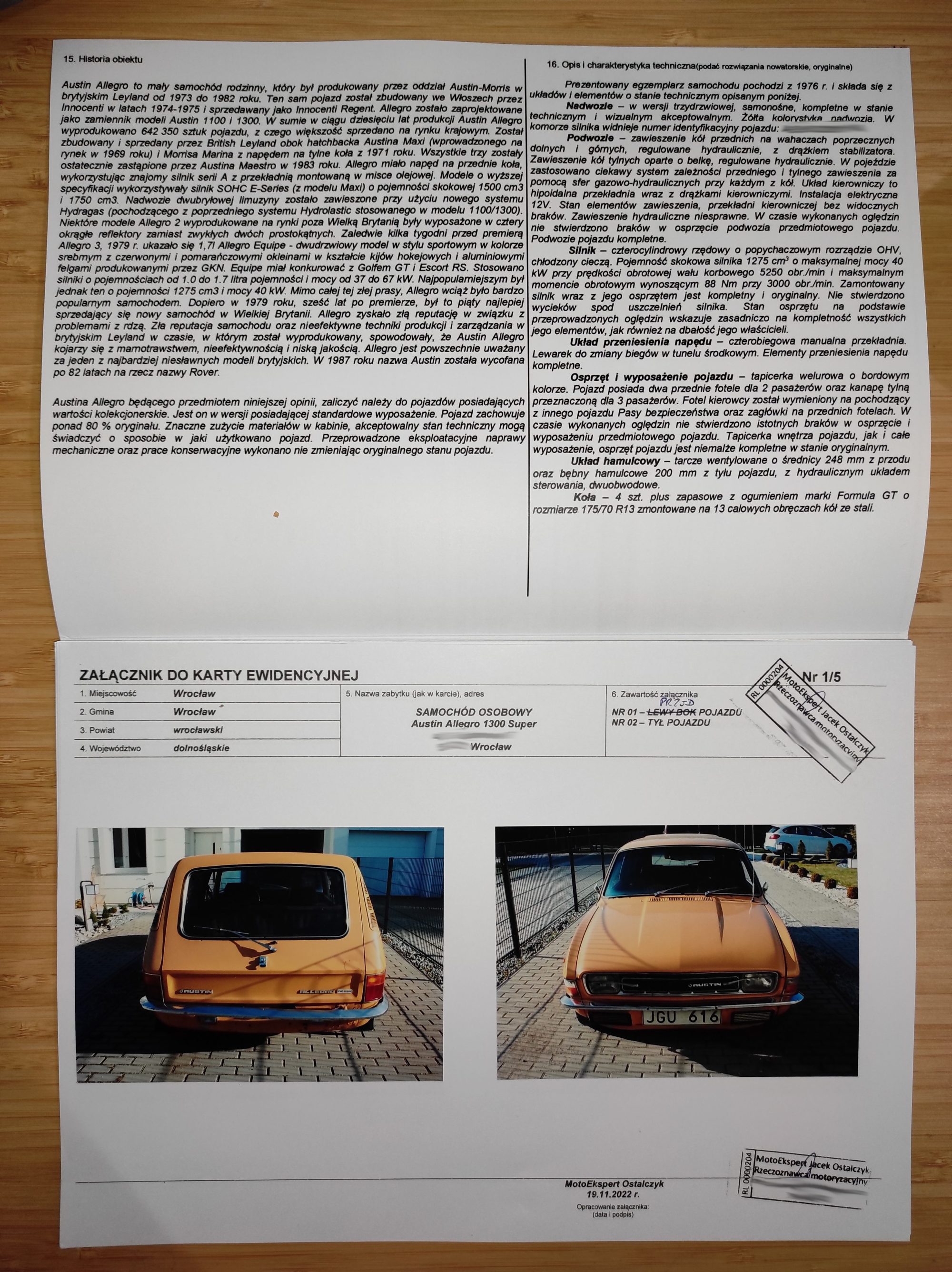
I think Agentha is at least 12 months away from being ready for the road, which gives us time to put some paperwork through so we can get her inspected and registered as soon as she’s ready. We have two options for registering Agnetha: “White plates” which are the norm (unless you have an electric car, in which case you get “green plates”), or “yellow plates” that are reserved for historic vehicles. The yellow plates are easily recognised not just for being yellow but for having a cartoon outline of a prewar-style car (not sure if it’s a real car or not), which I think is very cool indeed.
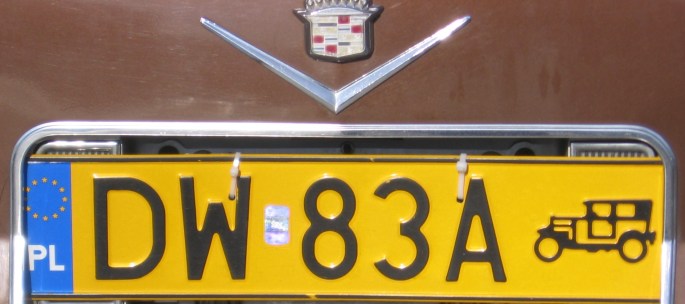
With the yellow plates you get a few perks: The vehicle only needs to be insured when you use it instead of all year round, so if I only want to drive Agnetha in the spring and summer I don’t need to insure her for autumn and winter. There are also discounts for insurance too. The vehicle can retain its original light and sound signals, and – while this won’t apply to Agnetha – they only need to be inspected once as long as the vehicle doesn’t carry passengers. Agnetha needs to carry passengers, however, and I’m a bit of stickler for safety, so she’ll be getting inspected annually.
Historic status isn’t automatically granted though. The requirements are quite strict:
- The vehicle must be older than 30 years
- The vehicle must have been out of production for at least 15 years
- It must feature at least 75% original components
That said, the final decision lies with the Conservator of Monuments for whichever region of Poland you live in. Every application is considered case-by-case and they may accept a vehicle that doesn’t meet the requirements, or vice verse. This article explains it.
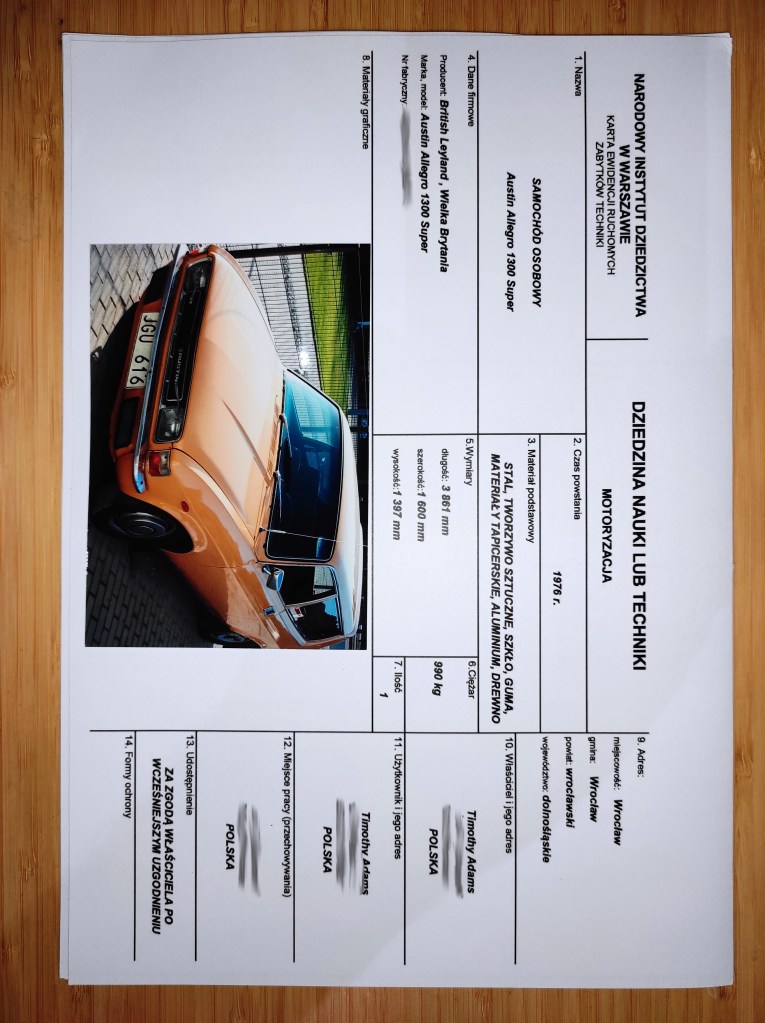
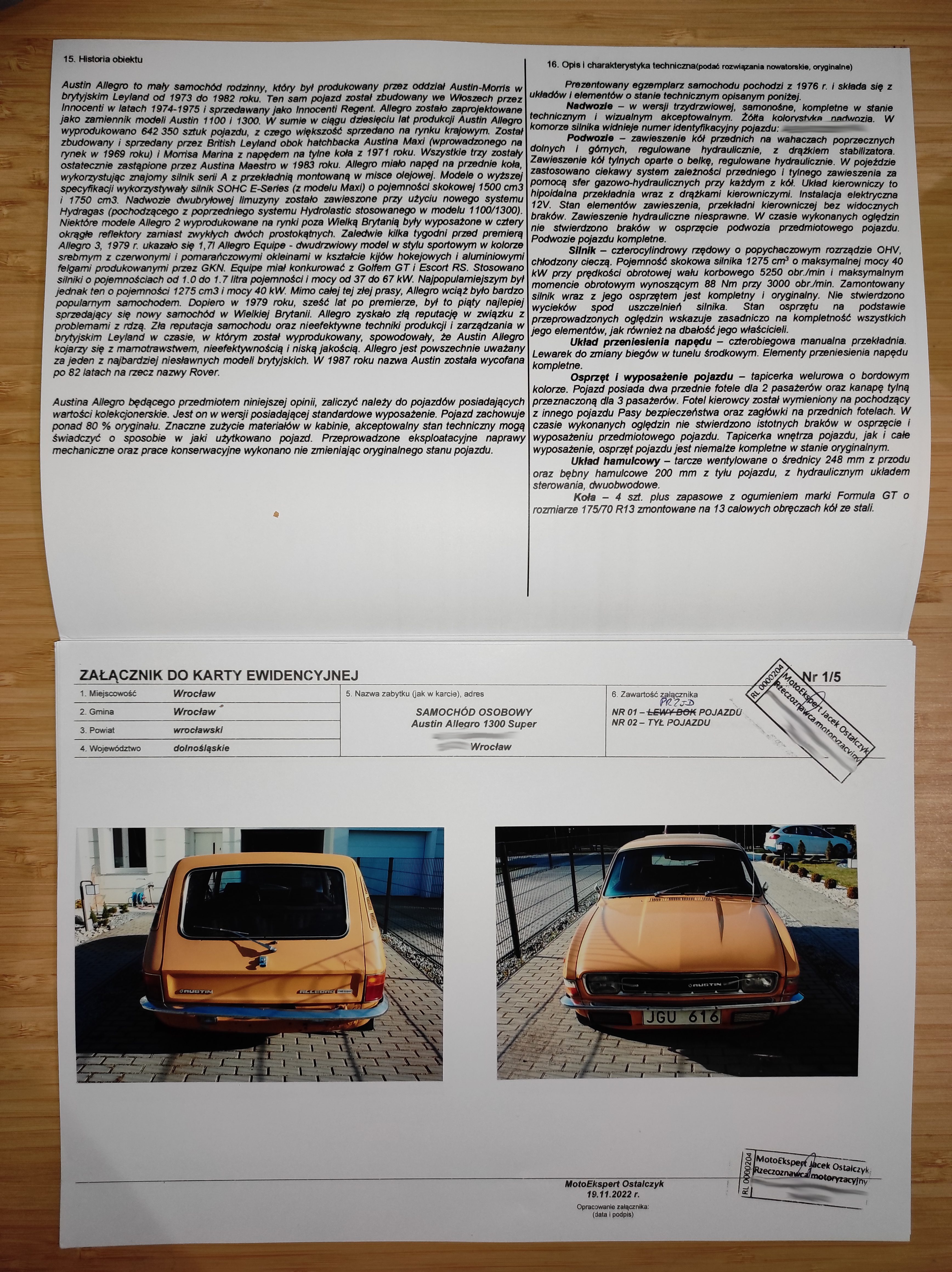
The application process is not trivial either. The Conservator needs a report written by an approved expert including photographs, technical specs, a description of not only the specific vehicle, but also the significance of the manufacturer and the model’s place in history, it has to be printed on a specific type of paper, 3 original copies, etc. etc. It is very detailed and not cheap! Once the report is delivered, it’s basically a case of stick it in an envelope and post to the Conservator. Here’s Agnetha’s application, and it’ll go in the post tomorrow:
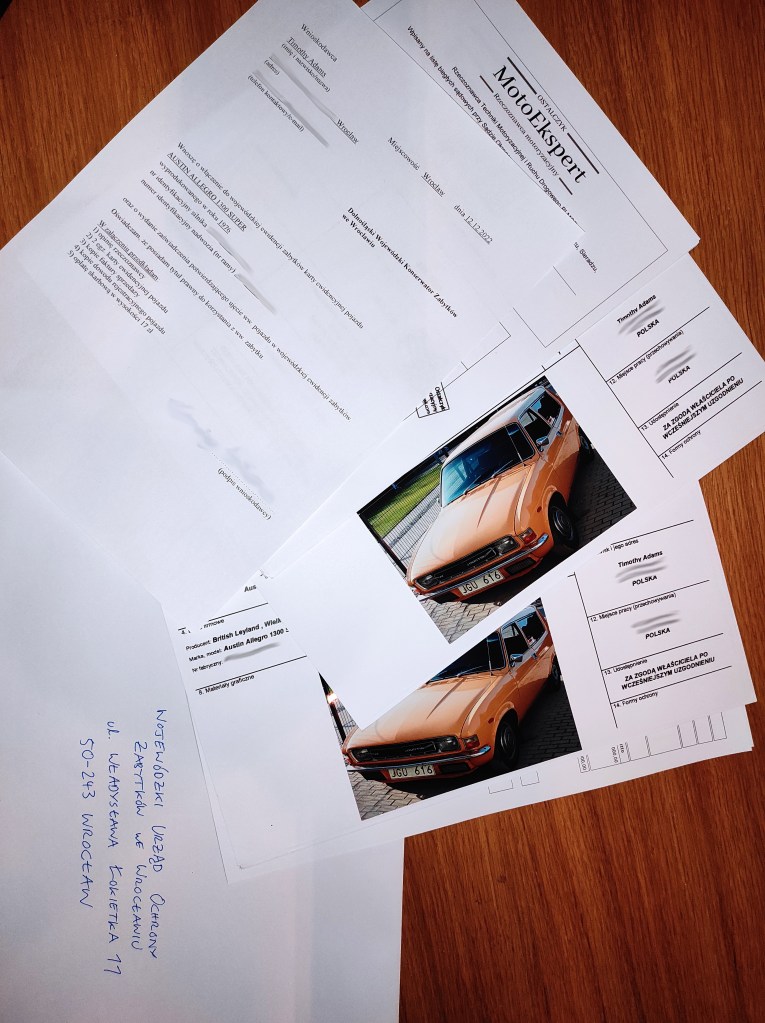
All being well, we should get a certificate confirming Agnetha to the inventory of historic vehicles in Lower Silesia. With the certificate granted, and provided I’ve done everything possible to ensure the car is safe to drive, I can obtain temporary registration plates which allow the car to be driven to a test station for a technical inspection – this will be her first drive on public roads since 1989! If that passes, we can finally get yellow plates and at last crank up the miles. Fingers crossed for that certificate…

