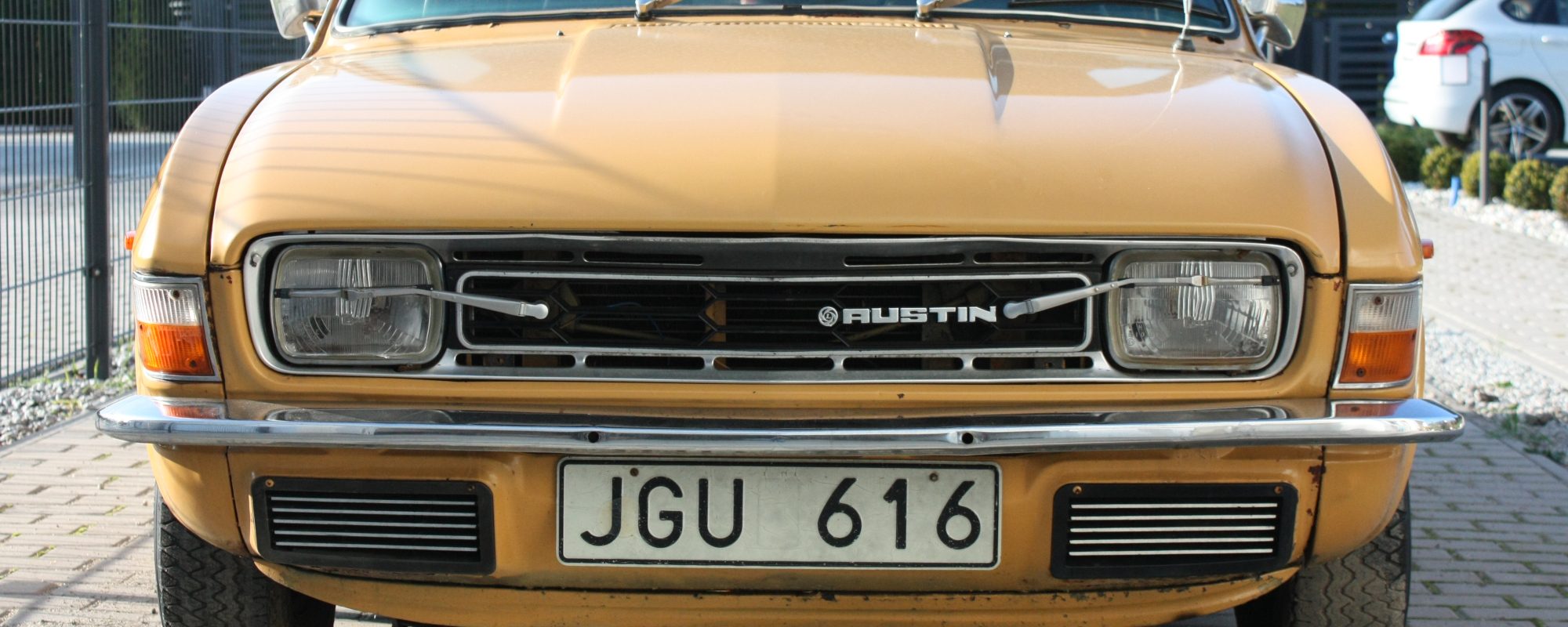
Headlight Wipers, New Metal and General Tinkering

Oops, 3 months have passed without an update so here’s a rushed and hastily written brain-dump of the latest developments.

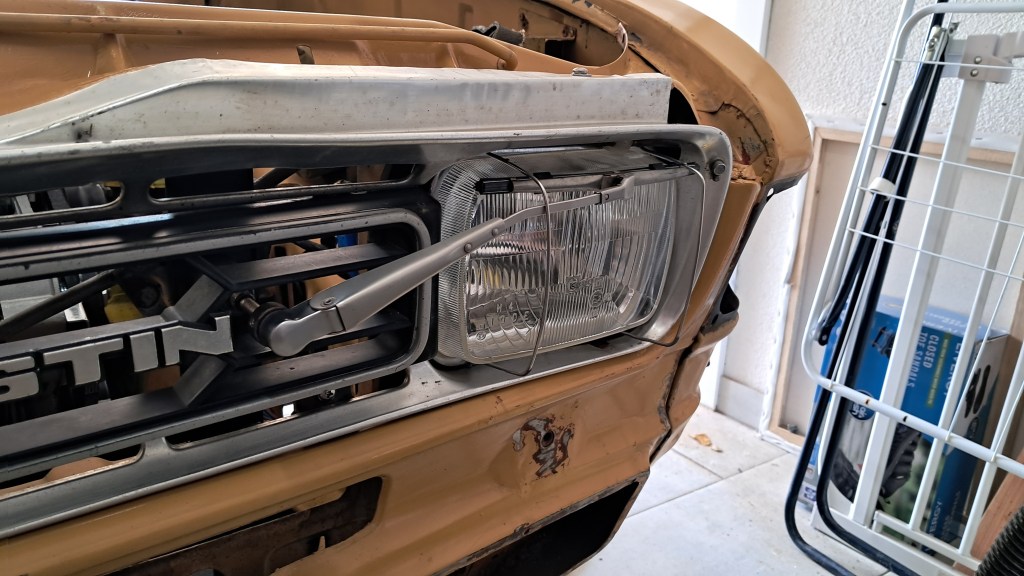
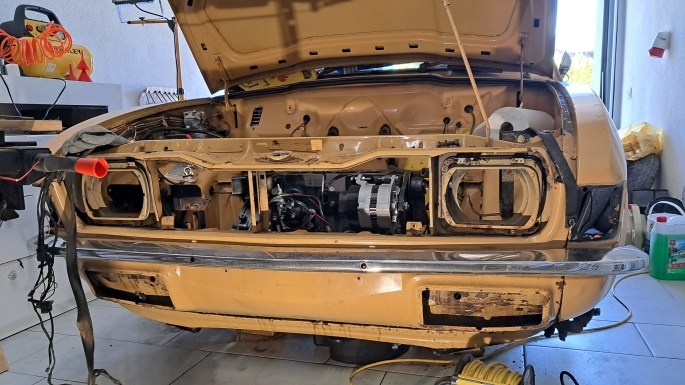
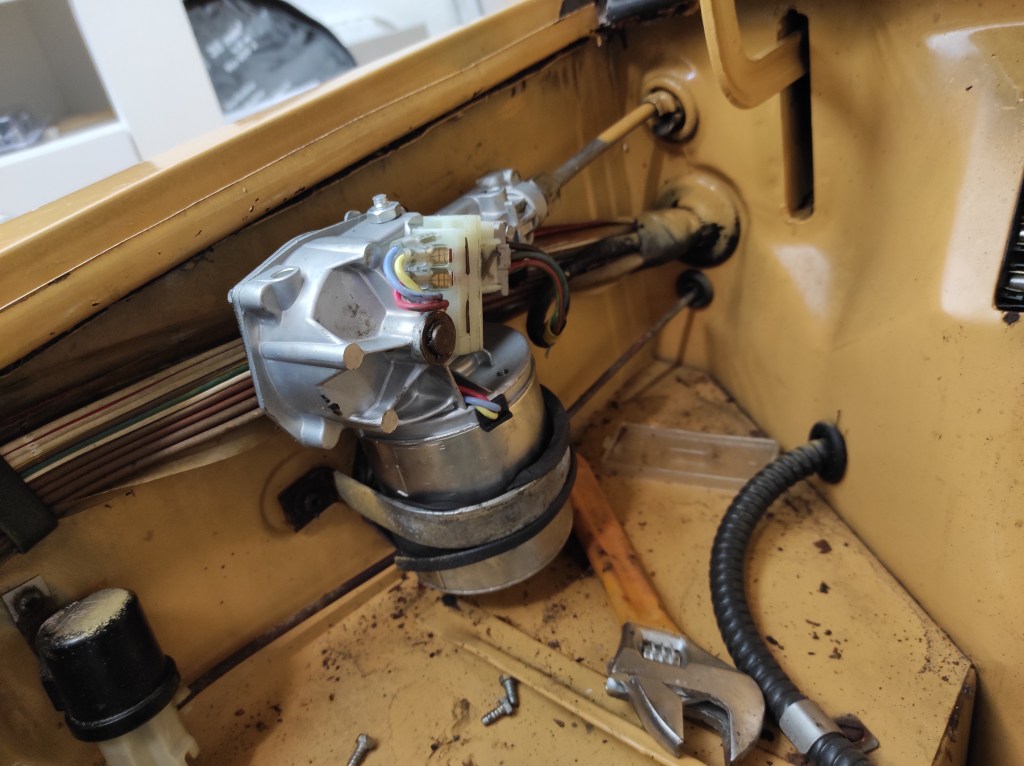
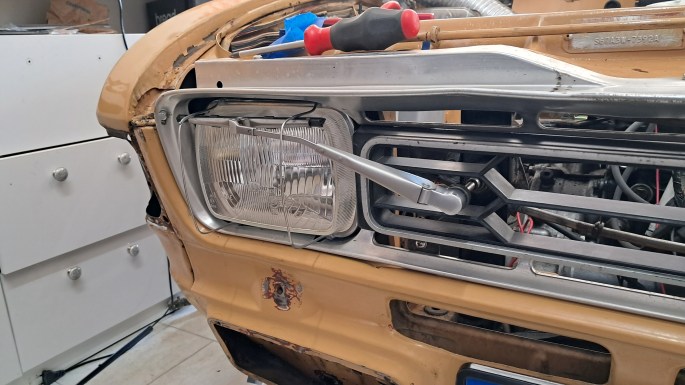
For of all – the headlight wipers are working! After replacing the original, heavily corroded headlight clusters with new old-stock units from Ciebié I decided to tackle the Allegro’s “party piece”. There’s nothing special about the mechanism: Just the usual Lucas windscreen motor drive used on probably all BL cars from the era. The gearbox has a shorter throw than on the windscreen wiper drive and that’s about it. As I found out though, the throw still isn’t quite short enough…
The problem was no matter how I adjusted the wiper arms, they always swept too far and pinged off the surface of the headlight. After looking at photos of other Swedish Allegros I noticed something missing from Agnetha: Each headlight should have a kind of “cope cage” around it to hold the wiper in place and stop it pinging off! So I had a good look at the old headlight units and the trim section that surrounds it; sure enough on the trim section there were the remains of steel wire that had once been welded there. It seems the entire headlight wiper assembly is a hack that was thrown together at the last minute to make the Allegro compliant with Sweden’s then-new regulations requiring headlight wipers on all new cars.

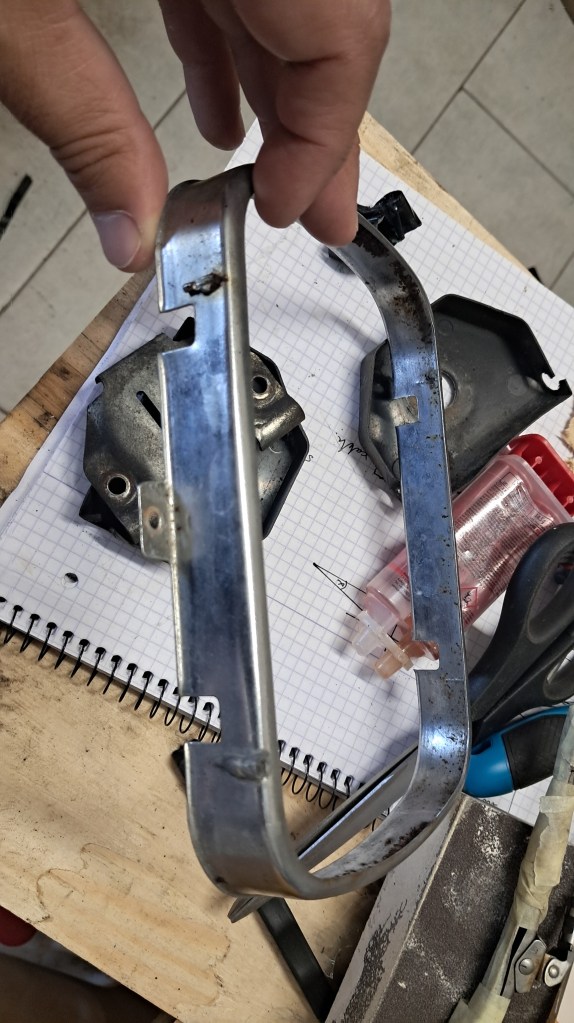
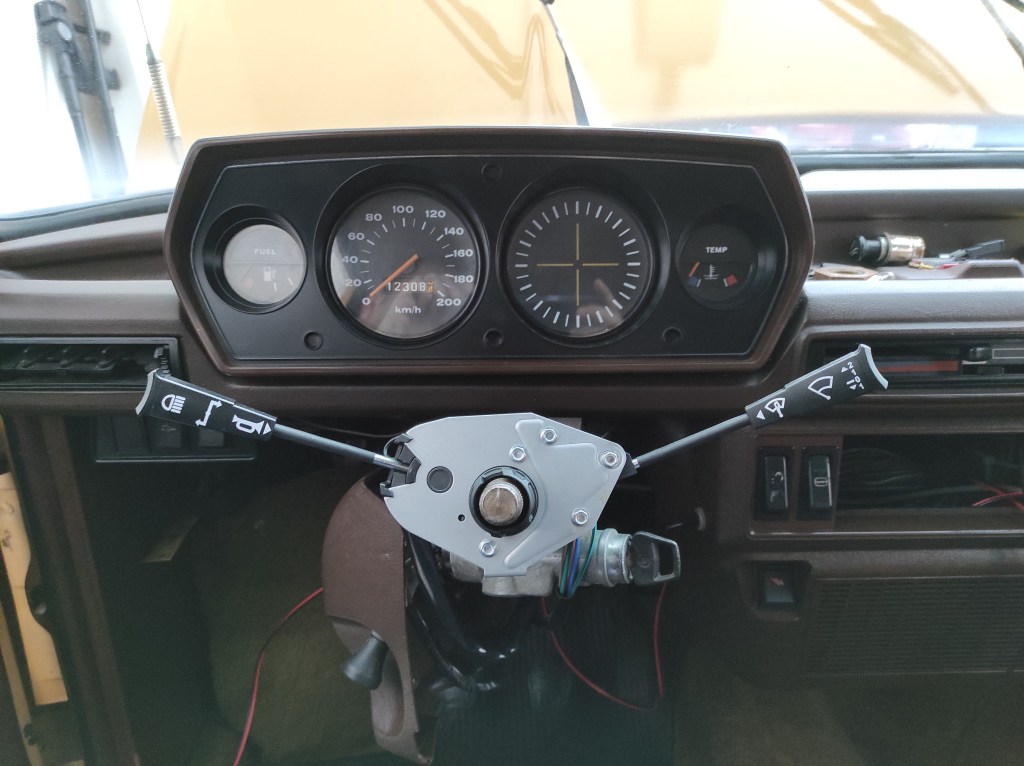
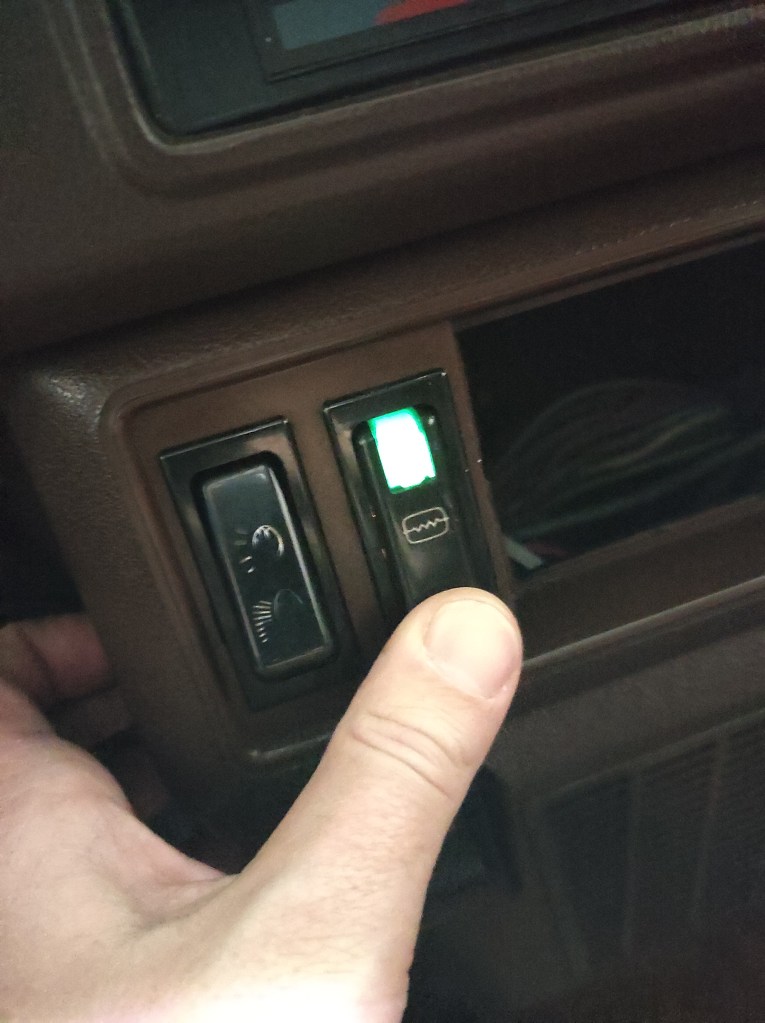
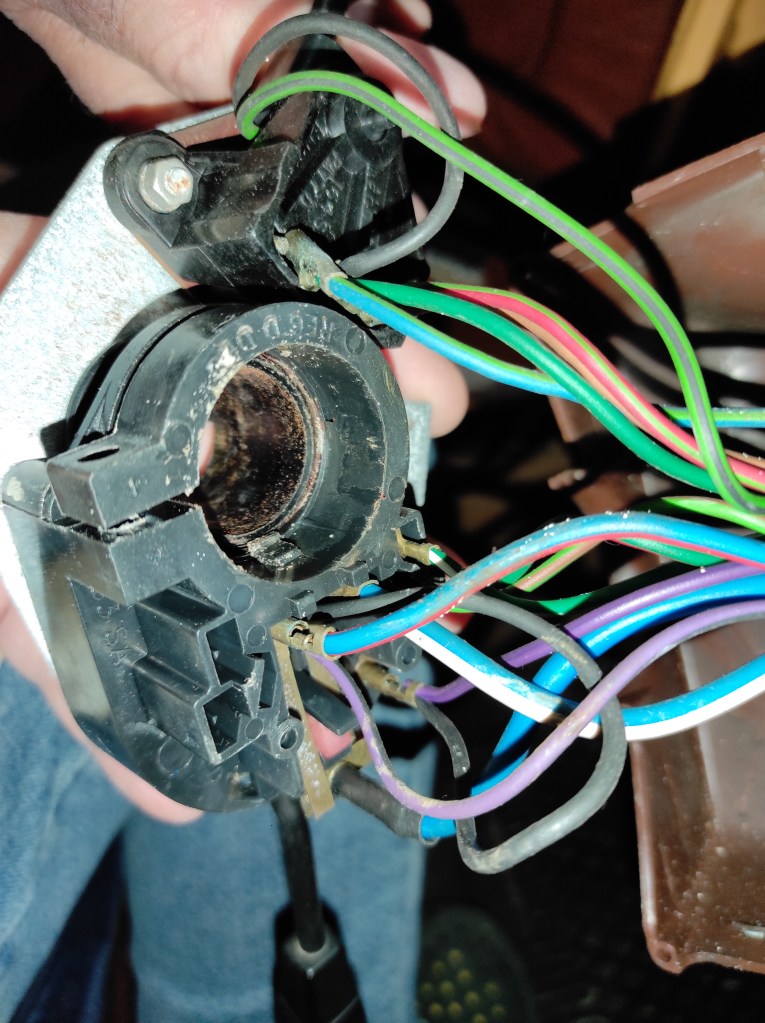
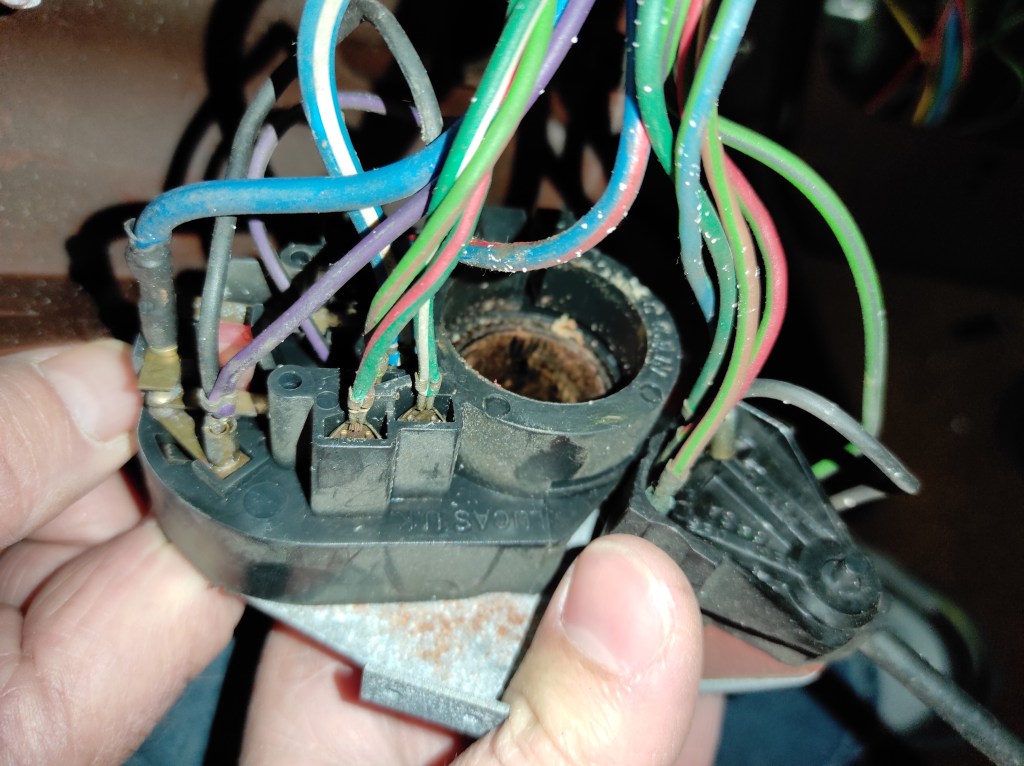
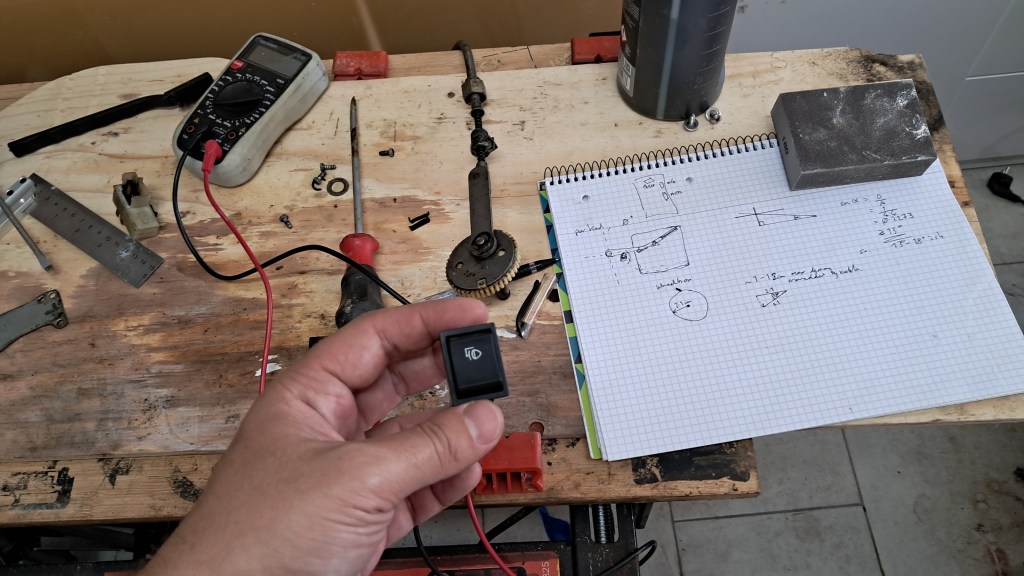
I ordered a length of stainless steel wire and fabricated (i.e. bent) 4 sections to attach to the headlight surround. There are no drawings for this (and probably never were) so it was all guesswork. As for attaching to the surround I used a kind of epoxy resin with aluminium particles – not sure if it really adds strength but it looks metallic at least. The next obstacle was the little Lucas switch the sits next to the windscreen wiper switch under the dash. I’ve learned to respect Lucas components and most of them tend to be over-engineered and generally indestructible, but their rocker switches can get in the sea. Horrible things. The switch is kind-of working now but I will have to ask the spares club for a new one to use in the long-term.
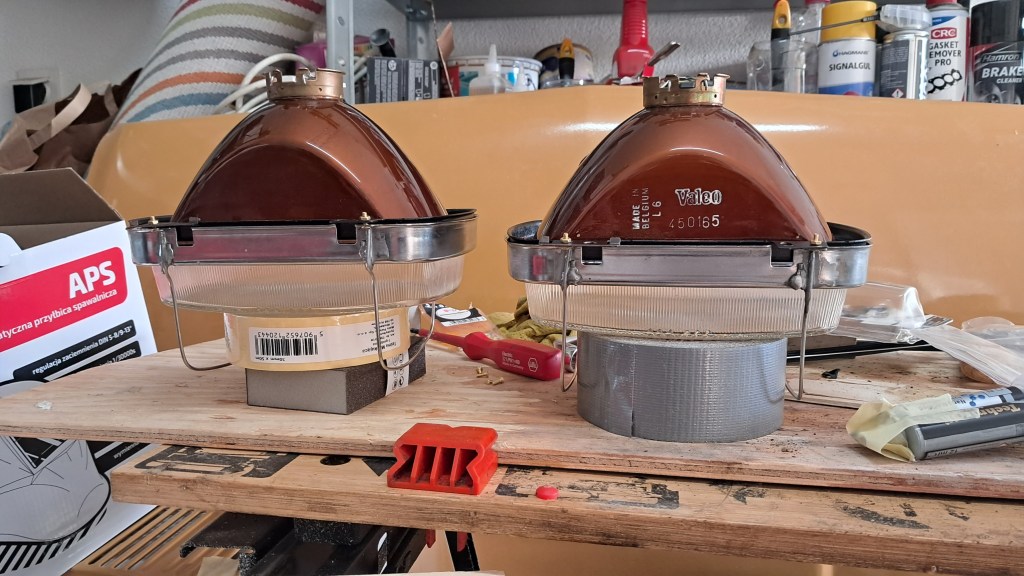
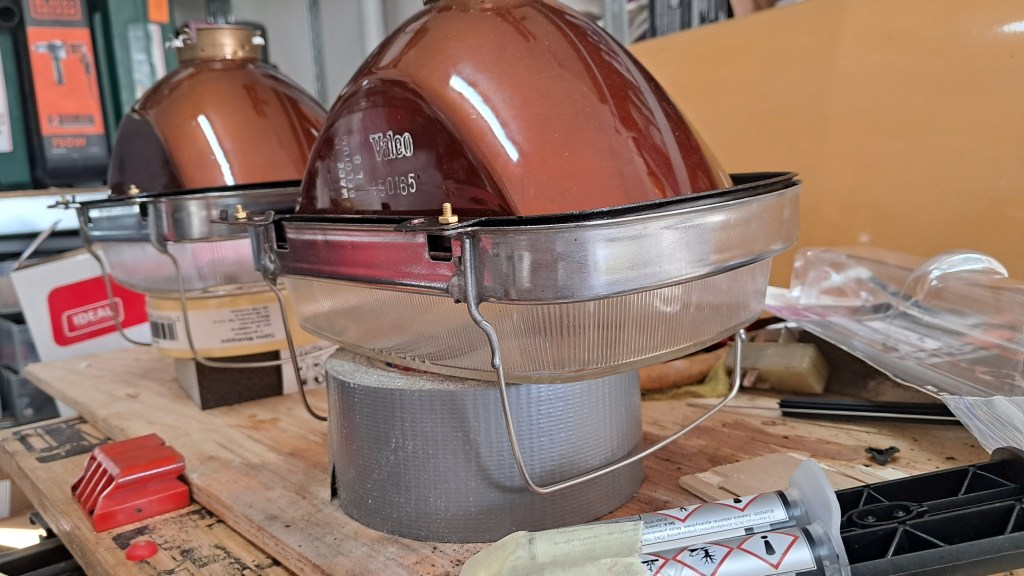
With everything back in place I tested it once more and – while it’s painful to see the entire mechanism strain each time the cope-cages catch the wiper blades – I was quite chuffed to see it working again, although I wouldn’t trust it in battle. It’s good enough for showing off at car meets though.

I think the really interesting part about this is that it gives us a tiny insight into how BL worked in those days. Given all their other problems, that they went to all this trouble to sell maybe a few hundred cars to a country that had the likes of Volvo and Saab as a domestic manufacturer tells us a lot about how BL was being pulled in all sorts of random directions by various forces, internal and external. It seems absolutely bonkers now that they would bother at all.

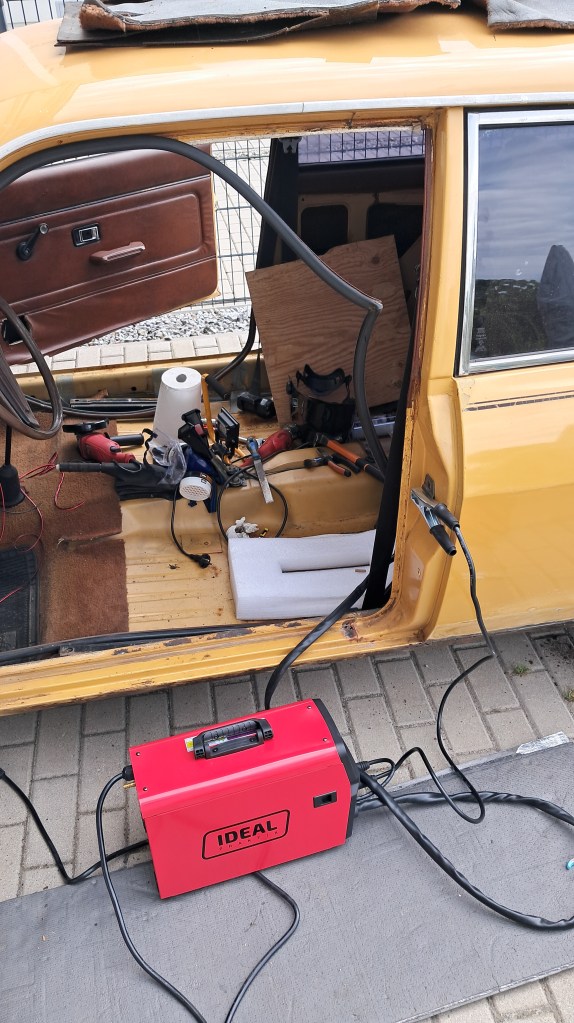
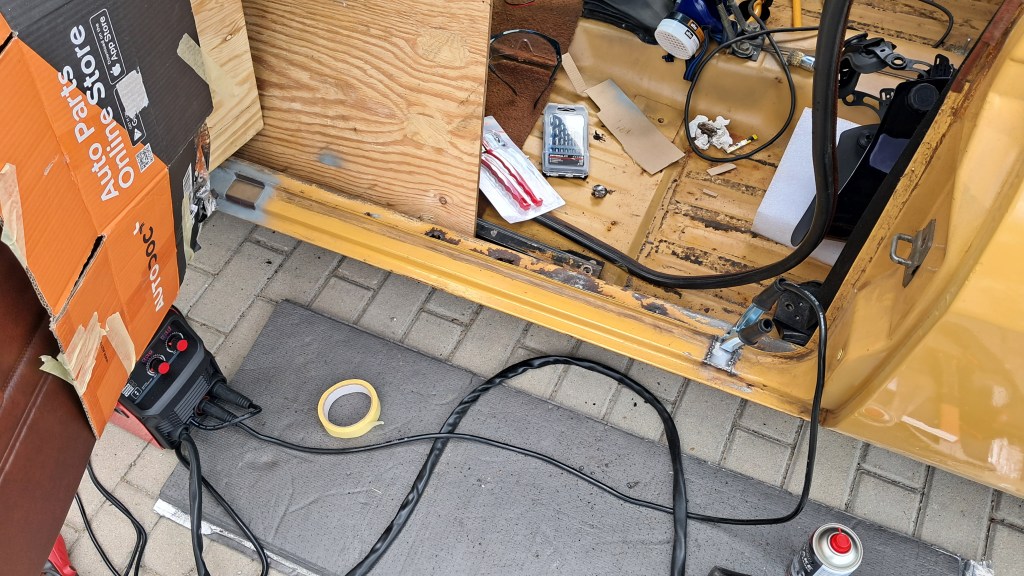
The other big news is – true to form – I’ve gone back on previous statements about not wanting to do the welding and bought myself a MIG/fluxcore starter pack. Fluxcore makes sense because I have to weld outside so shielding gas isn’t going to be very effective. The welds are definitely not beautiful but that’s more to do with my complete lack of skill than bad equipment. Besides, all it takes is to keep the vehicle inspector and his little hammer happy. This starter pack from Ideal is fantastic and everything worked right out of the box. The only extra kit I bought was an automatic welding helmet which is also a dream to work with.

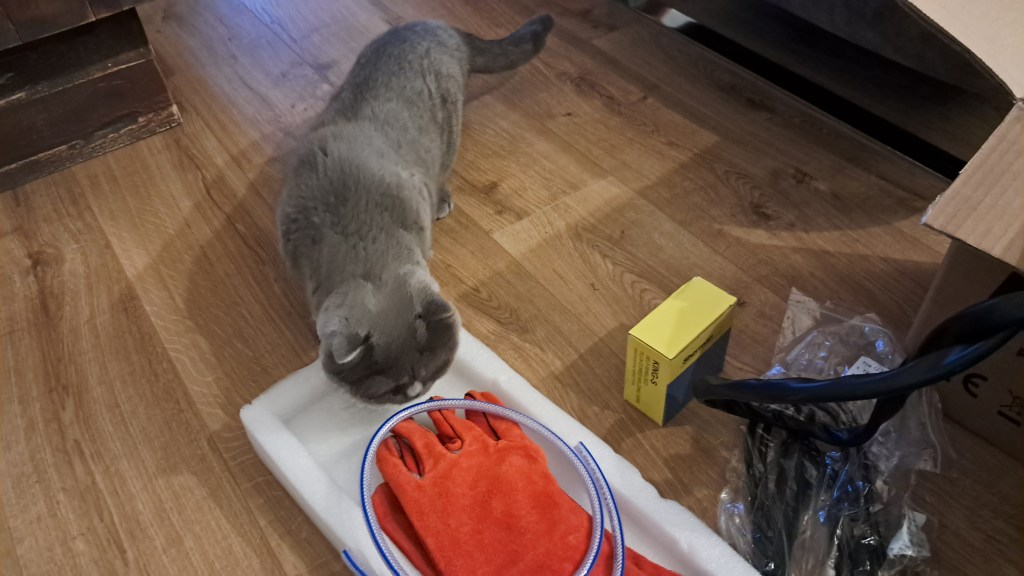
So I had a couple of weeks removing the rot (which wasn’t much, all things considered) and replacing it with shiny new sheet steel. Most of the inside of the body is now solid again. The outer sills, rear arches and a tiny part of the floor pan still need to be welded but this requires going underneath the car, so that’s on the back-burner.
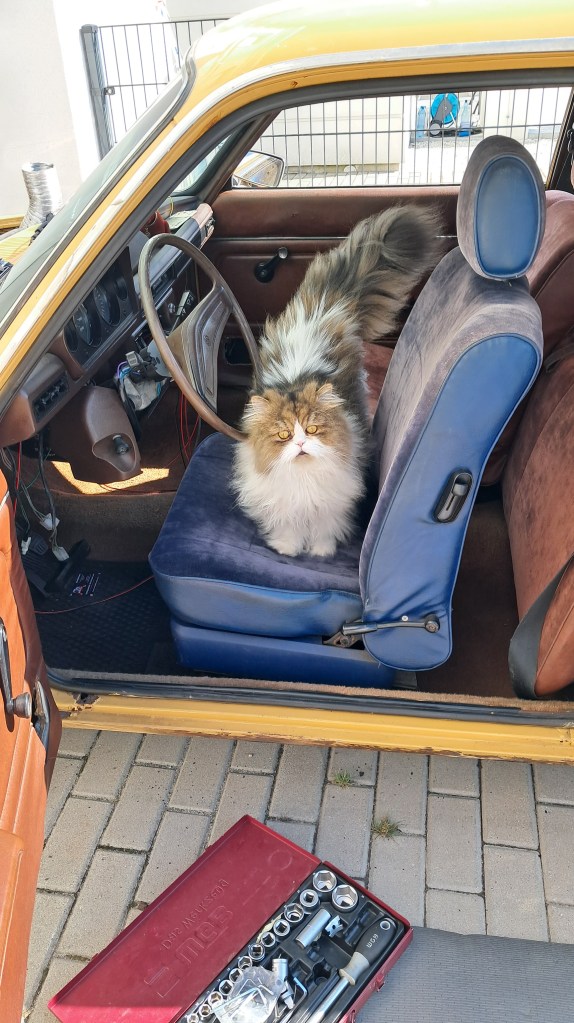
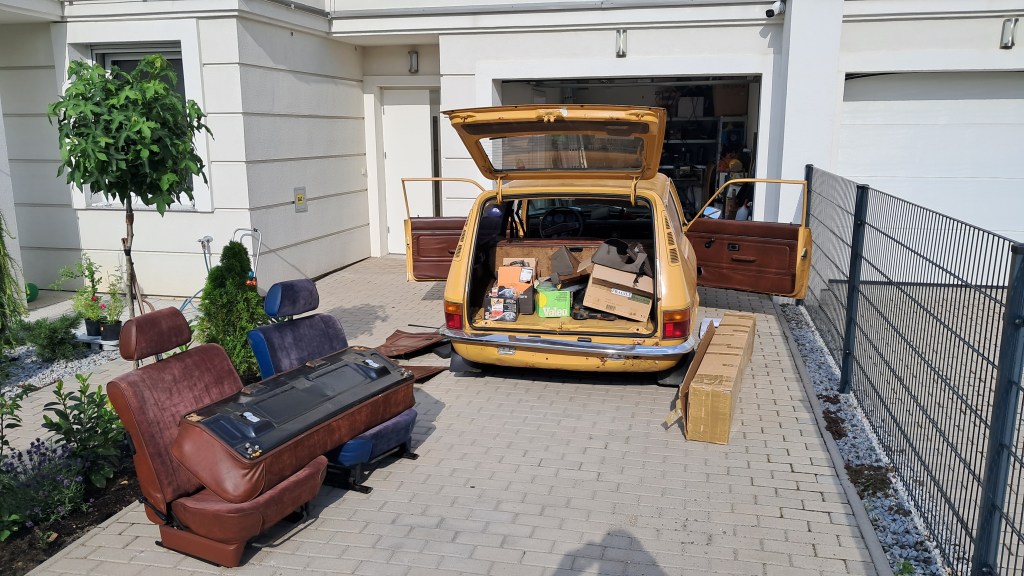
Having got this far I’ve been doing smaller jobs and trying to figure out if/how the hydraulics can start to work again. None of this was particularly interesting so here’s a bullet-point summary:

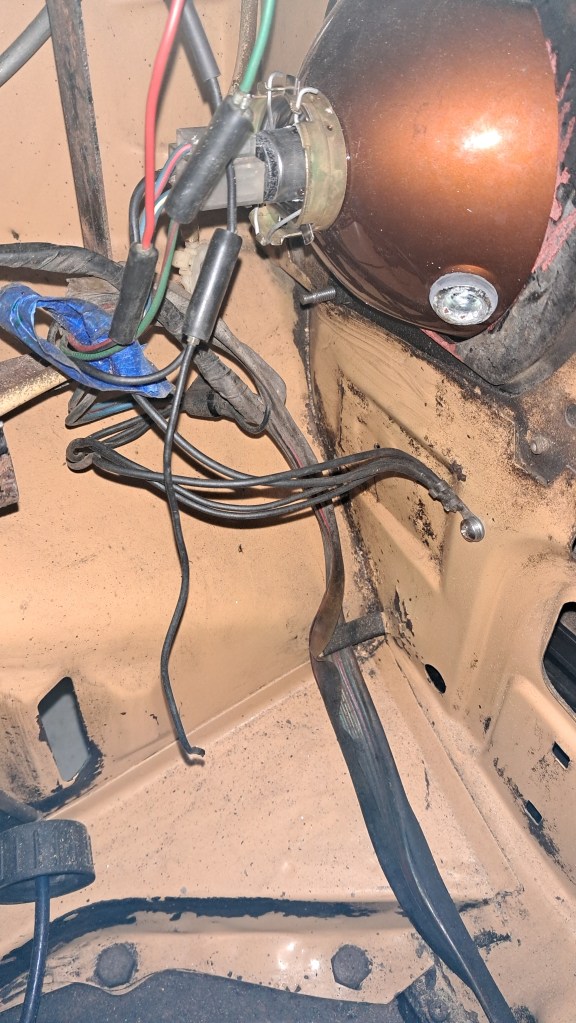
  • Fixed the front-left lighting earth point in the engine bay.
  • Replaced the corroded bulb holders in the indicate/sidelight clusters.
  • Freed-up the seized adjustment rails on both the driver and passenger seats.
  • Tested the radiator for leaks with supermarket cola – positive result: It leaks!
  • Tested the electric radiator fan – it doesn’t work but probably just needs cleaning/new bushes.
  • Sourced a Land Rover clutch pump to replaced the destroyed Girling pump.
  • Freed-up and dismantled the brake pump – it should live again with a clean and rebuild.
  • Got the handbrake working – really easy, only needed adjusting.
Right now I’m pressing ahead with the hydraulics. It still lacks cooling, but given a working clutch, a new radiator, thermostat and some pipework she could finally start to move under her own power. That would really be something.
Agnetha Finds Her Voice

Ok, so her exhaust fell off and had to be cut in half when it became wedged in the floor pan, but otherwise the partial engine rebuild was a complete successful – she’s a runner! I caught the first start since untold decades (which I wasn’t really expecting!) on the GoPro and made a video about it. Includes much rambling and waffle. Next job is to get a radiator on it so we can run it up to temperature and see if the smoke dies down.

Engine Progress

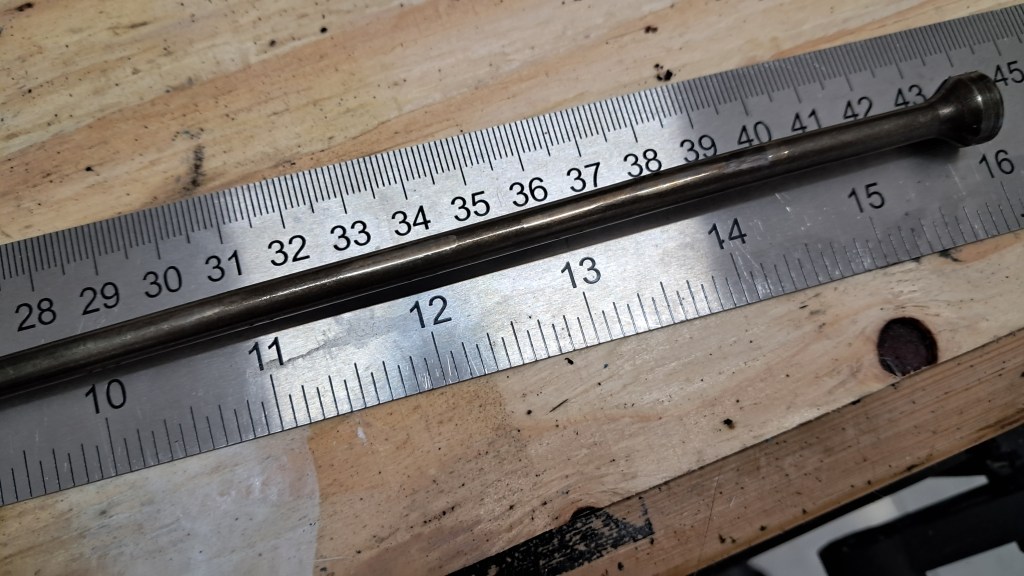
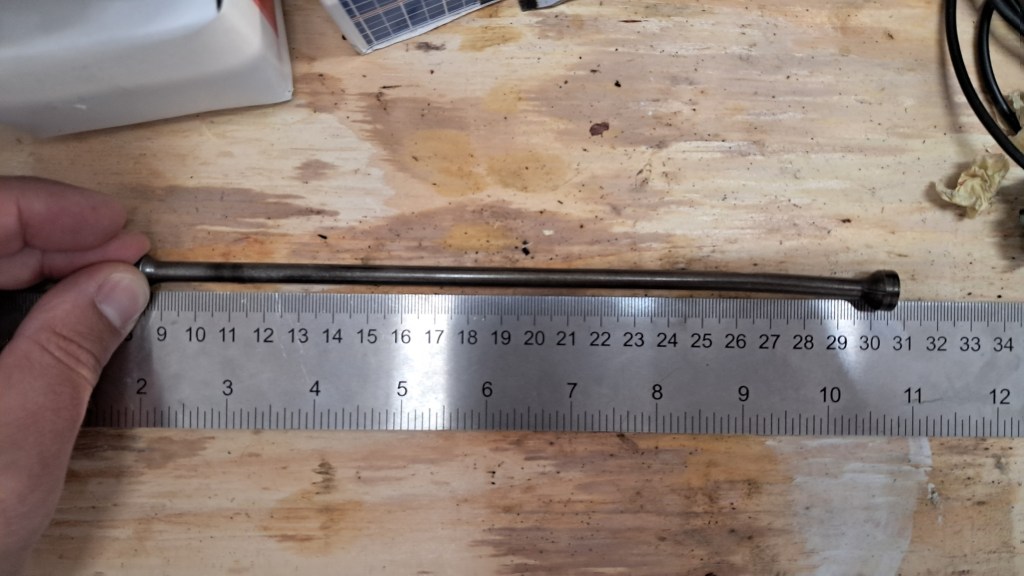
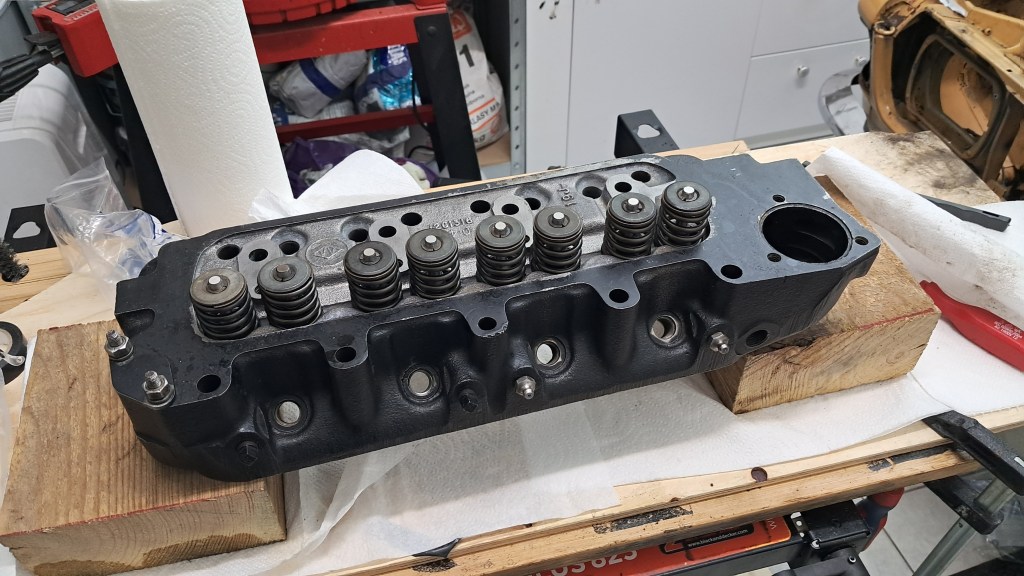
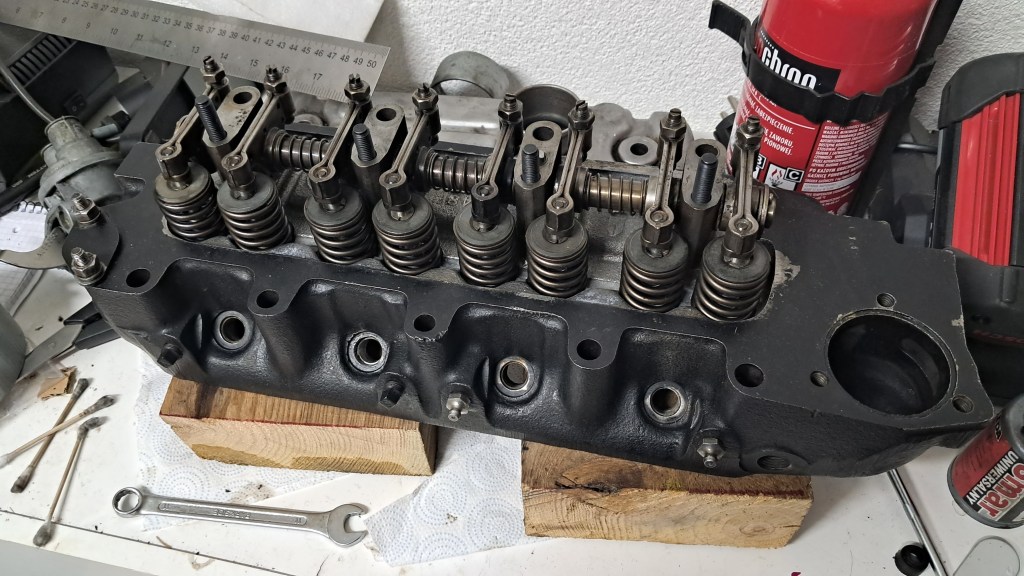
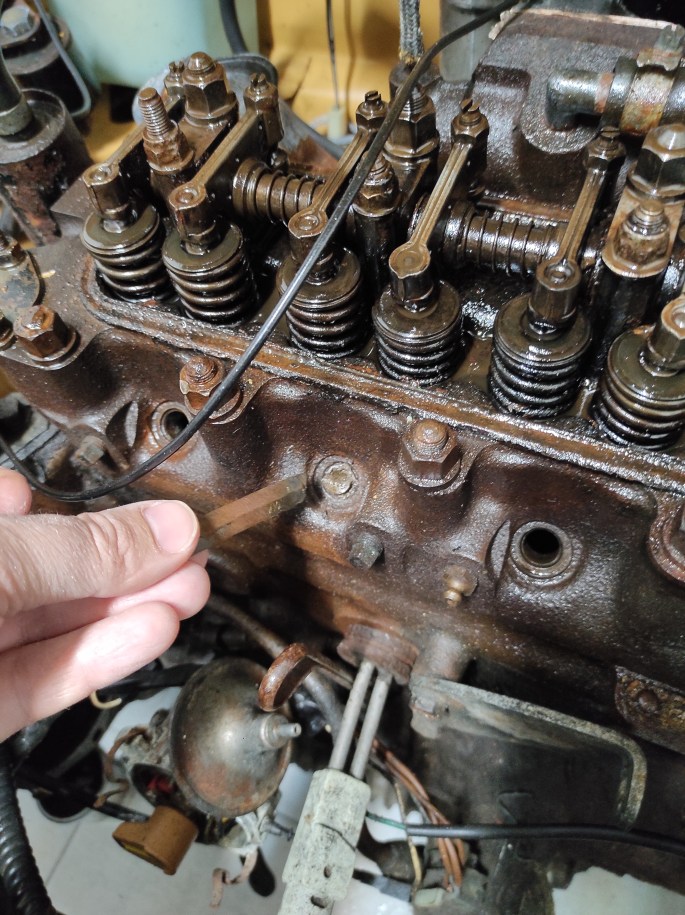
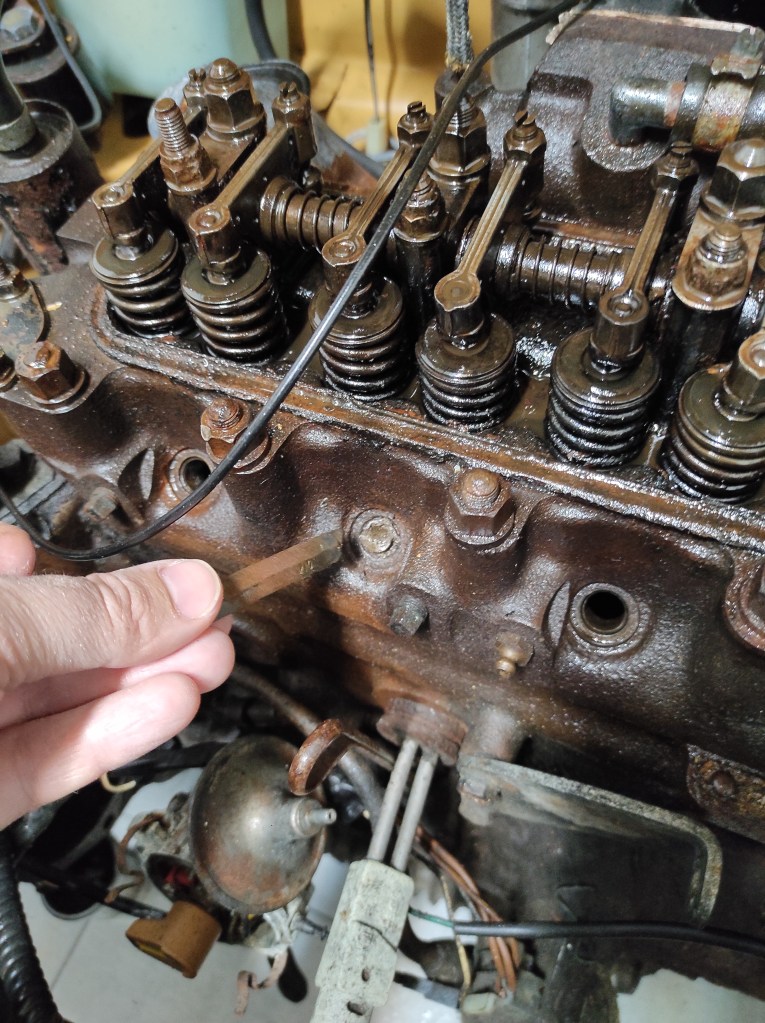
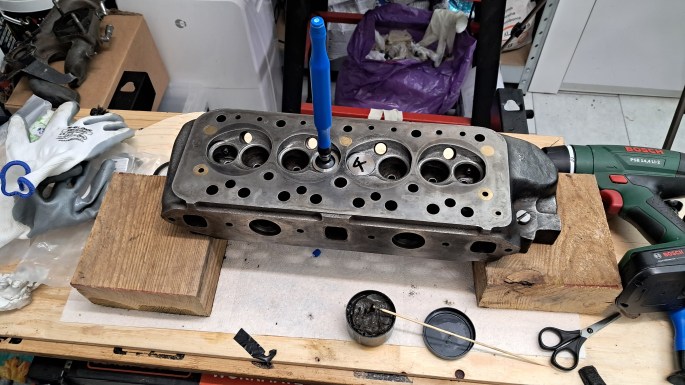
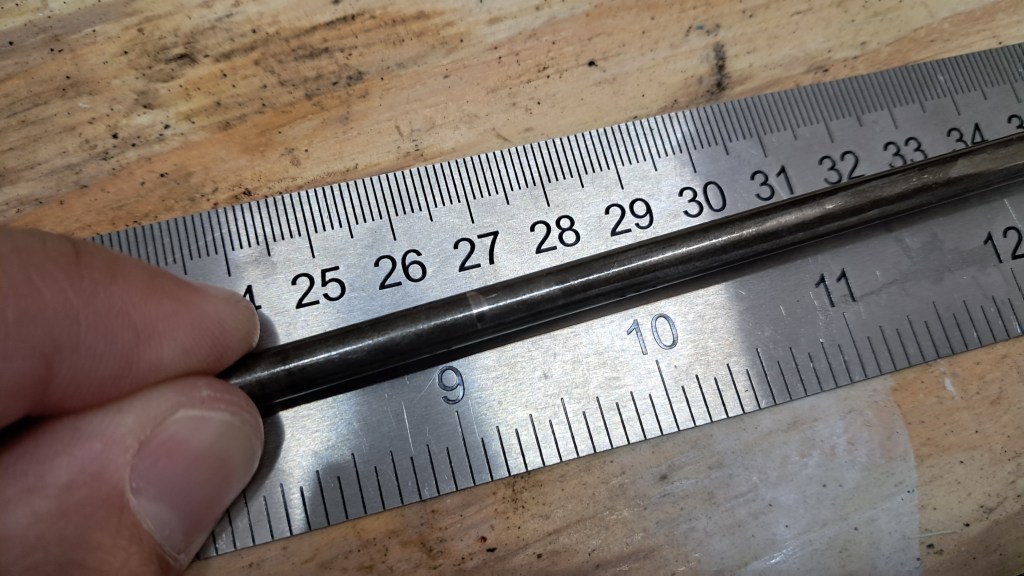
We’re almost ready to re-install the cylinder head and try for a first start. One minor set-back is that I just noticed at least one of the valve pushrods are bent! This particular one has some impressive witness marks as it gouged itself against the block – very nice. Due to the cleanness of the marks I guess this happened fairly recently.

Given the starter solenoid was dead when I got the car, and picturing the kind of force needed to bend a rod like that, I imagine it happened as a result of trying to free the crank manually with a torque wrench or something. As I found out, the valves were locked so solidly with debris and rust that I had to hammer them out, so forcing an engine to turn in that condition that was bound to cause damage. But anyway, new rods are on order.
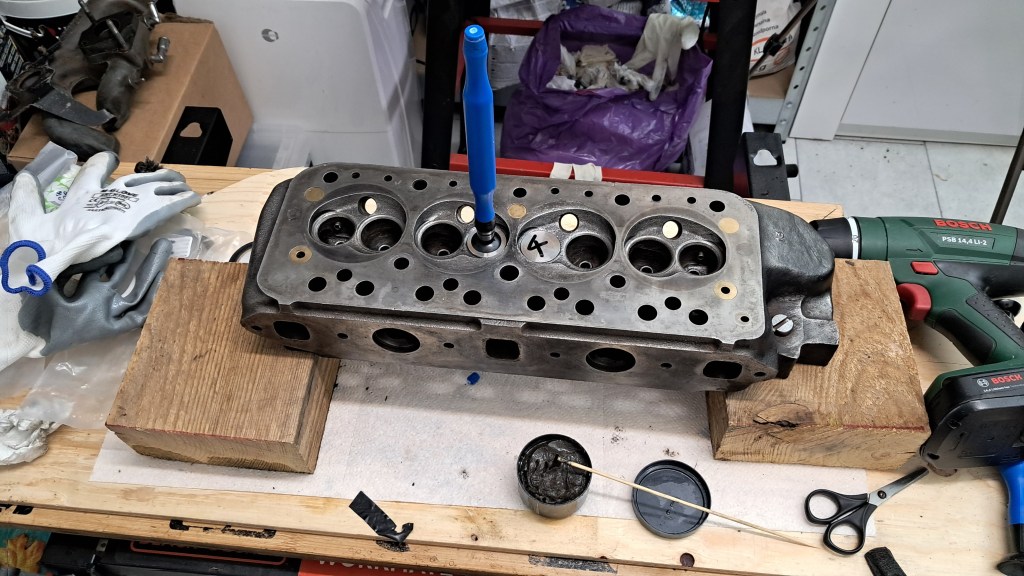
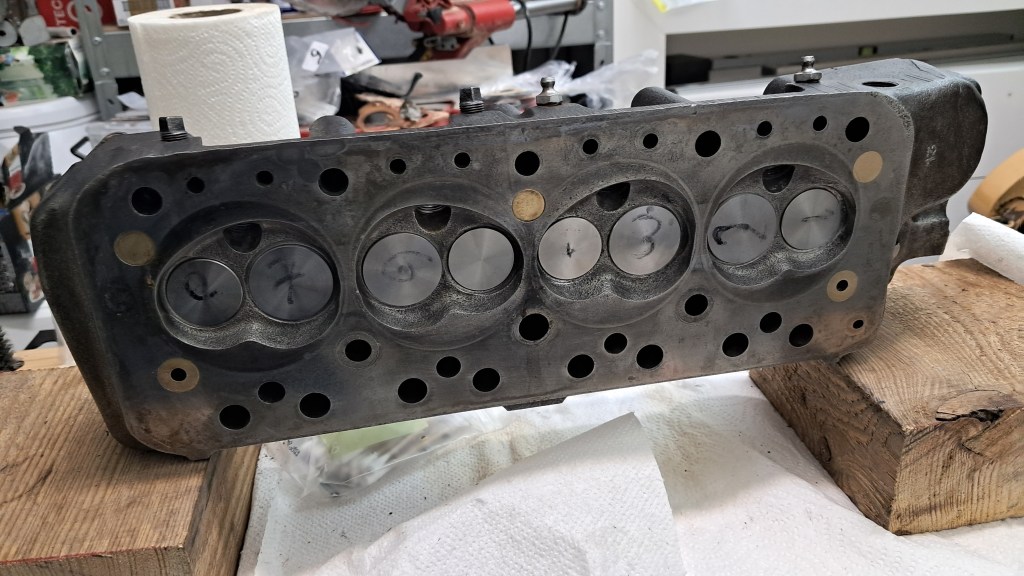
Speaking of valves, all 8 have been replaced. The main problem here was the valve seats. They are heavily pitted, particularly around number 2 and 3 exhaust ports. The seats should ideally be replaced but the plan is to get the engine running first and see what else is wrong then plan a full rebuild later on, so I’m going to defer replacing the valves seats until then. For now I just did my best to get some compression by over-grinding the exhaust port valves – far from ideal, and it was hard work on the hands, but it should at least run.

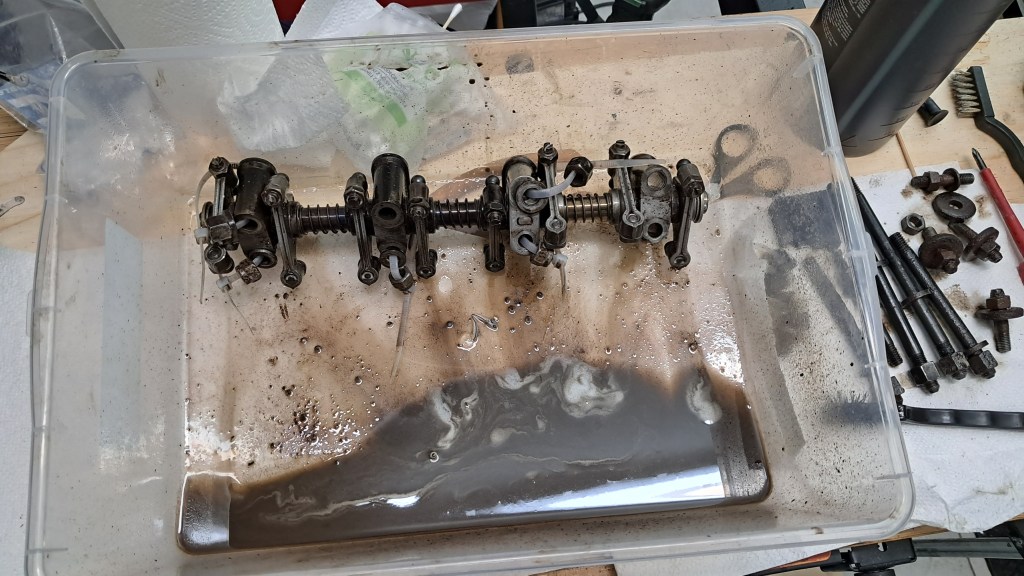
The rocker assembly is in good condition; it only needed a good degrease and a clean in isopropanol. Even the adjusters are fine and didn’t shear off or disintegrate into dust when I tried to free them.

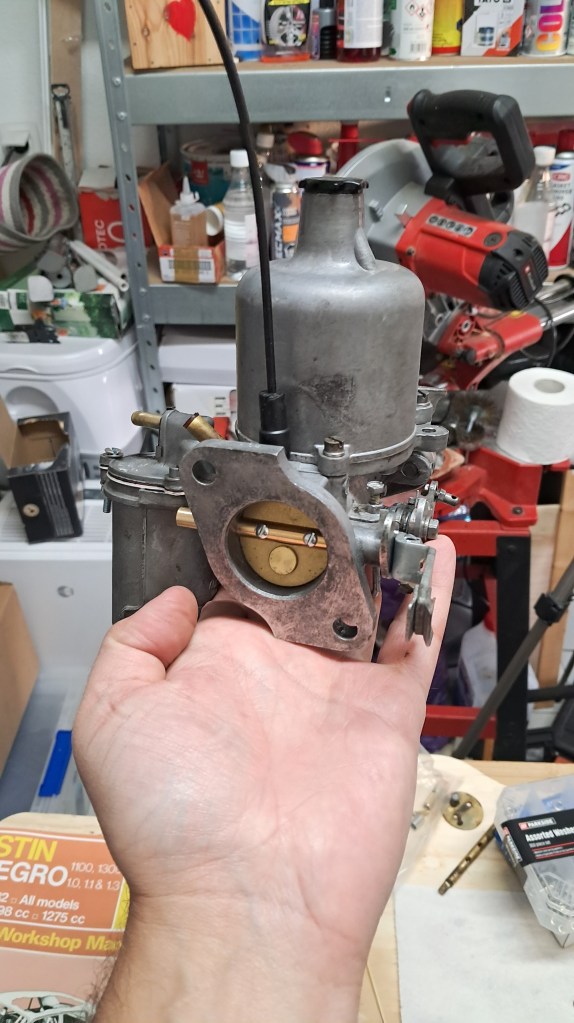
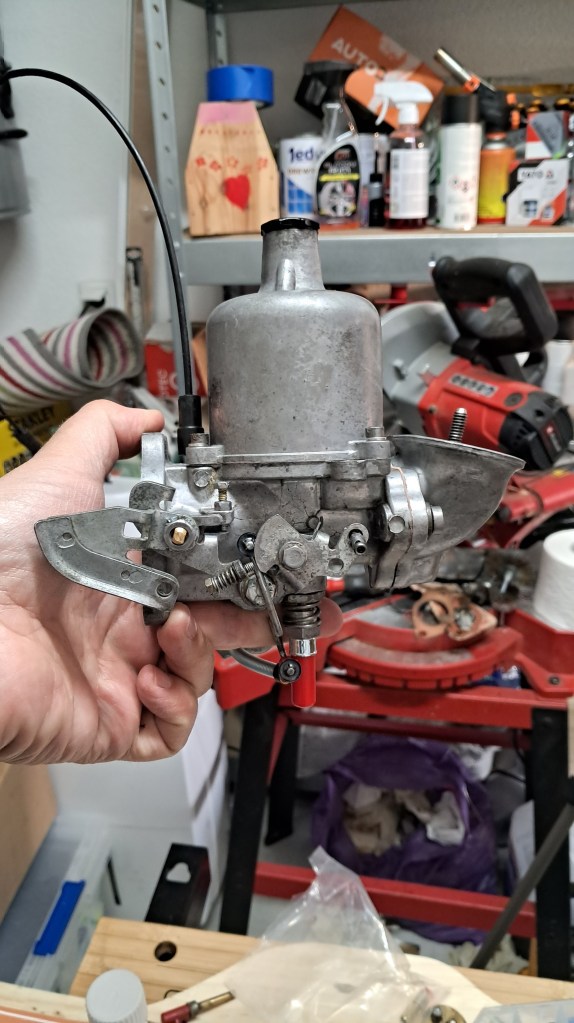
I’ve rebuilt the carburettor using the “expensive kit” and amazingly it went back together in the right order with no parts left over. Having done that I almost understand how a carb works now, but only just. The manifold has also been given a thorough clean and de-rusting, inside and out. No point filtering the air if you’re just going to add particles of rust to it at the last moment. Much supermarket cola was used in the process of de-rusting and it got messy. I might put out a video about that one day, but only if I don’t look like a total idiot. Partial idiot I can live with, but not total.

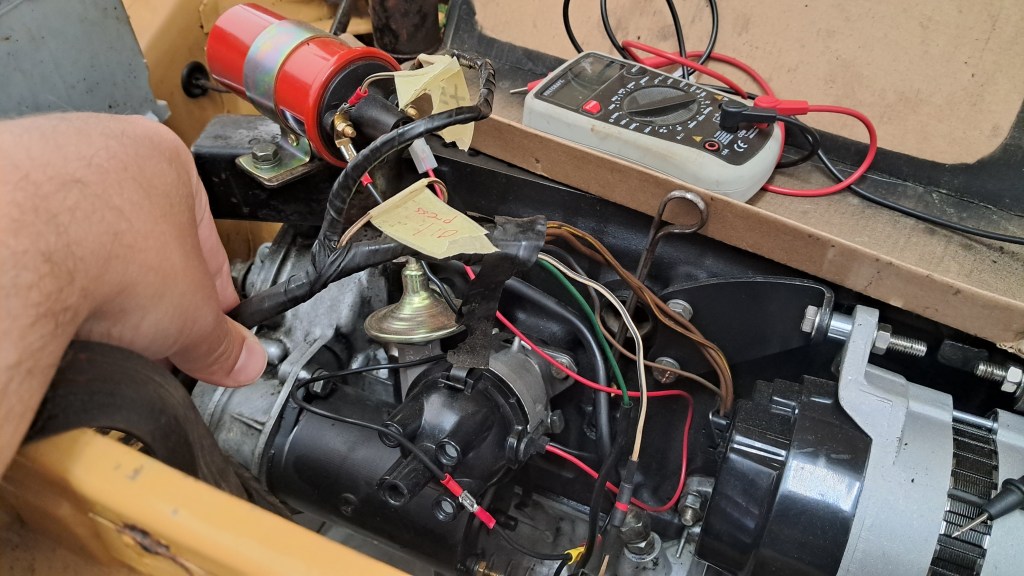
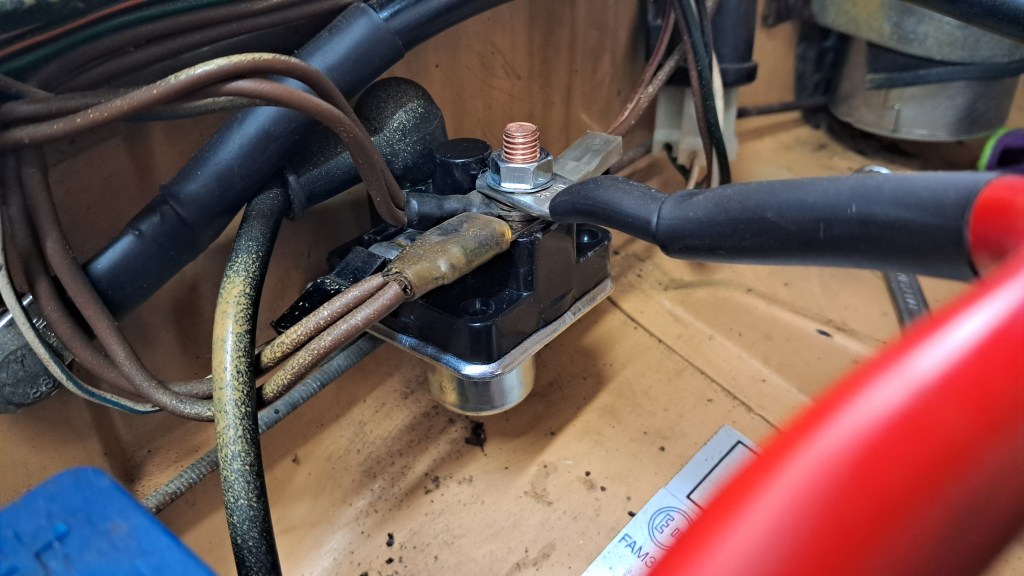
Finally I’ve begun putting the ignition electrics back together. A little guesswork needed as the wiring is, as usual, not exactly what’s documented in the Haynes manual – but never mind! Some block connectors have also been replaced, and a new starter solenoid has been installed; it now makes a very satisfying “CLACK!” when the ignition key is turned.

What’s next? Just waiting for a stud kit to arrive from Mini Spares and now another order with the new pushrods. Then we can pop the head back on, connect the fuel and see if she fires up.

The Road to the Road

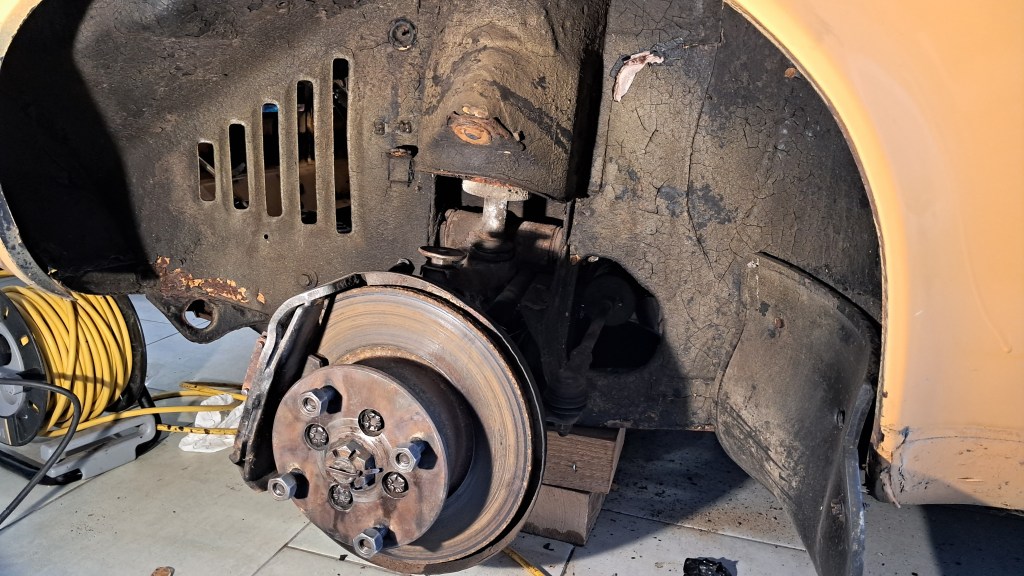
It’s been a while since the last update and a lot of good stuff has been happening.  After an easy start reviving the electrics I took a closer look at what 34 years of sitting idle around the Arctic Circle had done to Agnetha, and what she needed to get back on the road. She’s been on the blocks since January so that I could get a good look at everything. 
Here’s a fairly comprehensive list of what I found out, although some of these have already been solved, and no doubt there are other problems yet to be discovered:

  • Electrical loom is good.
  • Headlights are knackered.
  • Front indicator repeater bulb sockets are knackered.
  • Front indicator/sidelight clusters are OK, ish.
  • Rear light clusters are grand.
  • Starter relay is knackered.
  • Front discs and pads are OK.
  • Wheel bearings look good.
  • Steering rack seems OK, gaters are knackered.
  • Hydragas displacers – knackered.
  • Suspension fluid lines probably knackered.
  • Bump-stops disintegrated.
  • Tyres don’t have datestamps which makes them… older than the car?!
  • Brake lines and brake cylinders – knackered.
  • Handbrake is good.
  • Gearbox linkage is good.
  • Clutch pump is knackered.
  • Brake pump is knackered.
  • Brake servo seems OK.
  • Brake pressure differential switch is locked solid.
  • Clutch cylinder is knackered.
  • Clutch itself seems OK.
  • Alternator is knackered.
  • Distributor – knackered.
  • Fuel pump is knackered.
  • Carburettor isn’t too bad but deserves a rebuild.
  • Coil – knackered.
  • Thermostat is knackered.
  • Water pump – assumed knackered.
  • Starter motor is fine!
  • Valves are knackered.
  • Rocker assembly is good.
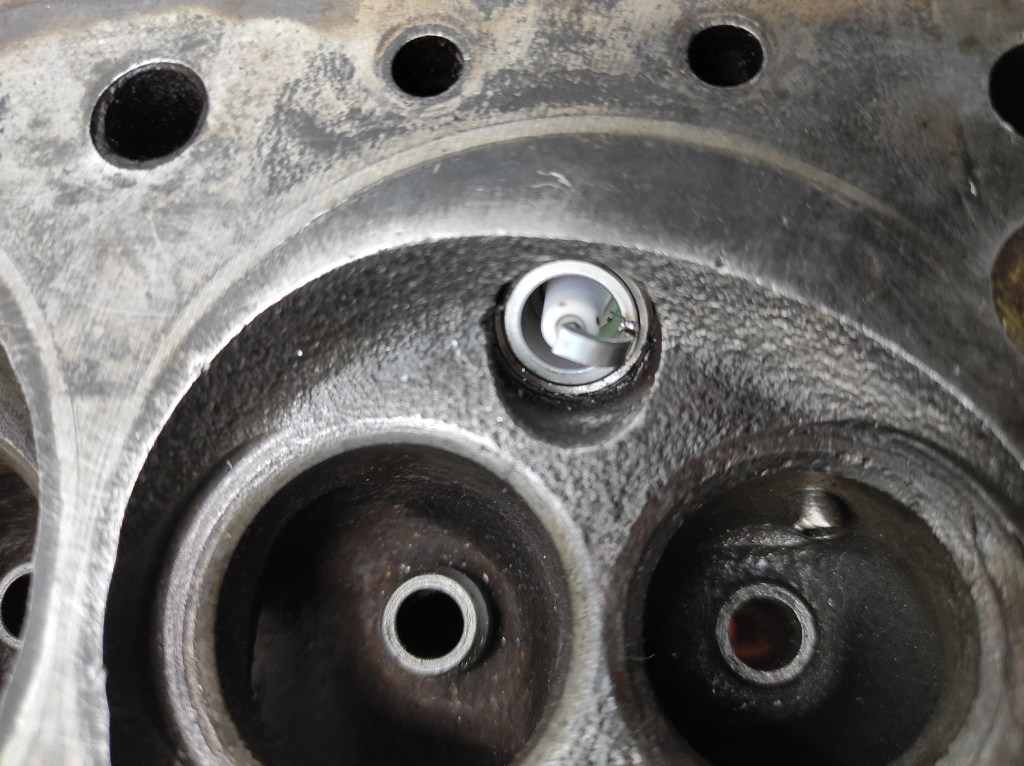
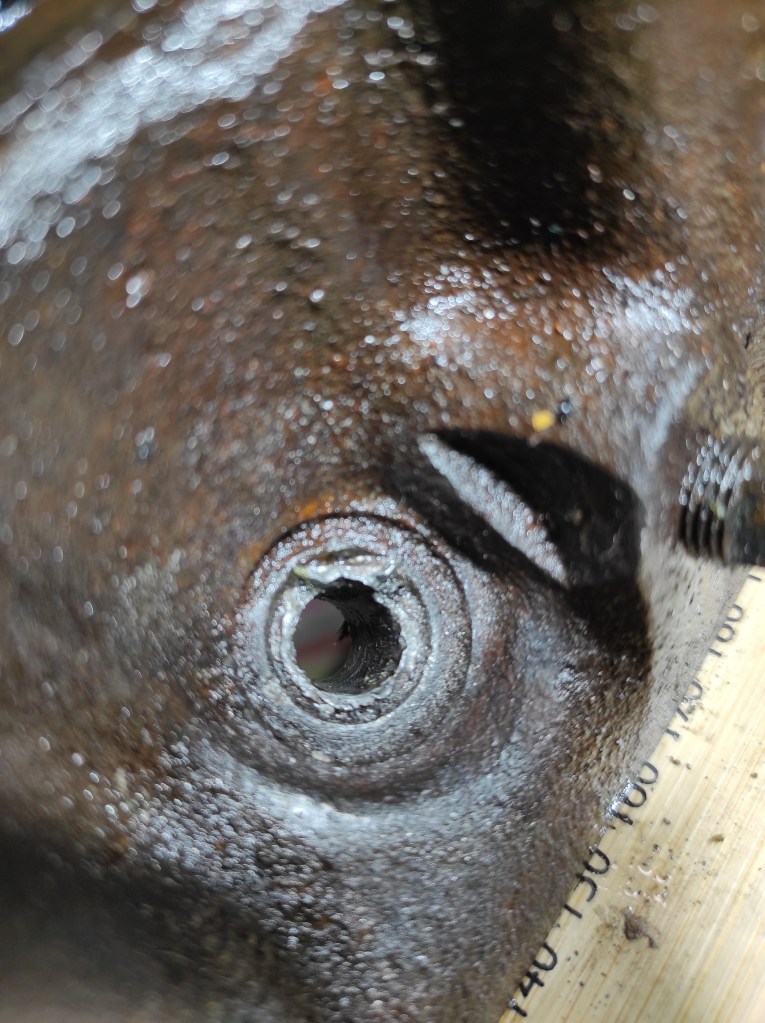
  • Remains of a broken spark plug seem to be welded to the block – rethreading required.
  • Engine rotates freely, bottom end seems OK.
  • Final drive seems OK.
  • All forward gears and reverse seem OK.
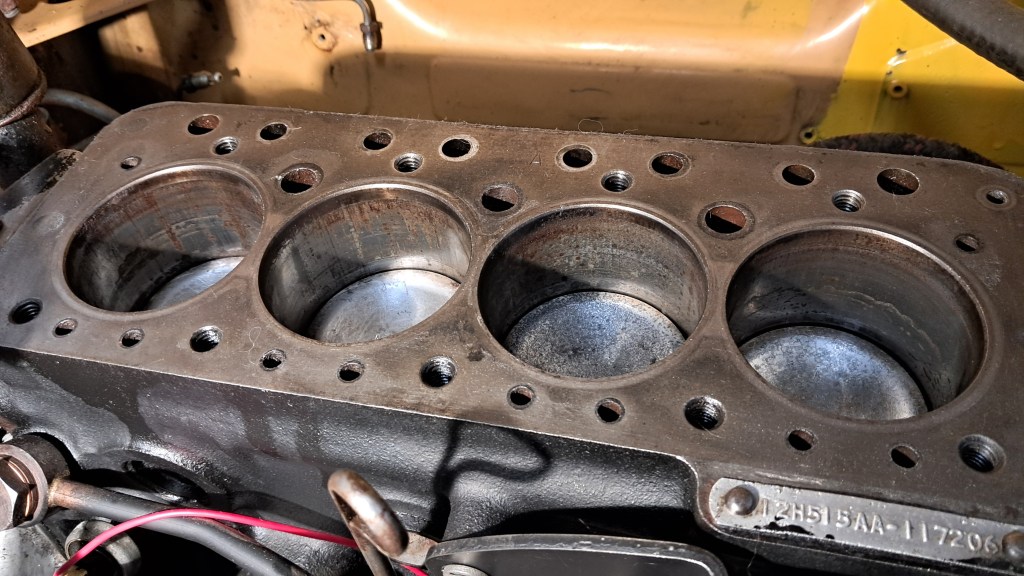
  • Cylinder linings are knackered.
  • Block heater disintegrated due to corrosion – there’s now a 1 inch hole in the side of the engine – great!
  • All rubber hoses are knackered.
  • Radiator might be OK but safer to assume it’s knackered.
  • Radiator fan motor is knackered.
  • Heater matrix not to be trusted based on what came out of the rest of the cooling circuit.
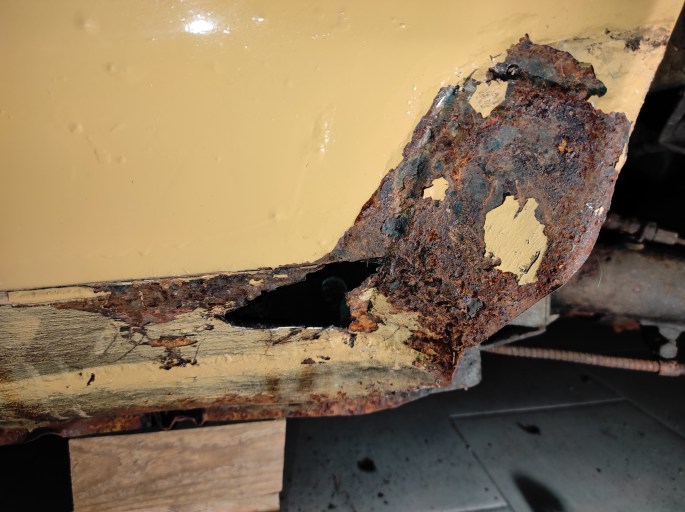
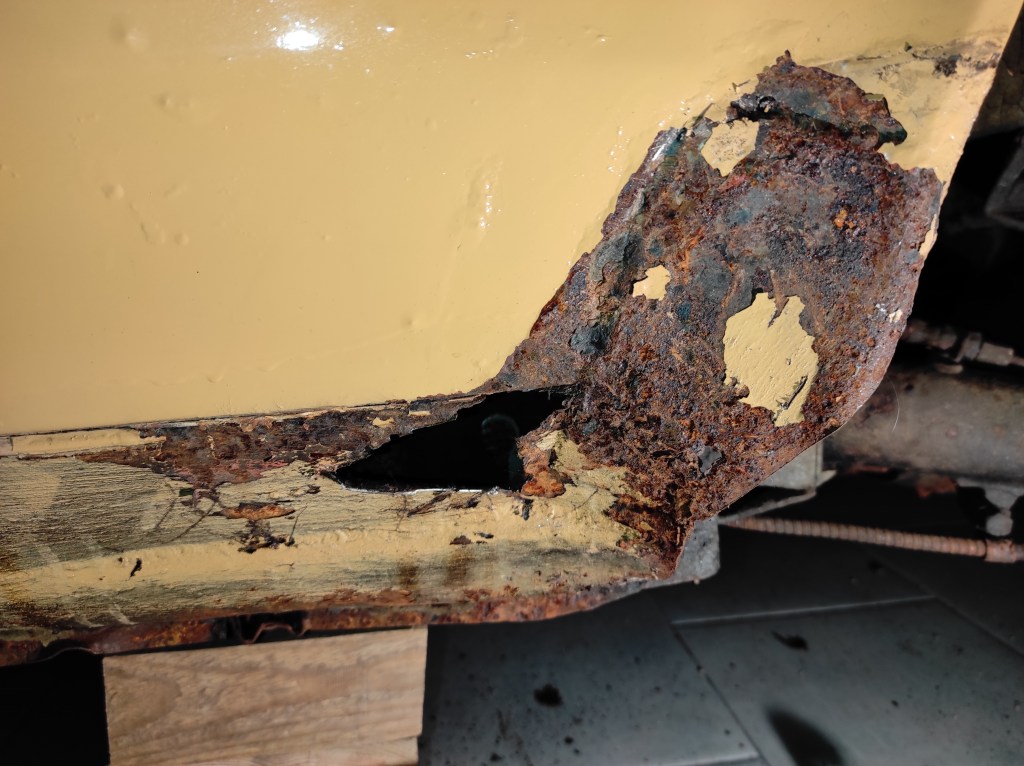
  • Corrosion along the sills.
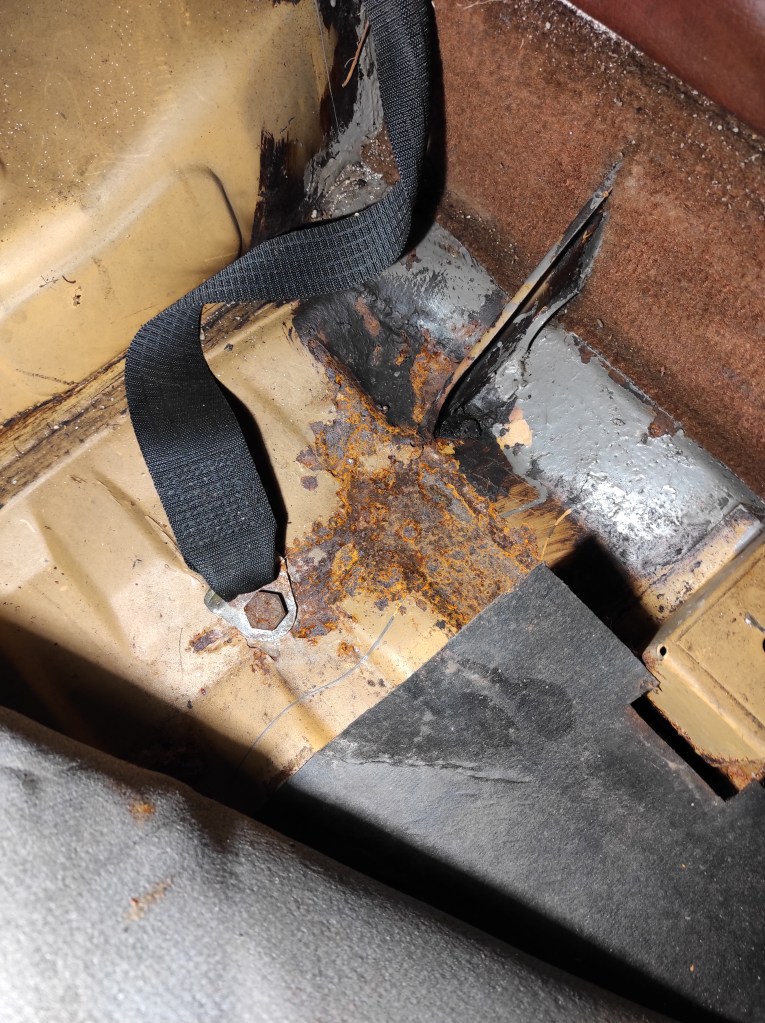
  • Localised corrosion towards the rear of the floor pan but nothing dramatic.
  • Inner sills look good.
  • Localised corrosion in the engine bay.
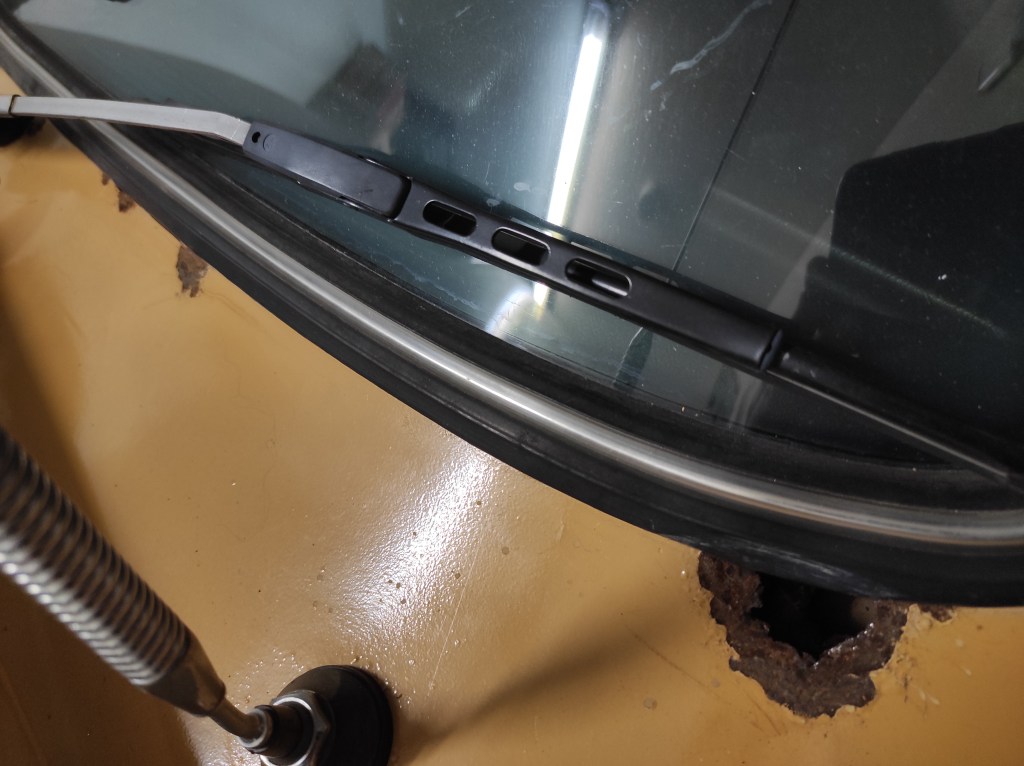
  • Corrosion around the windscreen, urgh.
  • Localised corrosion in both doors.
  • Localised corrosion & filler in the boot.
  • Window winders and door locks all work.
  • Carpet is strangely brittle and kind of revolting.
  • Seats are lovely.
  • Seatbelts are good.
  • Needs a stereo.

That’s quite the list, isn’t it? But let’s keep things in perspective.  The car is 47 years old, and was used continuously for her first 13 years, clocking up over 122,000 km driving around Sweden.  She then sat idle since 1989, evidently spending some of that time outdoors in harsh Scandinavian winters.   I would say she weathered it incredibly well.

Having said that, when I first confronted the scale of the restoration, I was in two minds about continuing. But come on this is a gorgeous super-rare Allegro Estate. Not many left in the UK, hardly any abroad, and she survived all that time. Lesssssss GOOOOOOOOOO!!!!!

Break it down yo

With any project a bit of planning goes a long way. I’m not going to cringepost about Scrum but I will admit to using Scrum very lightly for Projekt Agnetha. So, the project as been broken down in Epics with names like “Engine”, “Transmission”, “Suspension”, “Bodywork”, and so on. Within each epic are lots of short-term projects called Sprints, e.g. “Replace the distributor”, “Clean the shit off the sump”, and so on. Just one Epic is done at a time, and might take any number of months to complete. It doesn’t really matter as long as it’s your own money and not someone else’s! This means each Epic is almost like its own separate project. Everything becomes more manageable and the whole project is less intimidating.

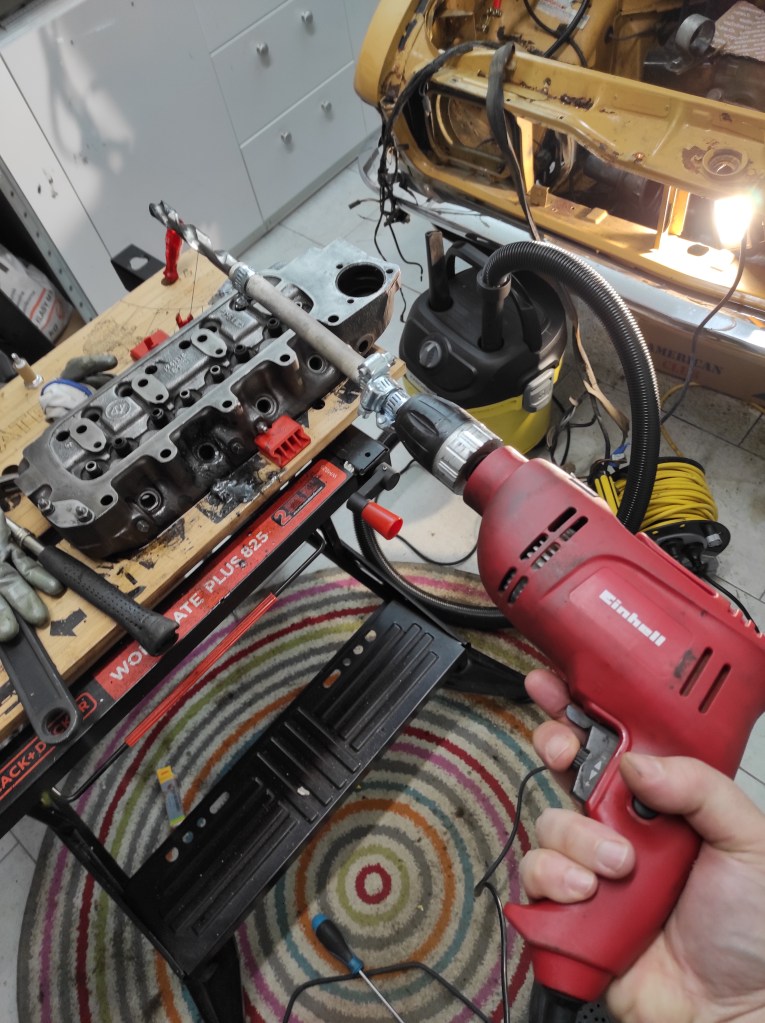
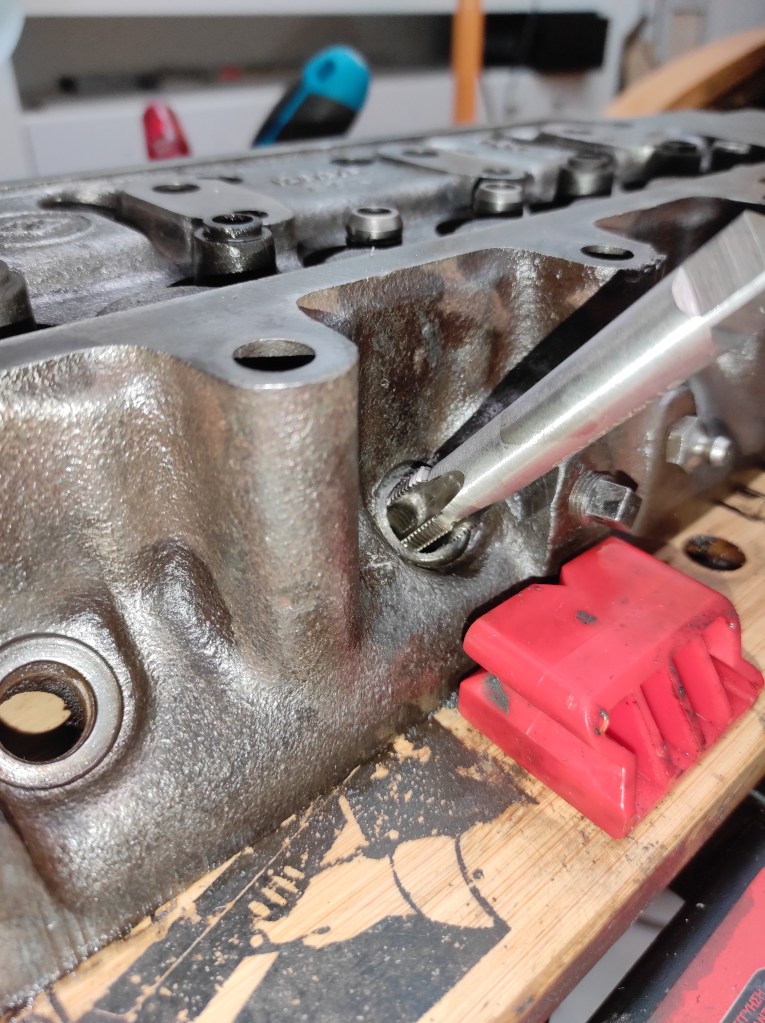
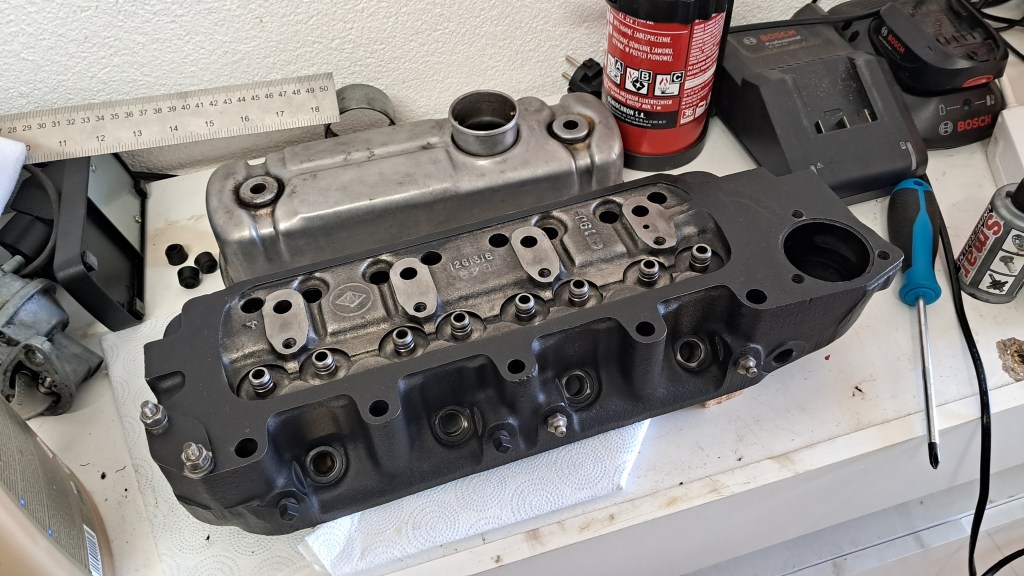
In March I made a start on the engine, and several items on the Big List have already been crossed off. I could have started with the bodywork or anything else, but I fancied a crack at the engine. The spark plug remnants have been drilled out and the cylinder head rethreaded – this was a lot easier than expected! I also had the head checked by a professional engine builder for flatness and so on. The alternator, distributor and coil have been replaced too.

New valves, springs, gaskets, studs ‘n nuts are on order, as are a new starter solenoid, fuel pump and carburettor rebuild kit. I’m fairly sure Agentha will have her first start this summer. Judging by the state of the cylinder linings, she probably hasn’t run properly since being laid-up in 1989, so that will be a big milestone. Can’t do much about the cylinder linings right now so we’ll just try to get it running and see how bad it is. If that old A-series needs to rebored then rebored it will be…and the rest, haha!!

What next?

Assuming the engine runs, the next Epic will be the drivetrain. From what I can tell, all she would need to move under her own power is new clutch hydraulics. Finding an original Allegro clutch pump seems problematic but I read recently in the Allegro Club magazine about using one from a Land Rover as a replacement. I’m not fussed at all about using original parts, so I’ve a Land Rover pump on order and we’ll try to fit that.

Maybe Agnetha could move under her own power by the autumn – who knows? Health and safety folks need not fret: Unlike the UK, all vehicles returning to traffic in Poland must past a vehicle inspection, so there won’t be any driving on public roads in Agnetha until everything – especially the much-needed welding – is crossed off the list and the car is absolutely solid again. I’m sure she’ll be fine for a bit of low-speed manoeuvring on the drive in the meantime though!

It might also be a good idea to get a new radiator sooner rather than later – I don’t think BL designed them to be air-cooled.

Let’s Talk About Rust, Baby.

Change of tactics, folks.  I originally planned a quick ‘n dirty resto to get Agnetha back on the road as quickly as possible, then fix any other problems as and when they occurred (or were discovered).  However, I think subconsciously I knew there were some corrosion problems with the bodyshell but I was enjoying being a first-time Allegro owner too much to take any notice.

Sure, it’s obvious that I should have checked this or that first but buying Agnetha was always meant as a decision from the heart rather than the head. This is my fun-time, my weird little hobby, I’m enjoying being naive, asking stupid questions, doing things wrong, f-ing around, finding out, learning, but at the same time being careful not to cause serious injury to myself or others (minor injuries to myself are fine though) – thus it is written in the Standard Operating Procedures of Projekt Agnetha. Don’t approve? Leave a comment below. Oh no, I turned them off. What a shame. Anyway back to the rust: I already knew the corrosion around the windscreen would probably be out of my league since I found her in the museum. Just look at it:

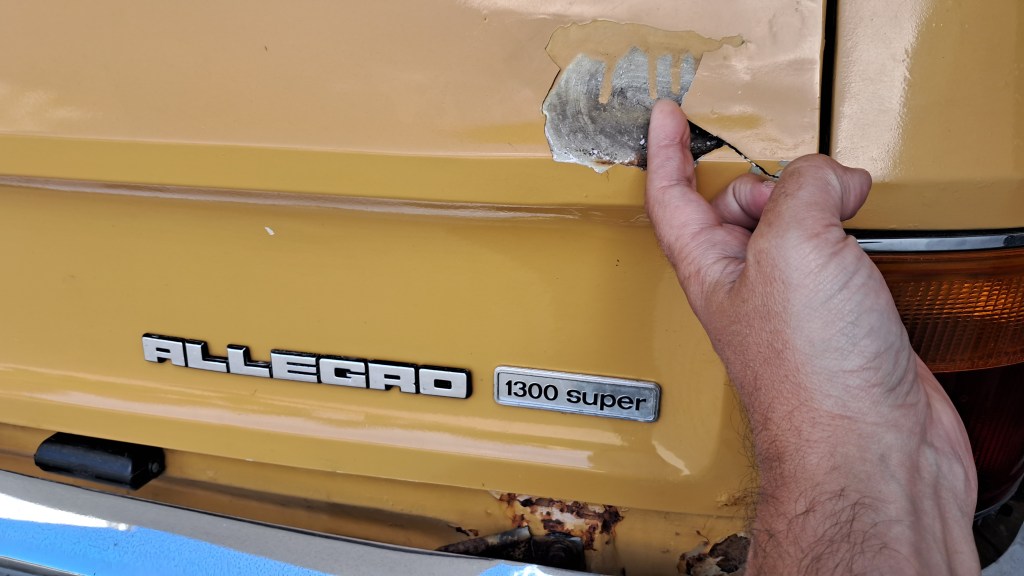
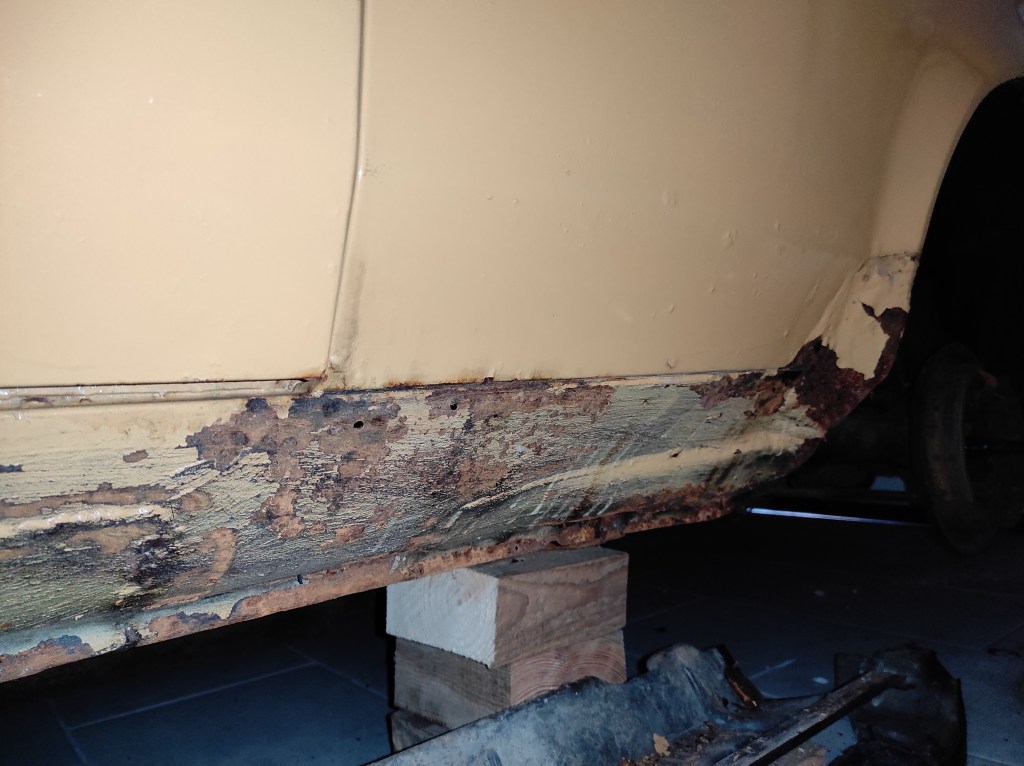
It goes all the way round like that. Then after Christmas I finally confronted my darkest fears and removed the plastic valence around the sills where I’d been ignoring the bubbled-up and cracked paint and – yuck.

It looks like the valence was intended to protect the sill from moisture and stones being flicked up from the road, but in the long-term this is obviously a perfect place for water to collect and initiate corrosion.  Also there’s evidence of Agnetha hitting something like a low wall and having quite a rough repair done which has borne the brunt of the corrosion.  The good news is that behind the sill the internal structure seems relatively tidy albeit a little bent out of shape in places.

Under the carpet inside there’s also some rust on the floorpan, but this looks more like it started inside the car somehow.  Definitely needs investigating – we don’t want a Flintstones type of car.

Don’t get me wrong. I think she’s held up remarkably well considering the decades of neglect since she came off the road in 1989. Let’s be fair: BL got a lot of things right with the Allegro! But it obviously isn’t safe like that, and as a historic vehicle under Polish law Agnetha has to pass a vehicle inspection before going back on the road. The inspection is pretty much done to the same standard as the MOT in the UK so it’s strict on corrosion and structural integrity (this is a good thing). Furthermore, Agnetha will be carrying passengers so the legal requirement is that she’s tested annually just like any other vehicle. Basically it needs to be fixed and, much as I would love to learn to weld, I’m not keen to turn the car into a smoking puddle of molten iron by teaching myself on it.

Having thought long and hard about the options, I think my best course of action is to ship her off to a professional bodyshop so she can be thoroughly welded-up, repainted and protected. While that’s happening I can crack on with rebuilding the engine and everything else. I’ve got some building projects in the Spring with the house so Projekt Agnetha will go quiet for a few months until that’s all buttoned-up. Then it’ll be a case of finding a suitable shop, stripping everything out and full steam ahead. Going to be a long haul but after surviving all those decades in Sweden she’s got to be worth it!

Applying for Historic Vehicle Status in Poland

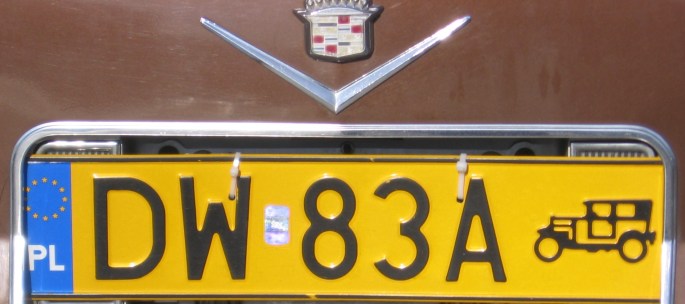
I think Agentha is at least 12 months away from being ready for the road, which gives us time to put some paperwork through so we can get her inspected and registered as soon as she’s ready. We have two options for registering Agnetha: “White plates” which are the norm (unless you have an electric car, in which case you get “green plates”), or “yellow plates” that are reserved for historic vehicles. The yellow plates are easily recognised not just for being yellow but for having a cartoon outline of a prewar-style car (not sure if it’s a real car or not), which I think is very cool indeed.

Source: Wikipedia

With the yellow plates you get a few perks: The vehicle only needs to be insured when you use it instead of all year round, so if I only want to drive Agnetha in the spring and summer I don’t need to insure her for autumn and winter. There are also discounts for insurance too. The vehicle can retain its original light and sound signals, and – while this won’t apply to Agnetha – they only need to be inspected once as long as the vehicle doesn’t carry passengers. Agnetha needs to carry passengers, however, and I’m a bit of stickler for safety, so she’ll be getting inspected annually.

Historic status isn’t automatically granted though. The requirements are quite strict:

  • The vehicle must be older than 30 years
  • The vehicle must have been out of production for at least 15 years
  • It must feature at least 75% original components

That said, the final decision lies with the Conservator of Monuments for whichever region of Poland you live in. Every application is considered case-by-case and they may accept a vehicle that doesn’t meet the requirements, or vice verse. This article explains it.

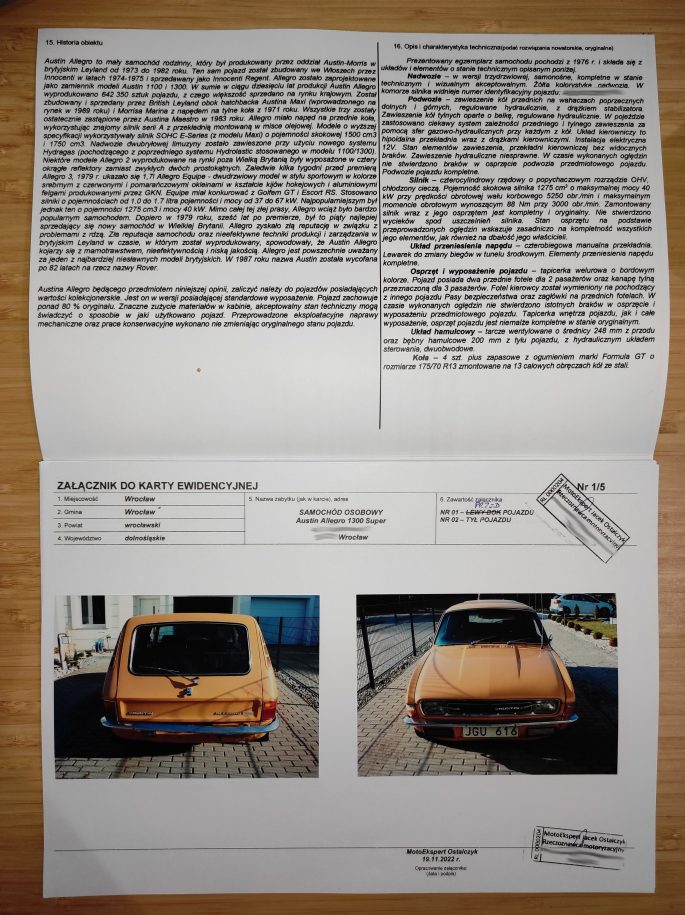
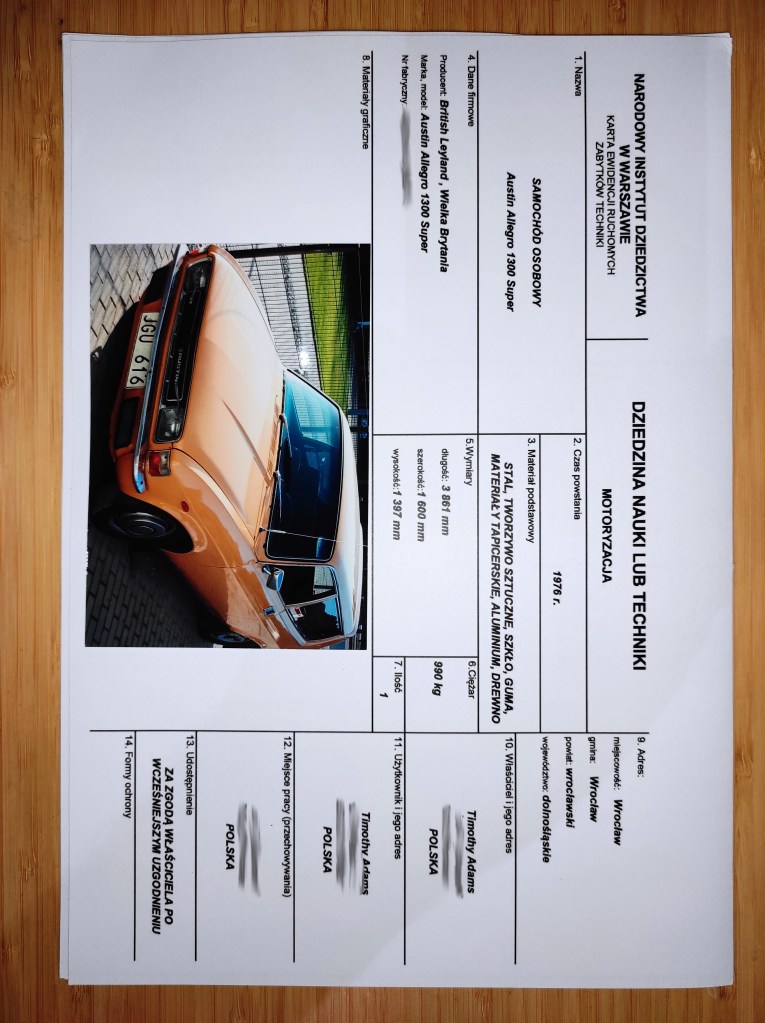
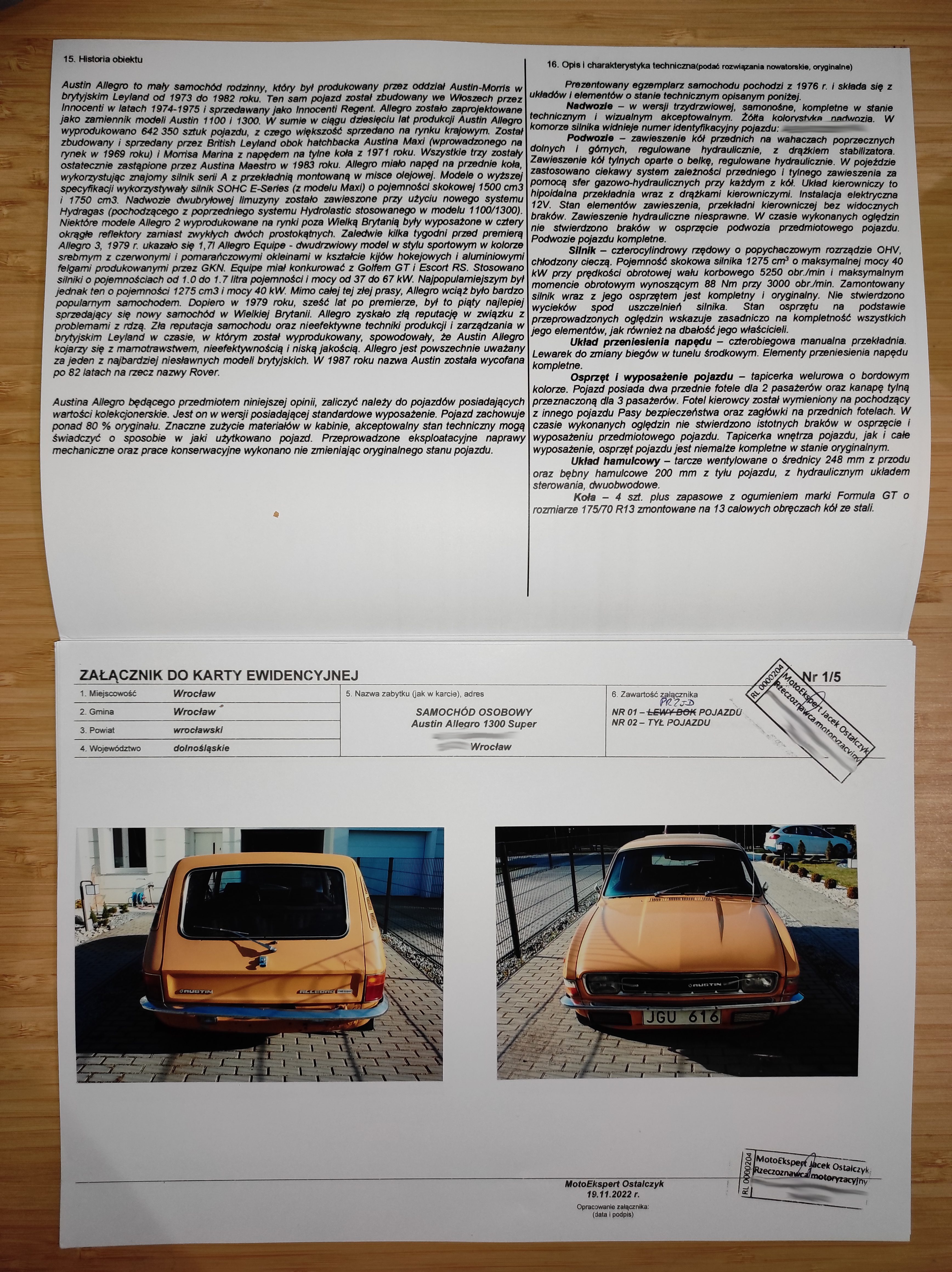
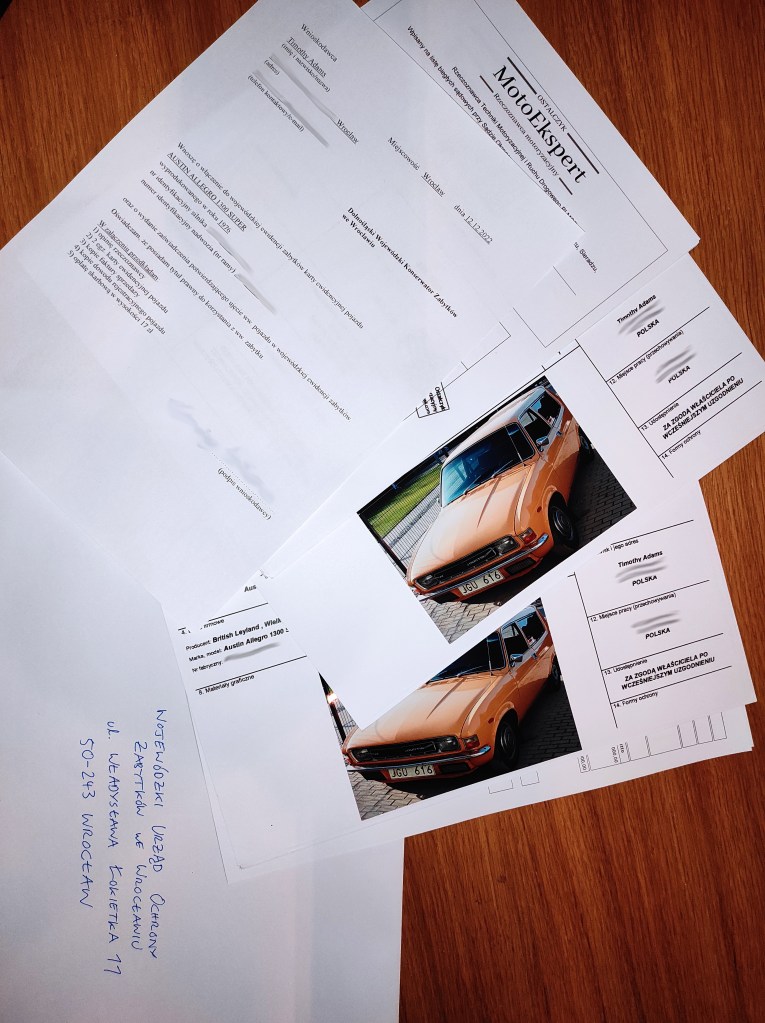
The application process is not trivial either. The Conservator needs a report written by an approved expert including photographs, technical specs, a description of not only the specific vehicle, but also the significance of the manufacturer and the model’s place in history, it has to be printed on a specific type of paper, 3 original copies, etc. etc. It is very detailed and not cheap! Once the report is delivered, it’s basically a case of stick it in an envelope and post to the Conservator. Here’s Agnetha’s application, and it’ll go in the post tomorrow:

All being well, we should get a certificate confirming Agnetha to the inventory of historic vehicles in Lower Silesia. With the certificate granted, and provided I’ve done everything possible to ensure the car is safe to drive, I can obtain temporary registration plates which allow the car to be driven to a test station for a technical inspection – this will be her first drive on public roads since 1989! If that passes, we can finally get yellow plates and at last crank up the miles. Fingers crossed for that certificate…

Electrics – Part 3

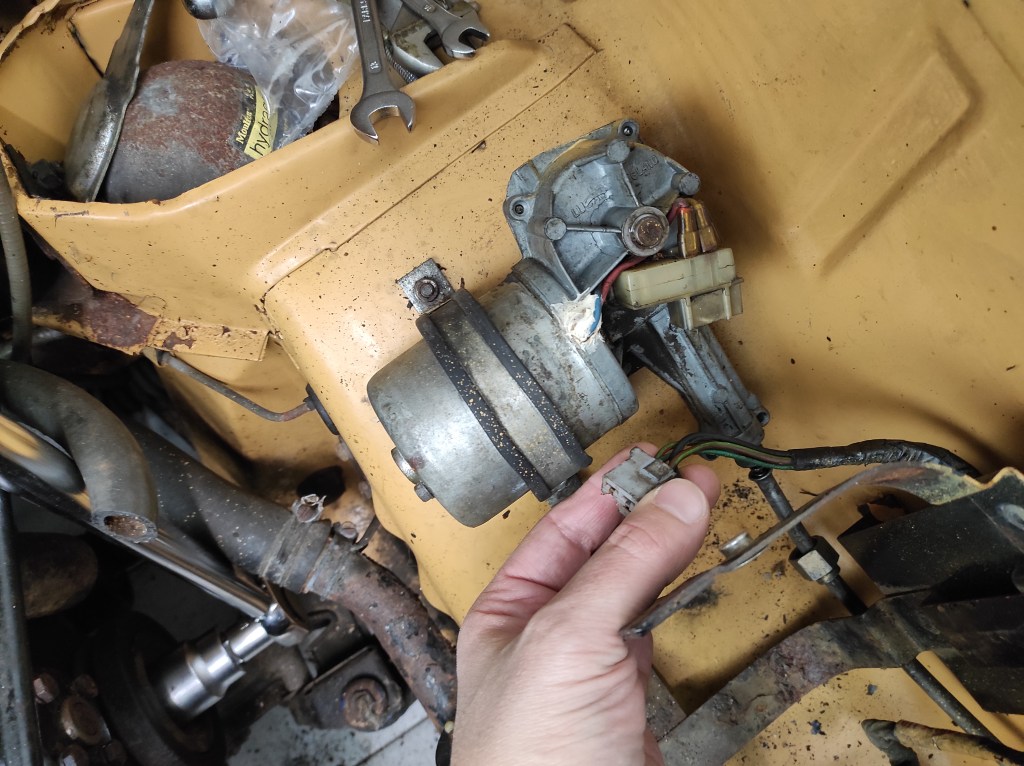
When Agnetha arrived in October, literally nothing electrical was working. After checking every circuit, scrubbing every contact in every switch, and in some cases replacing the switchgear altogether, almost everything now works. The one noteable exception is, of course, the headlight wipers. This was initially because the motor was rusted-up. The windscreen wiper motor worked fine, so I ordered a new motor from Mini Spares in the UK, fitted that to the windscreen wipers and transplanted the old motor to the headlight wipers.

Unfortunately I didn’t think to order a new plug even though it should have been pretty obvious that the original plug is also rusted to hell. This meant I was only able to get the headlight wipers to operate a couple of times before the plug gave out entirely and now it’s just an open circuit of various corrosion products lol.

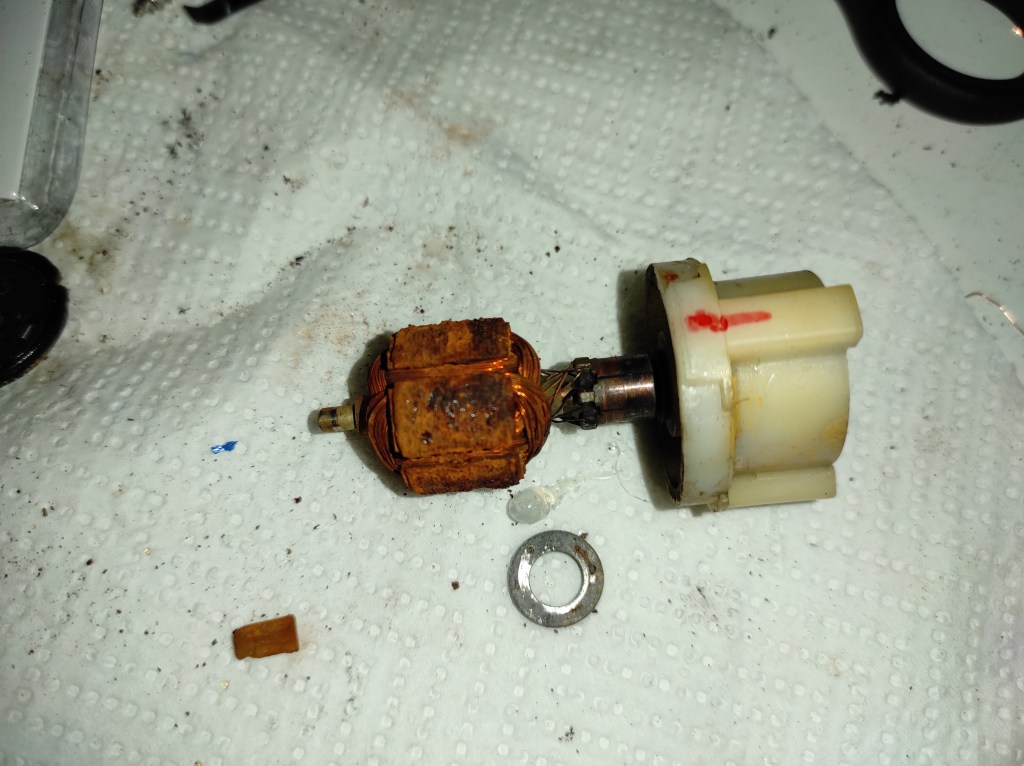
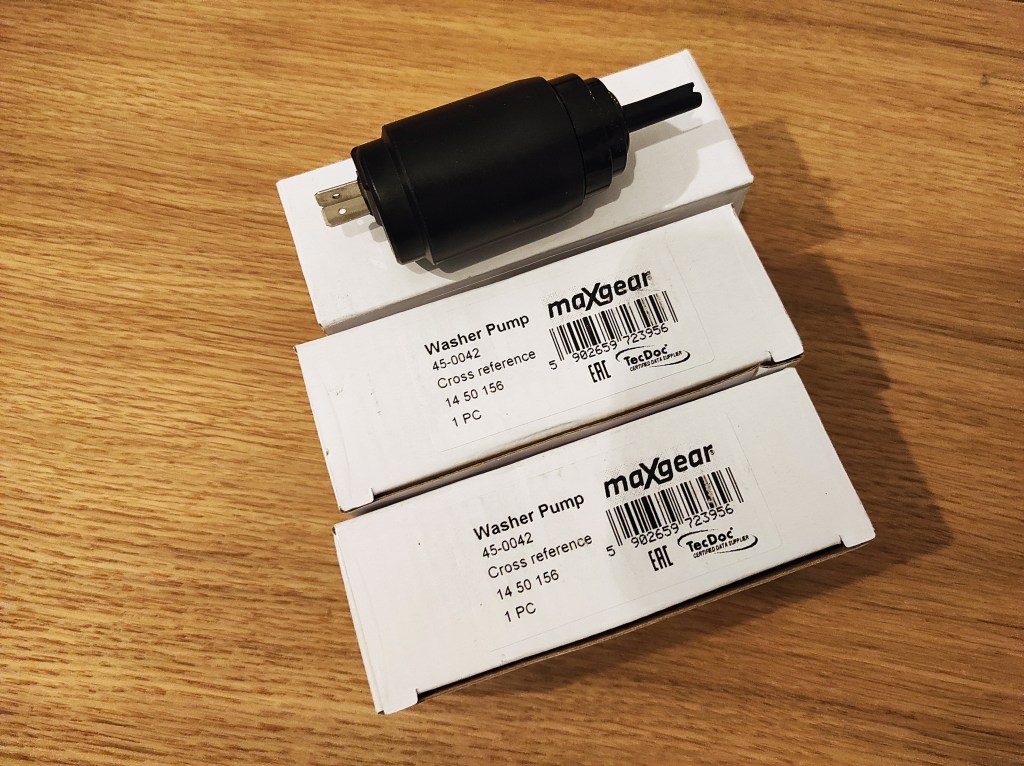
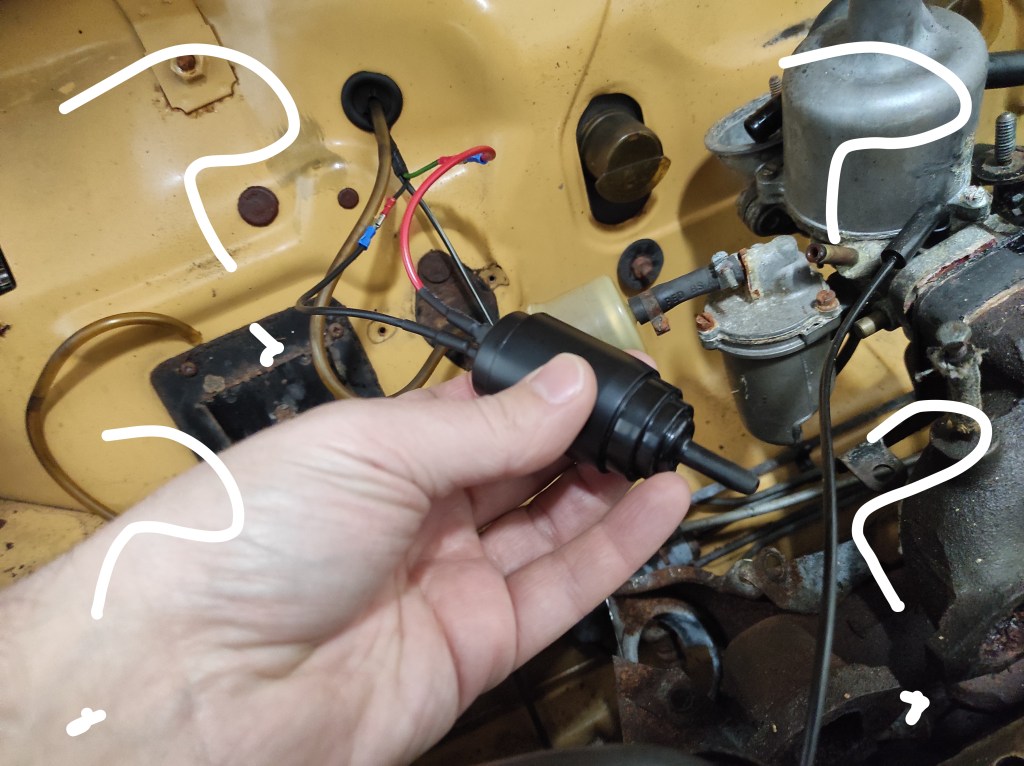
As for why none of the screenwash pumps worked, rust is also the answer. All three of them (headlights, windscreen and rear screen) had rusted completely. I replaced them with generic 12V pumps by a Polish motorfactor called Maxgear at 19.88zł each (about £3.60!!). They seem a lot more weather-proof and robust than the originals but naturally I didn’t think about how to actually mount them.

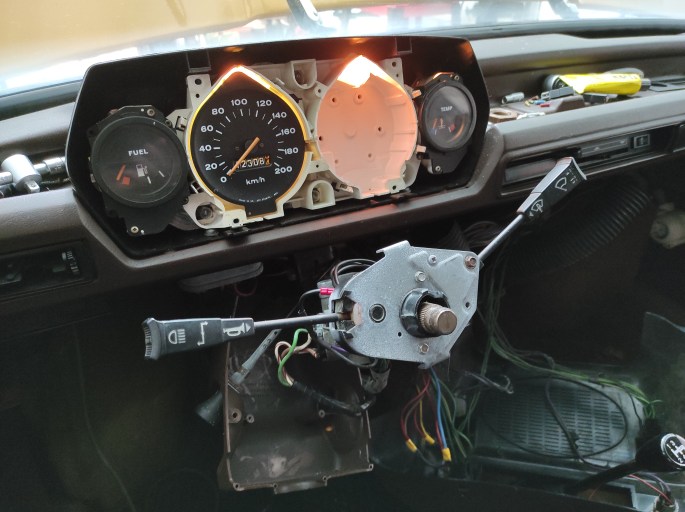
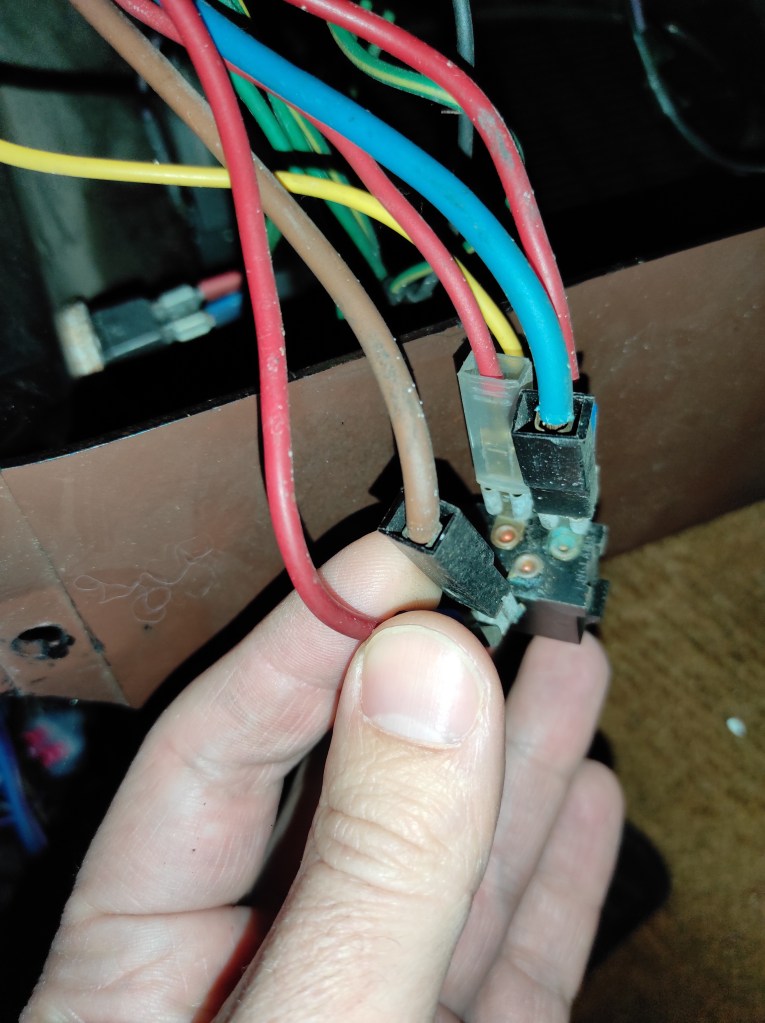
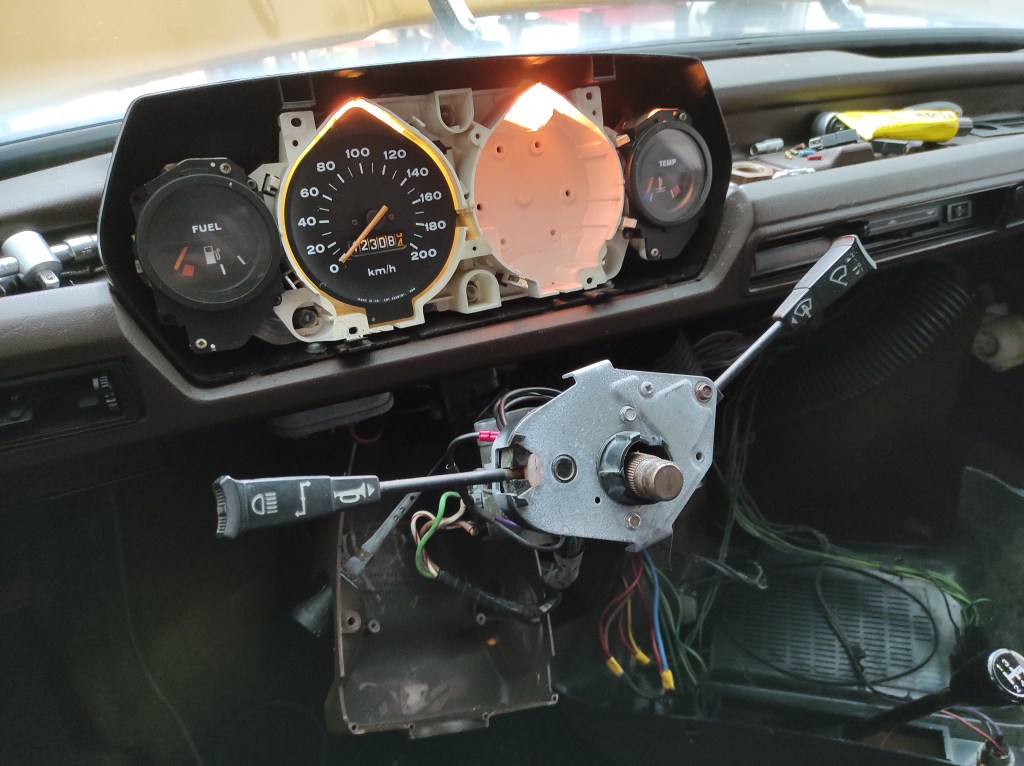
I’ve also traced some intermittent faults (and spectacular arcing) back to the ignition switch, hazard switch and indicator stalk. Turns out the repairs I did on them weren’t up to much, so I ordered new indicator and windsceeen wiper stalks and a hazard switch, again from Mini Spares. These were fairly easy to install apart from the wiring order of the sockets on the Allegro is completely different to the classic Mini so I had to fiddle around for an hour to swap the cables around in the plugs – luckily the colour-coding is the same!

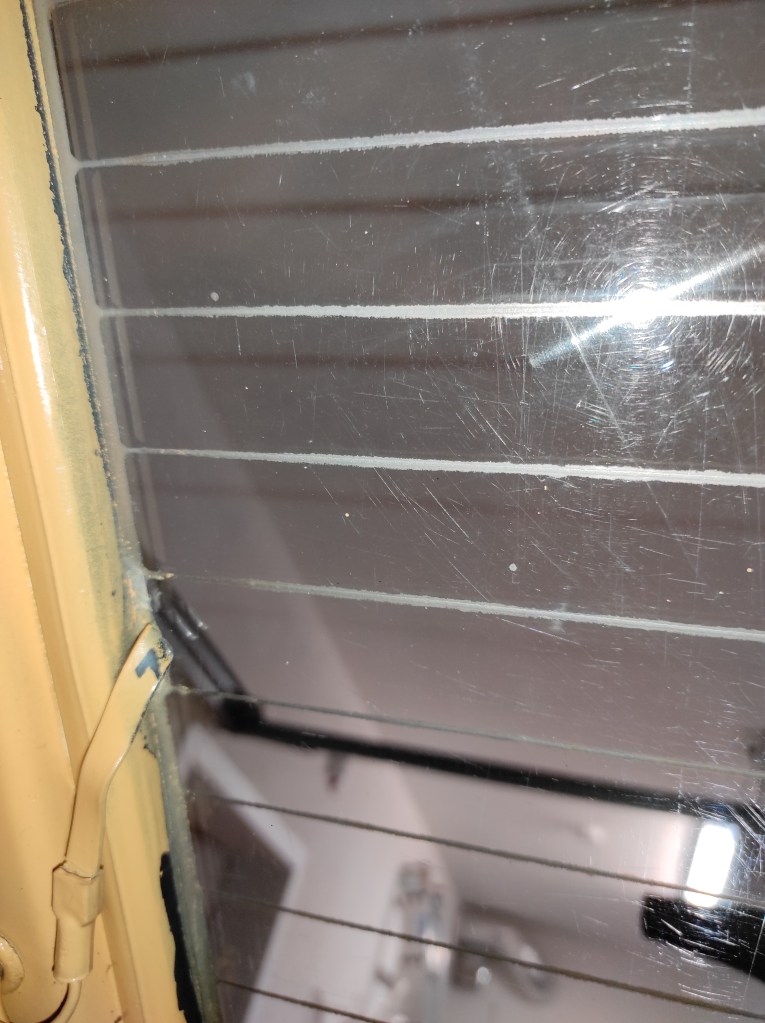
The ignition switch was an easy fix – it was just missing a ball bearing that acts on the plastic detents to keep the switch in position. Must have fallen out and gone up the vacuum cleaner when I opened it the first time. The rear window heater switch also came alive in beautiful green illumination after I gave it the now routine “wire brush and hot-glue” treatment – can’t tell if the heater itself works though. The element looks rather corroded.

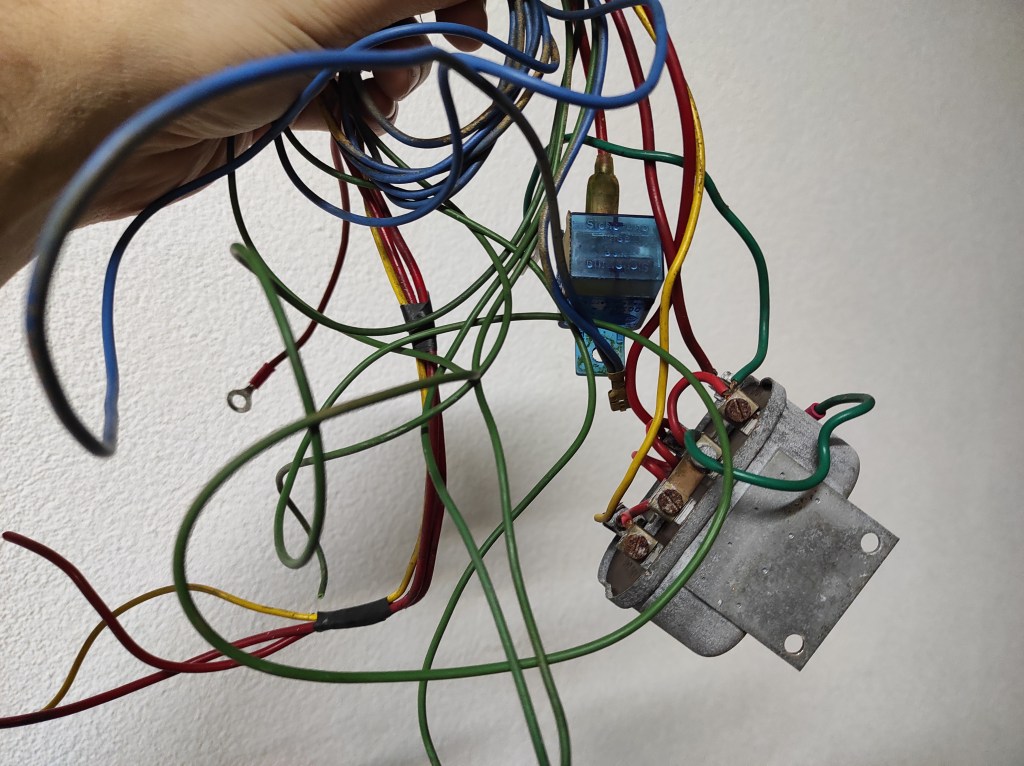
There were still some electrical gremlins though. It’s a simple car – so how can it be so complicated? As it turns out Agnetha had a couple of modifications. First of all, a relay had been installed to turn the daytime running lights on whenever the ignition was turned on. When I posted a photo of this on social media I got a comment that the wiring was “awful” – and, yeah, it didn’t look great. Secondly, there was another relay installed with an isolation switch to operate the no-longer-present bumper-mounter fog lights when high beam was selected. The wiring for this was in a bad state as well. So I stripped the whole lot out and returned it to the factory-spec wiring given in the Haynes manual.

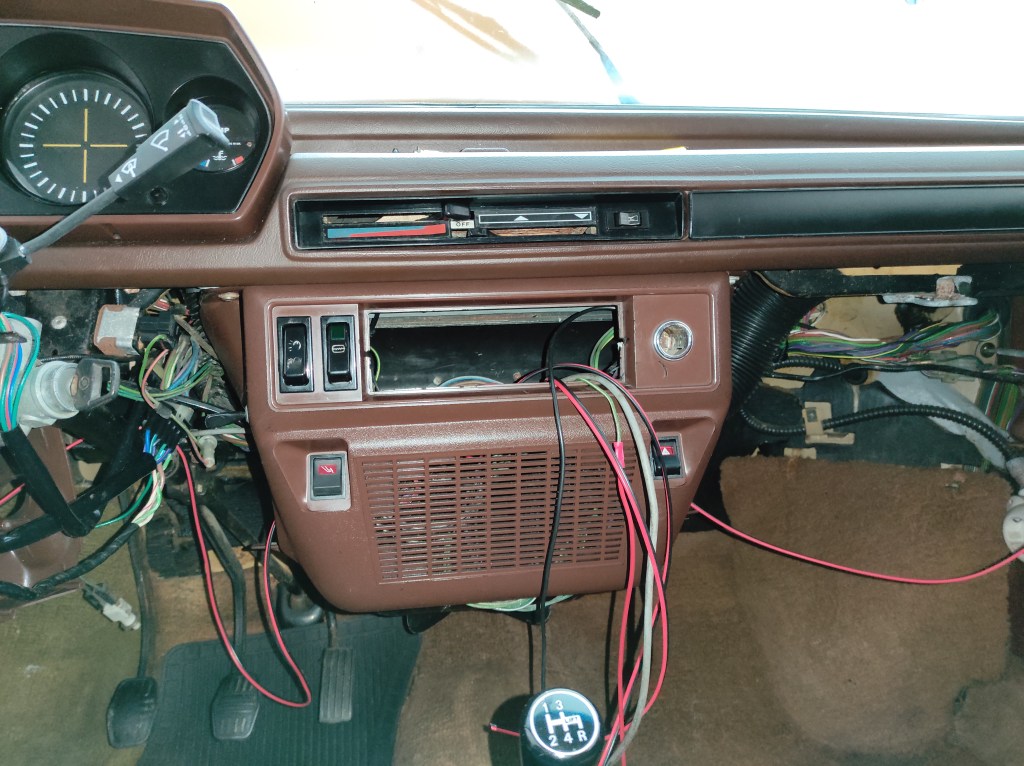
That solved everything. The trusty wirebrush also got the brake lights working! Feeling confident I then added some cabling for the forthcoming stereo, cleaned out the interior air-box and put the facia back in place.
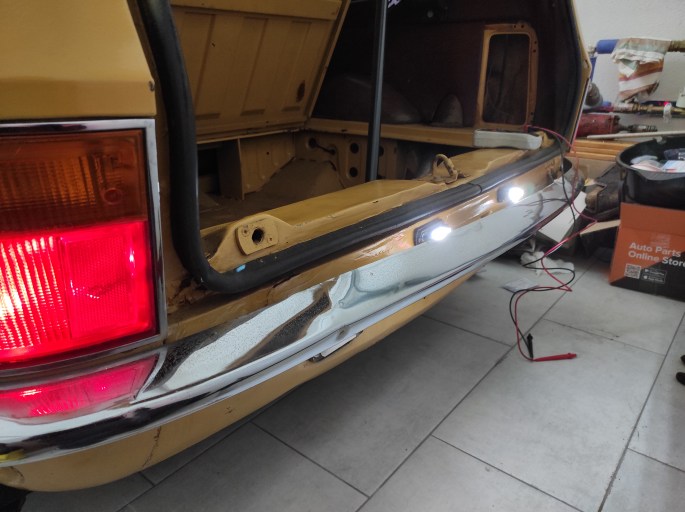
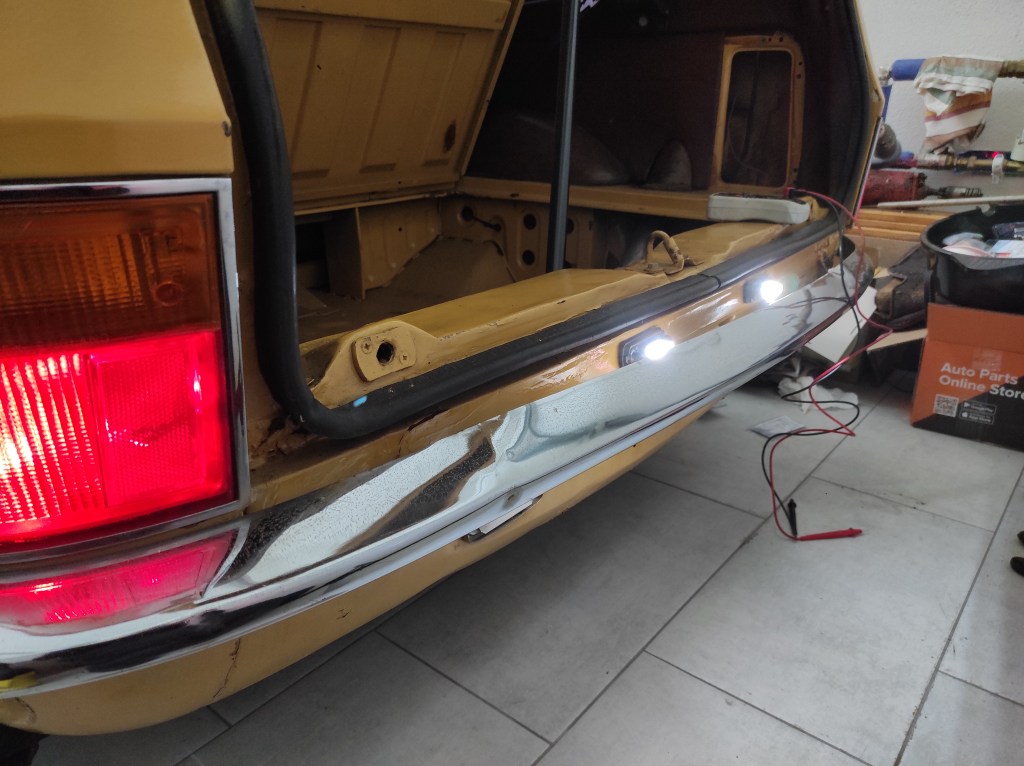
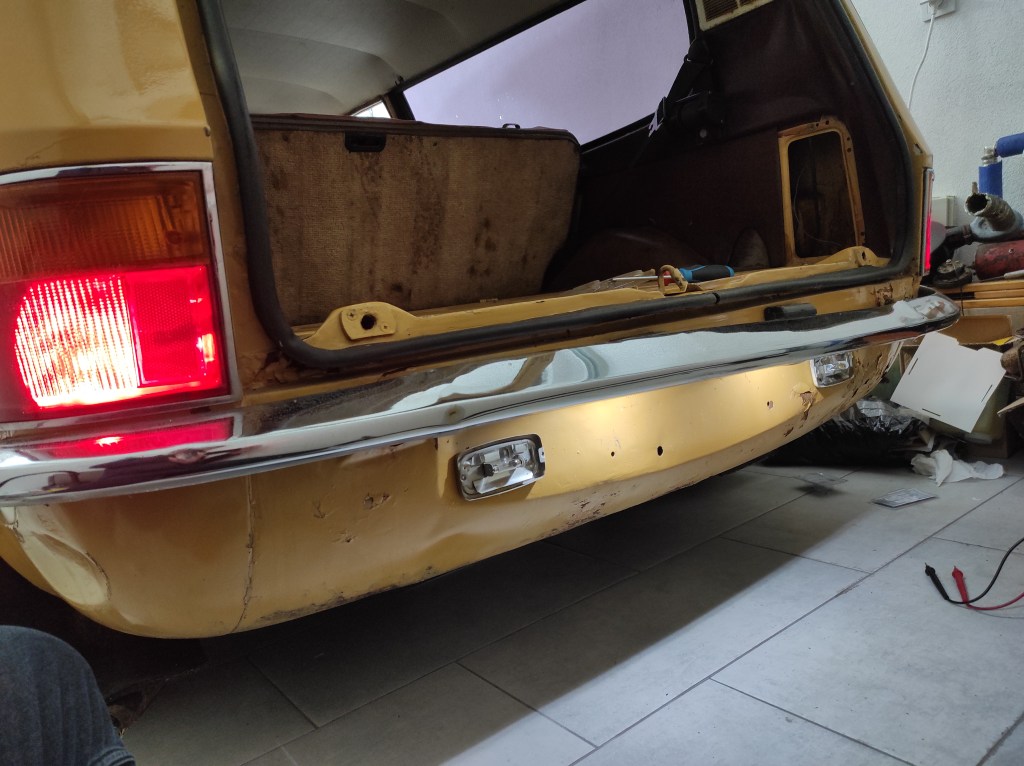
Then it was time to attend to the rear lights. The indicator/brake/running light clusters both work and I replaced the dead number plate lights with LEDs; a similar type to the interior lights but double the power – it may be a little too much as the rear now seems brighter than the headlights! I might swap them for the interior lights. No joy with the reverse lights. Most likely the reverse switch is verkacked. It will have to wait until I find a way to jack this baby up.

There’s still some work to do but it’s going to be incremental (fix this, replace that) and I think at this stage it’s fair to say the electrics are revived. Now we can focus on stripping down the engine.

Cylinder head repair – Part 1

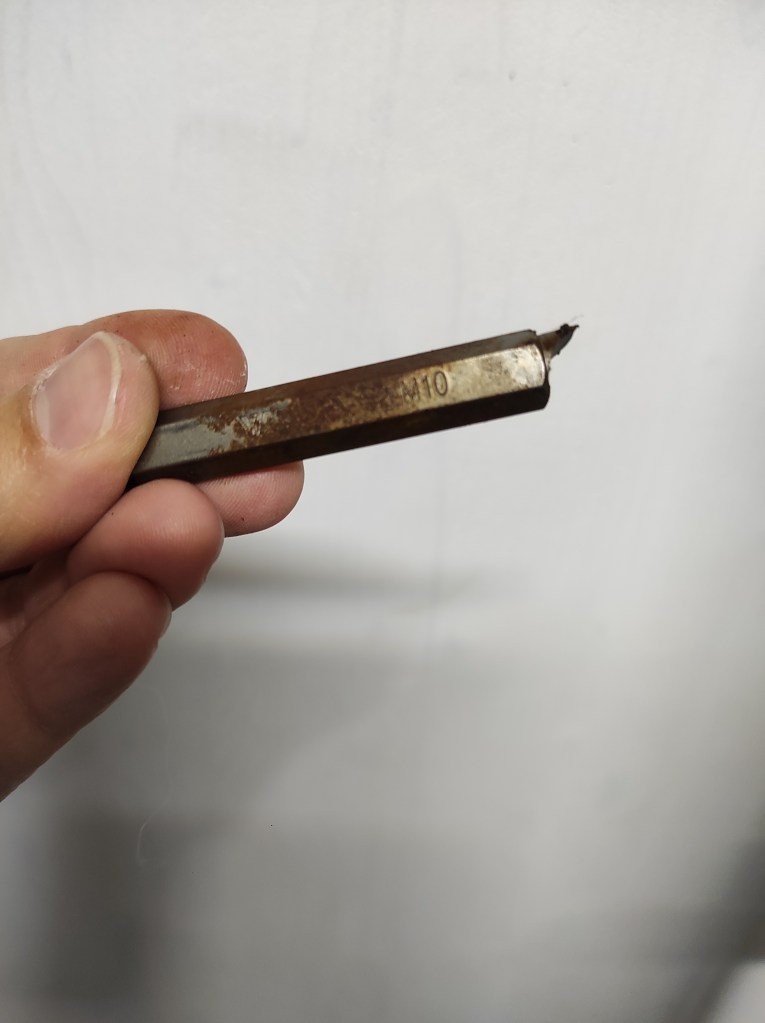
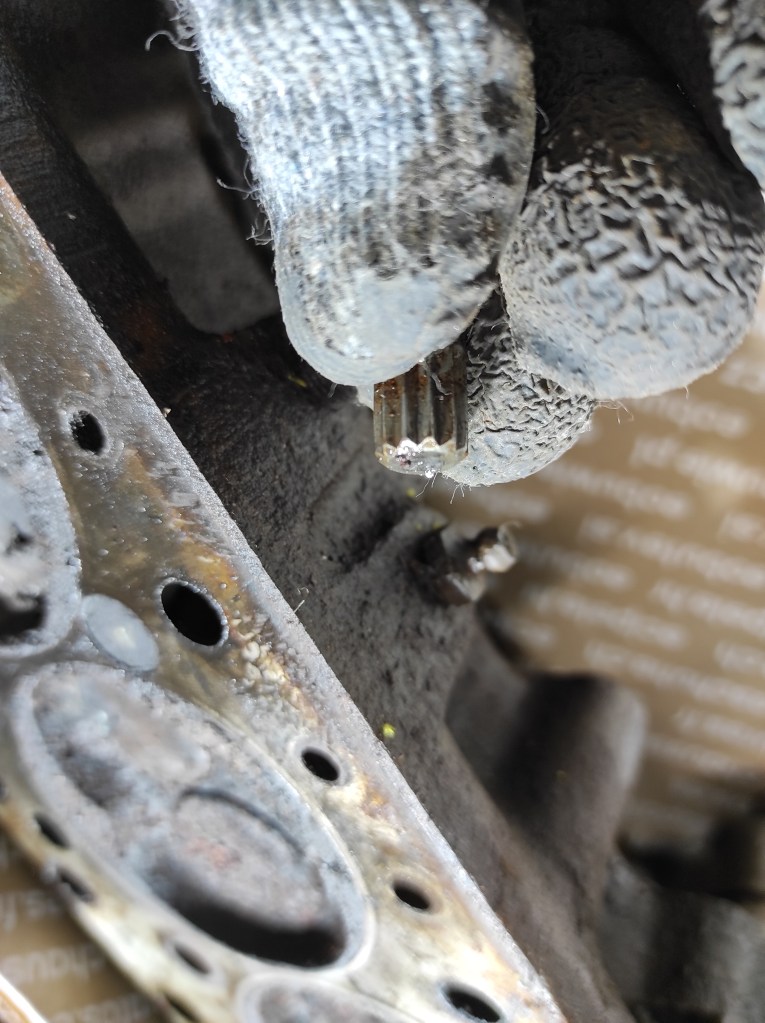
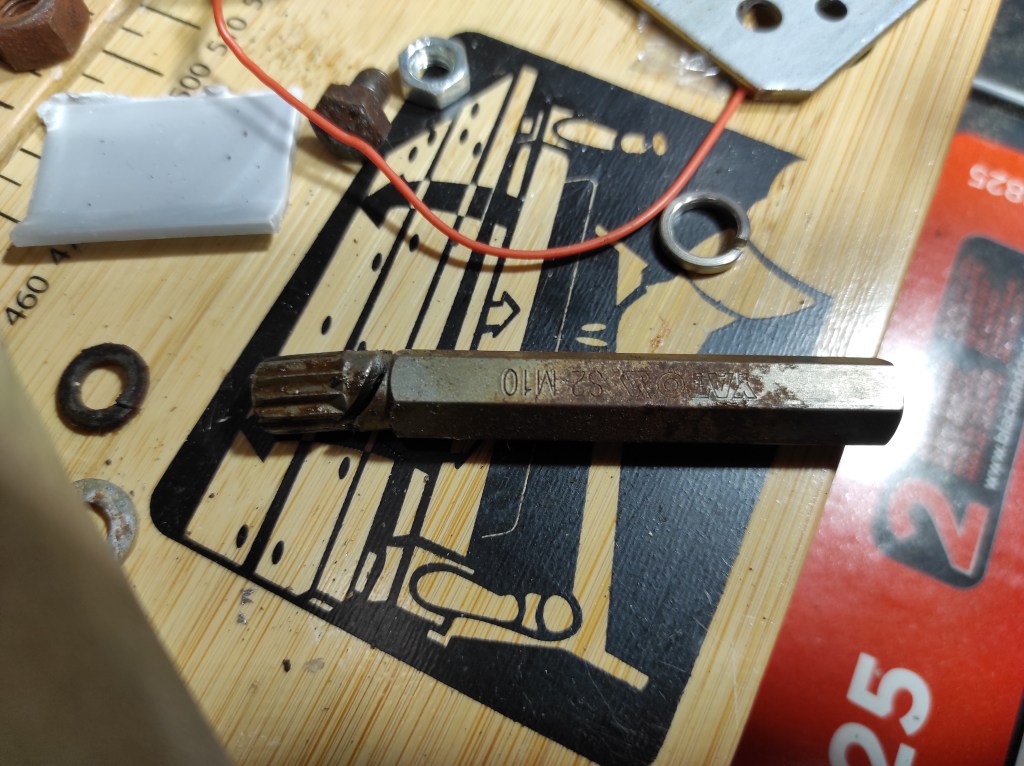
When we first saw Agnetha in the museum it looked like she had a broken spark plug. I didn’t think this would be a huge problem but after she was delivered I realised something else was going on. Yes, she does have a broken spark plug but lodged inside was a lump of Wakandan steel that was impossible to extract or drill out. After removing the alternator I found part of a broken tool lodged in the mounting bracket, and the broken end matched perfectly the lump of Captain America’s shield that was sticking out of the spark plug hole.

The tool has “YATO” branding which is a popular Polish toolmaker. I’m not sure how popular they are in Sweden, and I’ve no proof either way that someone smashed a piece of toolsteel into my block in *this* country or Sweden, so no point pointing the finger (even though I’m absolutely pointing the finger).

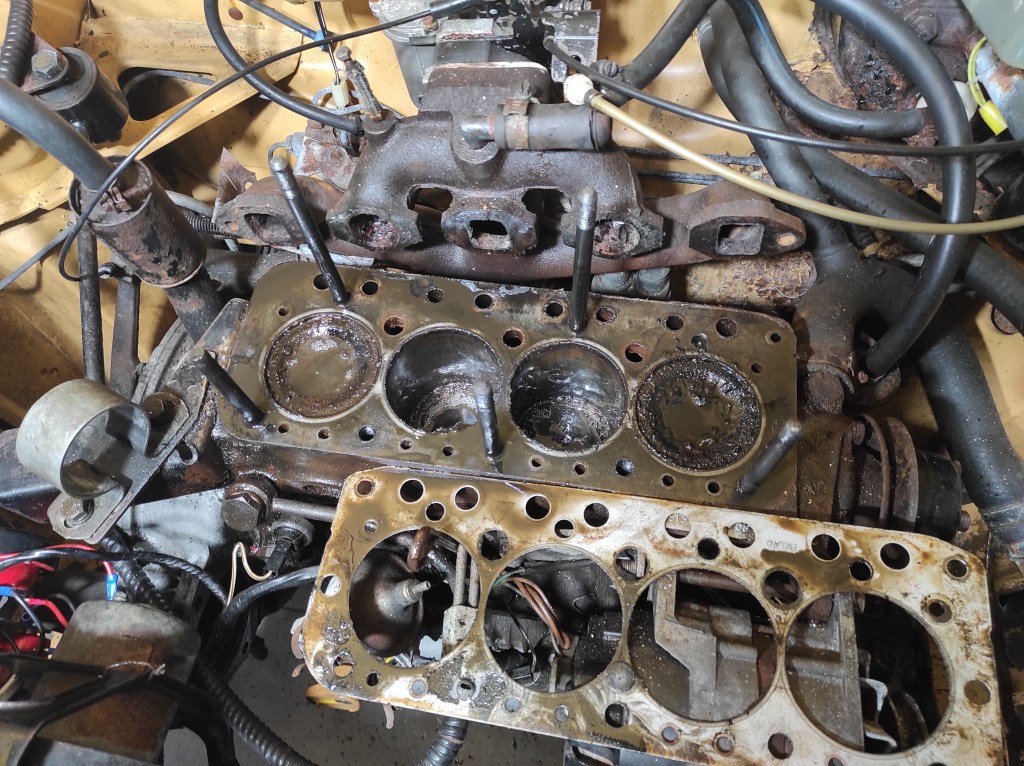
In any case the engine, although advertised as turning, was only able to turn a couple of degrees and it has been stood for some 33 years, so I bought the car knowing it would probably involve an engine rebuild. I’ve never taken the head off an engine before, let alone rebuilt one, but what could be better to learn on than a seized A-series? “Off with her head!”

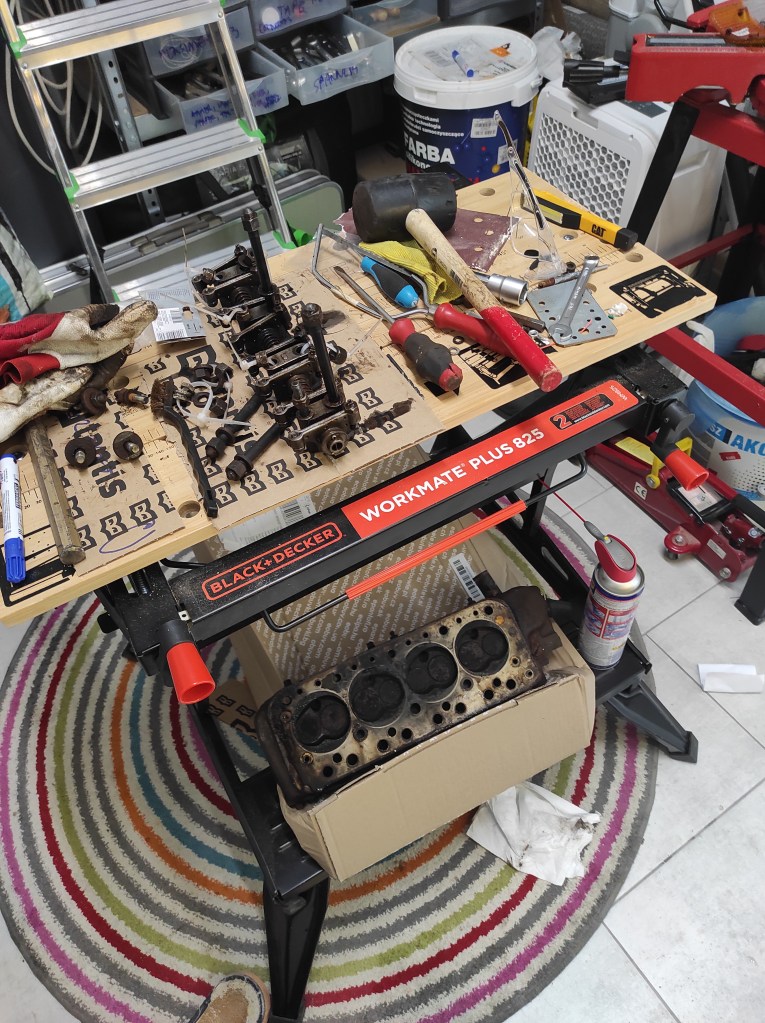
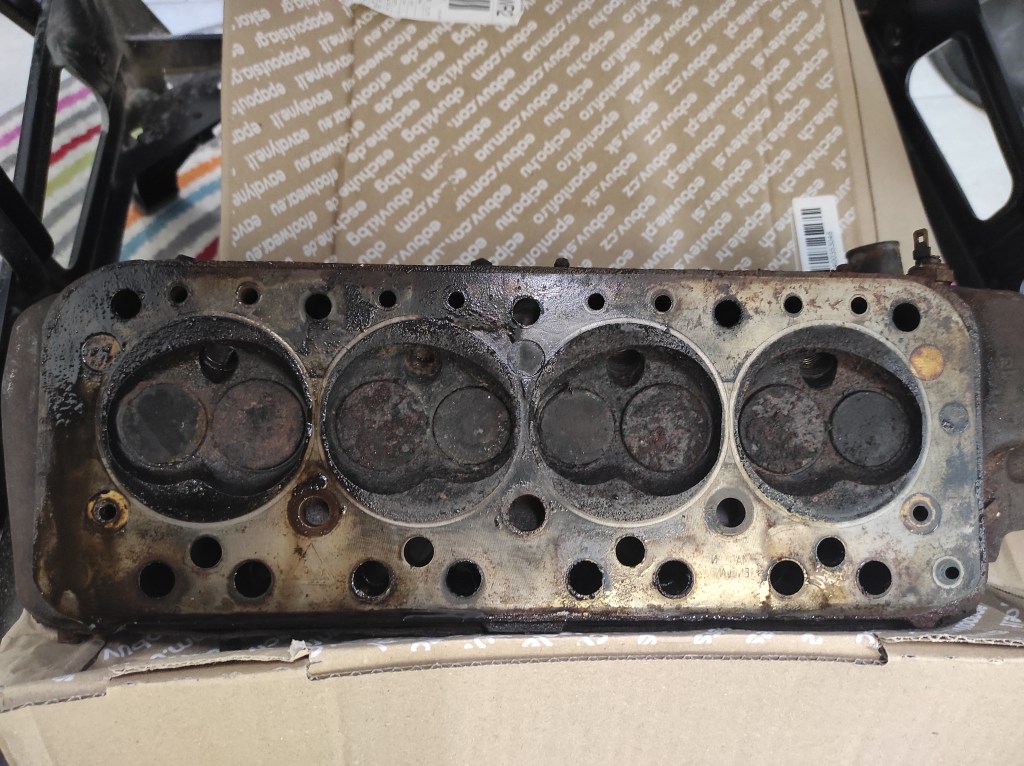
Taking the head off was a great workout. This video from All Things Alex was really helpful. In terms of engine rotation (or lack of) it looks like number 3 cylinder is holding everything back – possibly some corrosion around the piston rings? The other cylinders seem to be free. I’ve left them to soak in WD40 and we’ll come back to deconstructing that lot another day. The valves are crusty as hell – I will probably replace them along with the springs. But the rocker assembly is in good nick.

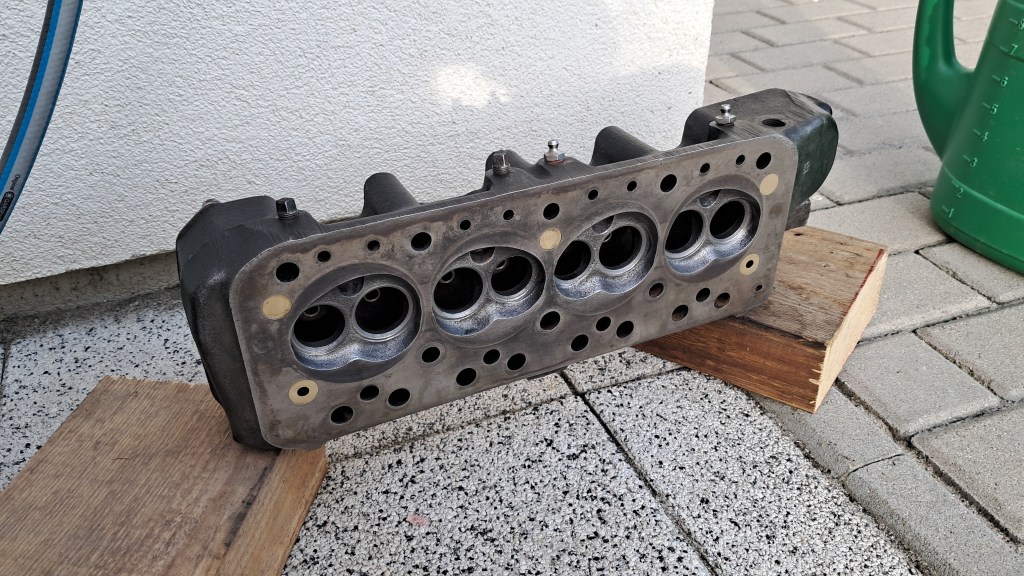
Getting the tool out was easy – just went in from the combustion chamber end with a screwdriver and smacked it with a hammer – ping! I tried to drill the remains of the spark plug itself and get it to turn with a bolt, but it seems to have become one with the head. I will probably have to drill the whole thing out and replace the thread with a repair kit. Then give the head a good clean, repaint it, replace the valves, polish and it should be good as new.

Electrics – Part 2

TL/DR: Still no headlight wipers!

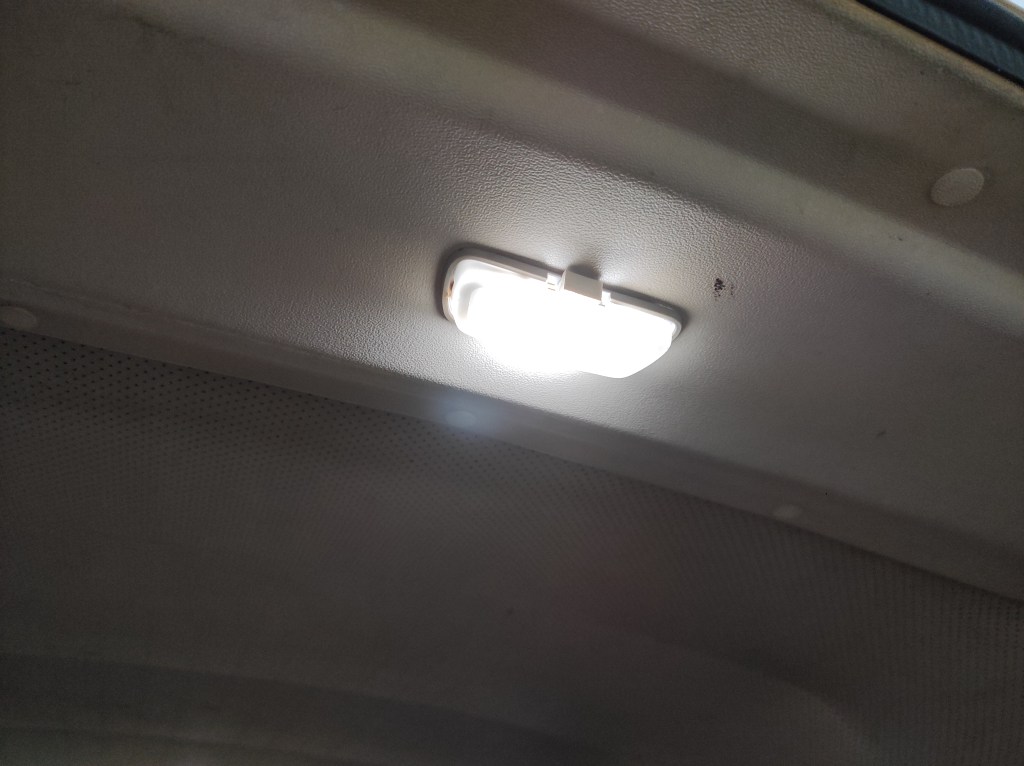
The ongoing troubleshooting with the electrics are all related to corrosion between terminals and switch contacts, and in some cases disintegration of the plastics – this is understandable after 33 years of neglect and I’m amazed it isn’t worse. In most cases, e.g. the door switches and interior lighting, I’ve been able to get things working by cleaning up the corrosion with a wire brush and sandpaper. For the interior lights there has been a subtle retromod: LED lights now provide much brighter illumination and should be less of a drain on the battery.

The indicator and wiper stalks, lighting switch and hazard warning switch are more problematic. Some of the terminals have quite severe corrosion and the plastic casings aren’t holding together anymore – resulting in entire circuits dropping out, arcing and alarmingly hot wires!

I had a go at cleaning up the hazard switch and indicator stalks but I don’t think they’re any better off and probably won’t put up with much when we’re on out on the open road. The hazard switch and stalks are nothing special – just generic BL components – so I’ve ordered replacements from Mini Spares in the UK, but I was able to save the lighting switch with some solder, dollops of hot glue and a bit of crimping. It now works perfectly and no longer doubles as an electric toaster… and for the first time both dashboard illumination lights come on!
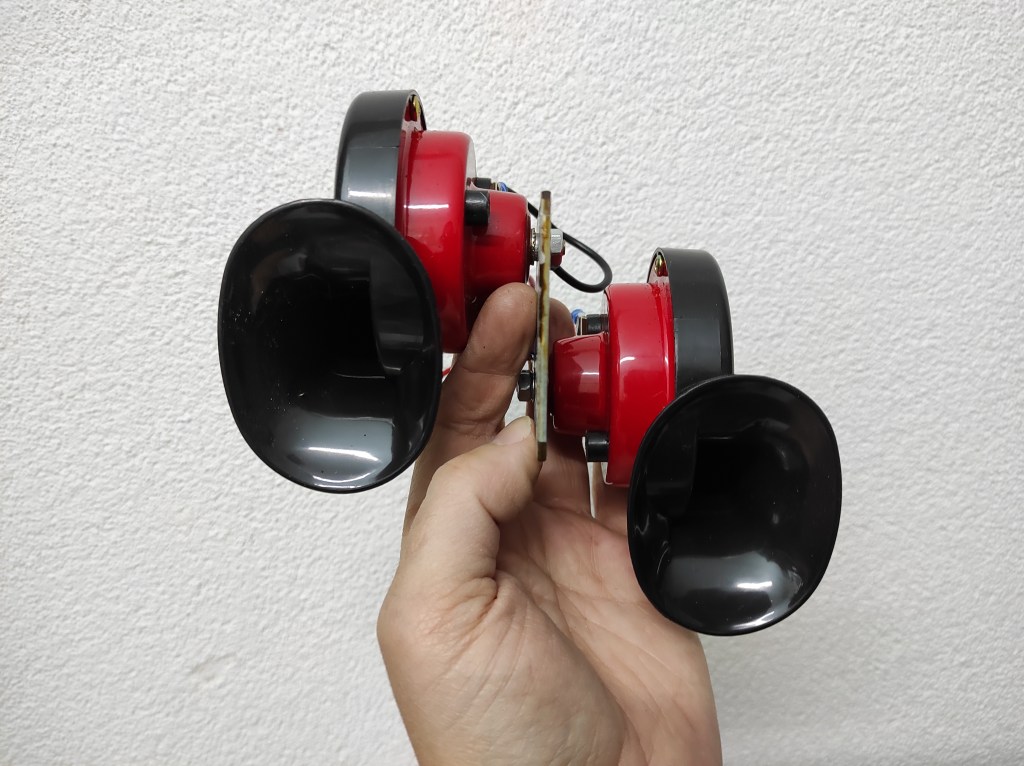
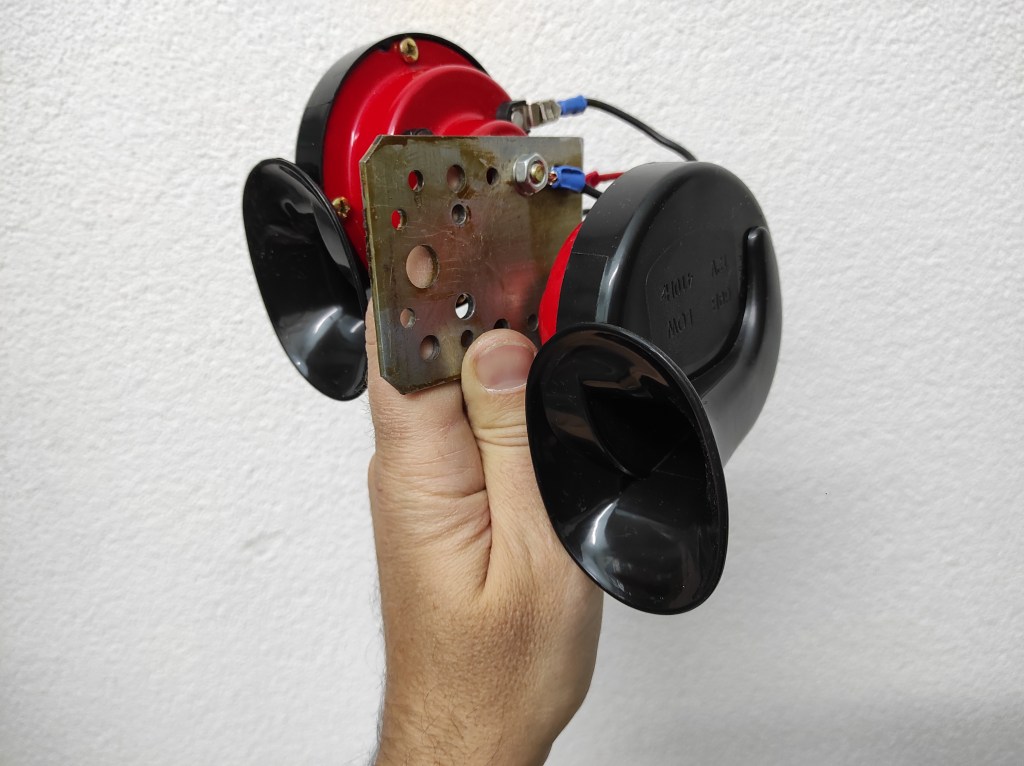
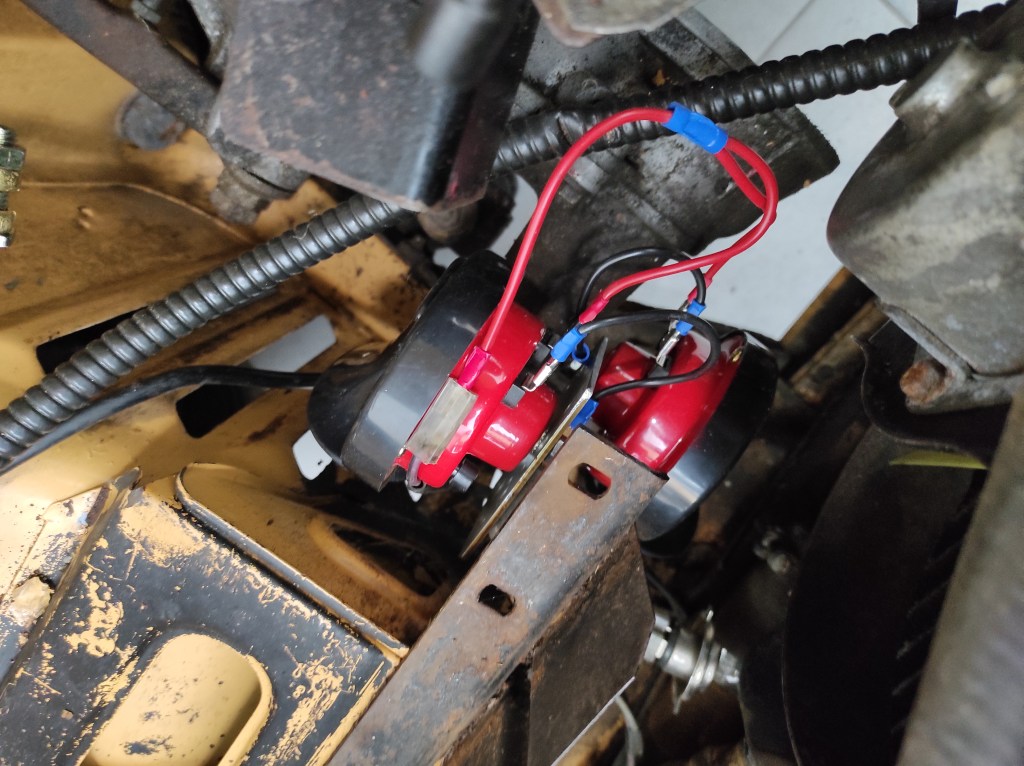
Finally I hacked a mounting plate to allow both horns to be installed, for all that 2-tone goodness. It sounds great but more importantly it looks good too – very cheeky. A full demo will be included in the forthcoming walk-around video.
As for loose ends, the faulty indicator flasher was replaced and it works, intermittently. Most likely it’ll settle down when the stalks, hazard switch have been replaced. There’s also something not quite right about the ignition switch, so all of those things are conspiring to produce a lot of gremlins. Hopefully in Part 3 we’ll have all that buttoned up!